How to make money selling used auto parts: from a garage hobby to a licensed yard
Ask ten people how to make money selling used auto parts and you will get ten different answers, because they are describing different businesses. One is parting out a car in the garage on weekends. Another is a licensed yard processing hundreds of donors a month. Both are real, and the gap between them is not talent - it is how much capital, licensing, and infrastructure each person wants to take on.
So this guide is a router, not a lecture. There are four ways to make money selling used auto parts - four different operating models, not four mandatory stages you must climb. Plenty of people stay on one model for good. Find the one that fits you now and follow its links.
The economics are the same underneath all four. What you keep on any part is roughly:
Net profit = sale price − acquisition cost − marketplace and payment fees − shipping − packaging − your labor − storage − a returns and warranty reserve − disposal and compliance costs.
What changes between the models is which of those costs you carry and where the revenue comes from - a commission split, a retail margin, or the full recovery value of a car. That is what the four paths below trade off.
The four ways to make money selling used auto parts
- Collaborative selling (early access) - sell parts you do not own, no yard, no inventory.
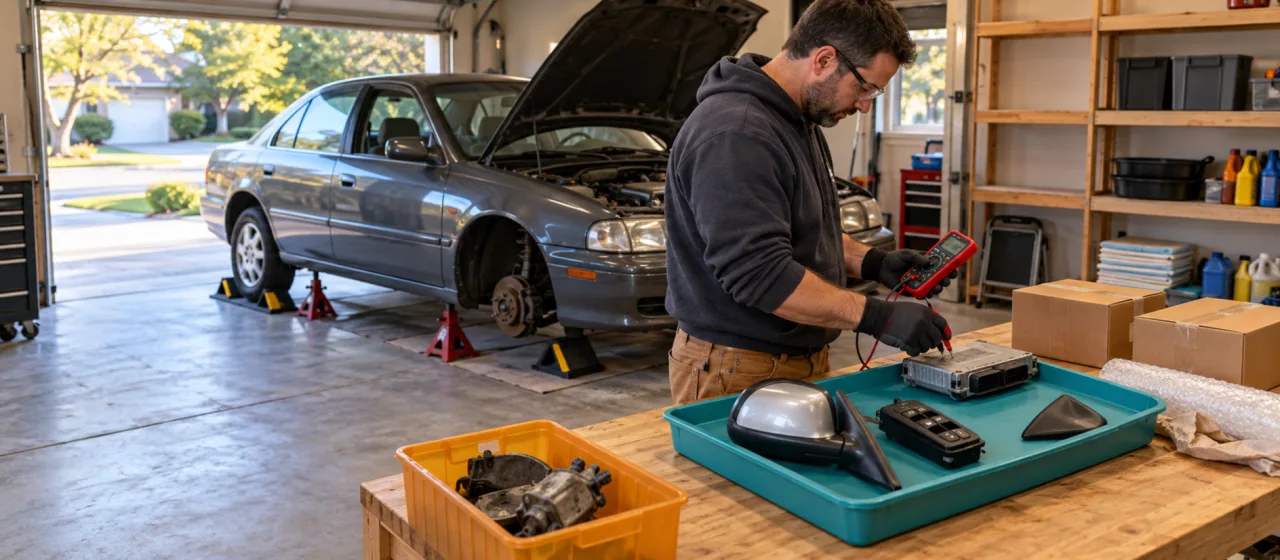
- Garage resale or occasional owner part-out - sell already-removed parts, or part out a car you own, from home.
- Small licensed dismantler - buy donors to part out, with the license the activity triggers.
- Full-service licensed yard - a multi-person recycling operation at scale.
| Model | Main investment | Where the money comes from | Biggest risk | Plan |
|---|---|---|---|---|
| Collaborative | Your time and selling effort | A commission or agreed split | Ownership, tax, returns, payouts | Early access |
| Garage resale / part-out | Parts, tools, storage | Retail margin per part | Slow inventory, hobby-scale limits | Garage |
| Small licensed dismantler | Donors, a facility, a license | Parts + cores + scrap | Compliance and working capital | Yard |
| Full licensed yard | Facility, team, systems | Scale and recovery rate | Fixed overhead and throughput | Yard Pro |
Pricing below is month-to-month and is lower billed annually - see current pricing, and treat licensing notes as general information, not legal advice.
1. Collaborative selling: sell without a yard (early access)
You do not have to own or dismantle cars to make money selling used auto parts. Collaborative selling - a reParta feature in early access, being built now - is designed to let you sell parts you do not own: coordinate with another seller who lists and sells a part, or take the parts a local body shop is allowed to sell on consignment, and share the proceeds. No donors to buy, no fluids, no yard, which makes it the lightest footprint of the four. It also does not erase the ownership, tax, returns, and payout responsibilities of selling someone else’s property, so read the model and its fine print in sell used auto parts without a yard, then join the early-access list to be first when it opens.
Fits: planned availability and plan eligibility have not been finalized - join the early-access list for product and pricing updates.
2. Garage resale or occasional owner part-out
Two related but distinct low-scale models. Garage resale is buying already-removed parts and reselling them, which carries the lightest operational and environmental exposure. Occasional owner part-out is dismantling a car you own and selling the parts - which may avoid some acquisition rules but can still involve zoning, fluids, storage, title handling, and final vehicle disposal. A small operation has fewer infrastructure needs, but “side hustle” or “hobby” is not a licensing exemption: what you buy, dismantle, store, and sell, plus state and local law, decide the rules, and side-hustle income can be taxable either way. The full picture is in parting out cars as a side hustle, and the buying decision that makes or breaks it is in is parting out a car worth it and how to part out a car for profit.
Fits: the Garage plan - catalog, fitment, pricing, and eBay plus Facebook assist at a one-person scale; see pricing.
3. Small licensed dismantler
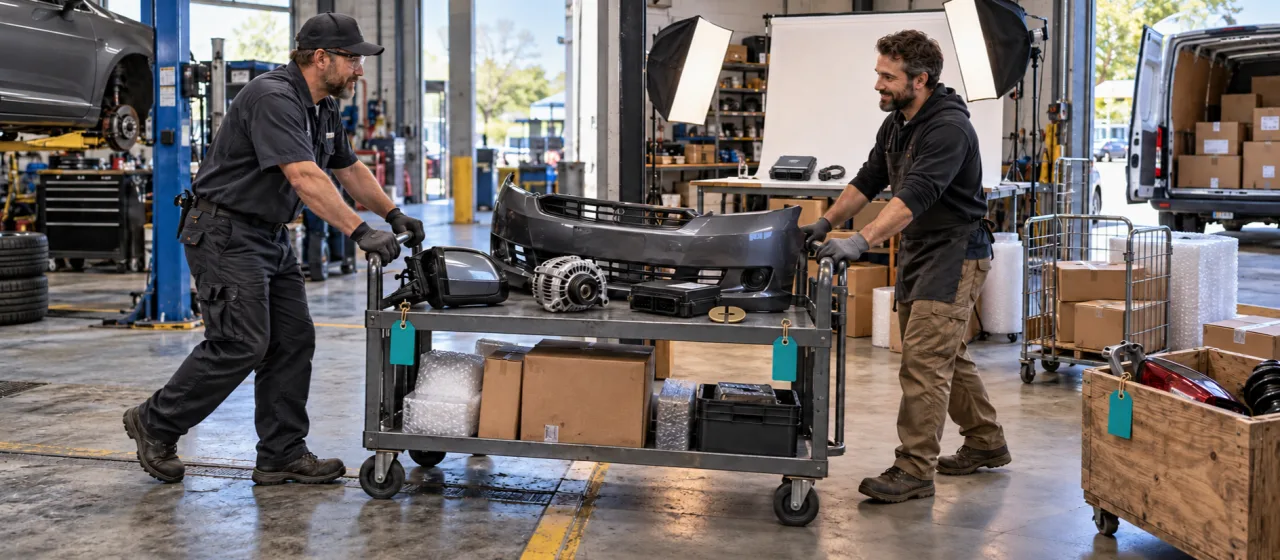
Buying donor vehicles to part out is where licensing usually enters - and it enters because of the activity, not because you have “grown up.” A regulatory trigger typically comes from buying salvage vehicles to dismantle, dealing in used parts, or storing junk vehicles, so even a small operator can need a dismantler or recycler license, zoning, and environmental compliance from the start. The signs you have outgrown the garage model are simple: you are buying regularly, holding real inventory, and running out of room. Get the fundamentals right with how to inventory a salvage yard, the most profitable car parts to sell, how to price used auto parts, and the go/no-go math in parting out vs selling the whole car - and confirm what your state requires in do you need a license to sell used auto parts.
Fits: the Yard plan - more volume, orders and tracking, and a buyer CRM; see pricing.
4. Build a full licensed yard
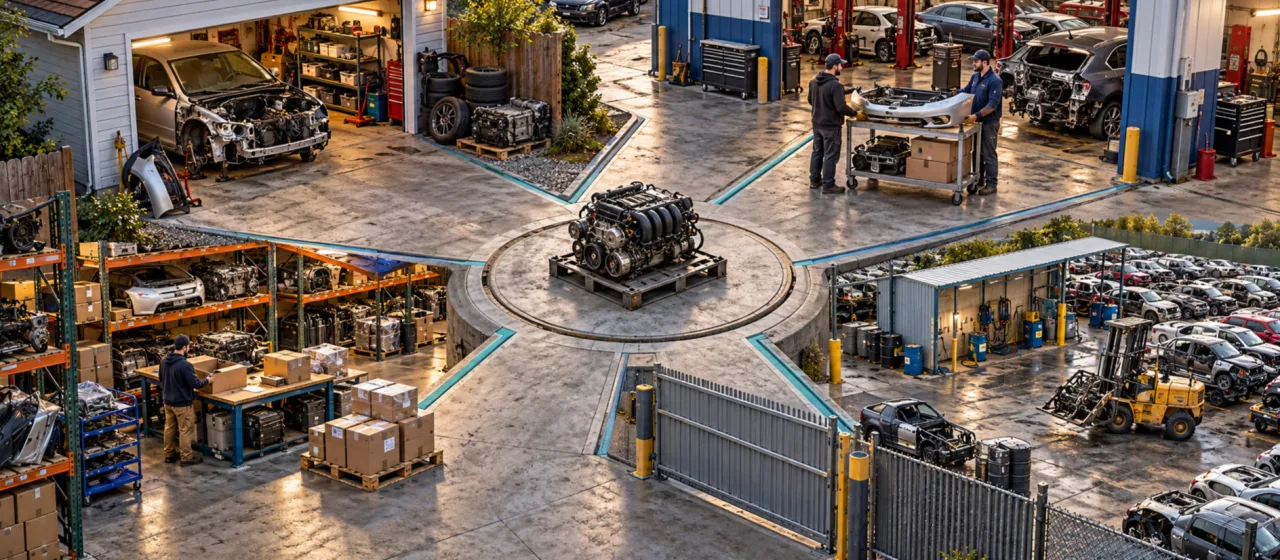
The largest model is a full-service licensed recycler: buying donors at volume, depolluting and dismantling safely, and running the compliance and finances of a real operation. It differs from a small dismantler in scale, team, and systems, not in the basic legal nature of the work. This is where the deep due-diligence cluster lives, grouped by what it covers:
Start and license: the start-up guide, what is auto dismantling, do you need a license, salvage yard zoning.
Federal and environmental compliance: federal regulations for auto recyclers, NMVTIS reporting, EPA compliance.
Financial protection: taxes, insurance, the financial model.
Acquisition and expansion: buying an existing yard, importing auto parts, and, for foreign founders, the E-2 visa path.
Fits: the Yard Pro plan - multi-location, advanced analytics, and the full team; see pricing.
How to choose your path to make money selling used auto parts
Two questions settle it. First, how much do you want to own and handle - nothing (collaborative), a few parts or a car (garage), or a licensed operation (dismantler or full yard)? Second, what do the numbers say - after fees, labor, and the reserves in the formula above, can you buy parts or donors that clearly beat scrap? If the second answer is no, no amount of infrastructure fixes it; if it is yes, pick the lightest model that matches your appetite, and let the activity, not a growth target, tell you when a license and more infrastructure are required.
How reParta helps at every level
The reason to name your path is that the tools should match it. Every current plan shares the same core - pre-bid ROI so you buy with numbers, VIN decode and fitment so parts get found, pricing against the real used market, listing on your own eBay account with assisted Facebook, and profit tracking per car - with limits and operational features (active parts, team seats, orders, CRM, analytics, locations) increasing by plan from Garage to Yard to Yard Pro. Collaborative selling, for the no-yard path, is in early access. It is operations software, not a licensing or compliance service: it does not obtain permits or file reports for you, but it keeps the part of the business you do run organized.
Start where you are. Start a free 14-day trial - no card required - or see plans and pricing to match a plan to your path.
Frequently asked questions
How do you make money selling used auto parts?
By capturing a part's remaining working value before the car becomes scrap - a clean, in-demand used part sells for far more as a replacement component than the same metal by weight. How you do it scales with commitment: part out the odd car in your garage as a side hustle, sell parts you do not own through collaborative or consignment selling (a reParta feature in early access), grow a steady business, or run a full licensed recycler. The economics are the same at every level; the capital, licensing, and infrastructure are what change.
What is the easiest way to start selling used auto parts?
The two lowest-commitment starts are a garage side hustle - buying the occasional donor or already-removed parts and reselling the good pieces online - and collaborative selling, where you sell parts you do not own by partnering with other sellers or local body shops, so there is no yard, no donors to buy, and a much lighter footprint. Collaborative selling is a reParta feature in early access. Either way, start small, buy with numbers, and only scale when demand and cash flow justify it.
Do you need a license to sell used auto parts?
It depends on your state and on what you actually do. Reselling parts you already own is treated differently from operating as a business that buys whole vehicles to dismantle, which commonly requires a dismantler, recycler, secondhand-dealer, or used-parts license plus zoning and environmental compliance. The higher up the path you go, the more of this applies. This is general information, not legal advice - see the licensing guide and confirm with your state motor-vehicle authority.
Which reParta plan fits my level?
Most solo dismantlers and side-hustlers start on Garage ($49/mo) - 500 active parts, pre-bid ROI, eBay publishing and Facebook assist. Growing crews move to Yard ($299/mo) for more volume, orders, and CRM, and full operations run Yard Pro ($599/mo) with multi-location, advanced analytics, and the complete sell-side stack. You can change plans as you grow, so pick for where you are now, not where you hope to be.