Is parting out a car worth it? A go/no-go guide
“Should I part it out or sell it whole?” is the most common question we hear from new dismantlers. The honest answer is that it depends - on the specific car and on your own capacity - but a handful of signals settle it quickly, and you should decide before you commit weeks of work, not after.
The short answer: usually yes, but not always
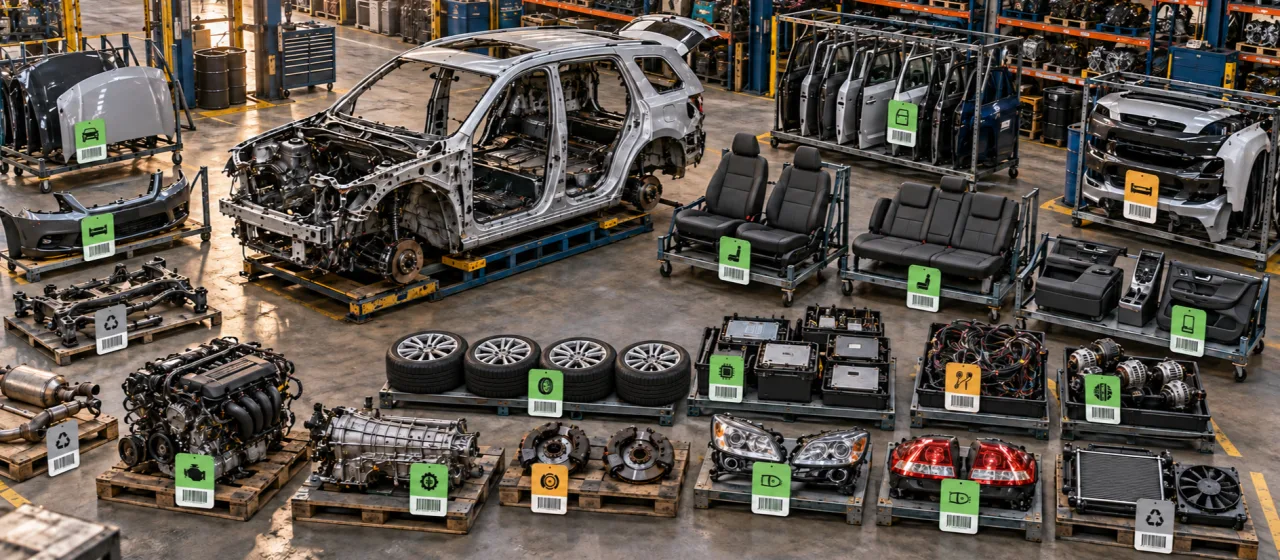
A whole car is priced by one buyer looking at the single worst thing about it. A parted-out car is priced by many buyers, each caring only about the one good part they need. That is why a car with a blown engine and a clean interior can be worth far more in pieces - the interior and body buyers do not care about the engine. That gap is the whole reason part-out exists, and it is why part-out beats a whole sale more often than people assume.
But “more often” is not “always.” Part-out is a trade: a higher ceiling in exchange for time, space, and slower cash. Whole-sale is the opposite - certainty and speed at a lower ceiling. Neither is automatically right. The decision comes down to the spread between the two exits and your capacity to work the car.
When parting out a car is worth it
The clearest green lights, checkable at the auction or on the lot:
- A popular, high-volume model. A large installed base means real buyers are actively searching for its parts. Demand relative to supply is what matters, not just how many were built.
- Clean, high-value anchor parts. A running, documented low-mile engine or transmission, straight undamaged panels, good glass, working electronic modules and lights. One or two fast, high-ticket sales de-risk the entire teardown.
- Damage concentrated in one area. A hard rear hit that leaves the drivetrain, front clip, and interior harvestable is a good part-out candidate; the loss is contained.
- In-demand trim, options, or color-matched panels that are hard to find elsewhere.
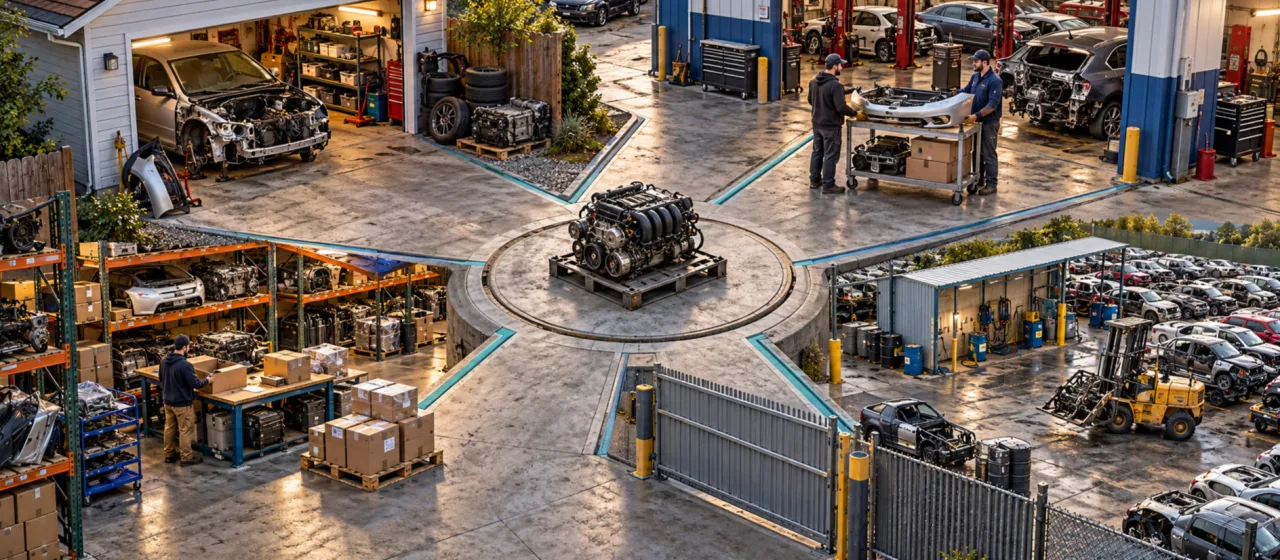
- You have the capacity - the labor, covered space, and listing bandwidth to work a car over weeks or months. Part-out is a business you operate, not a one-time transaction.
If the top few parts alone clear the whole-car price, that is a strong signal to part it out - as long as those parts are genuinely undamaged, in demand, and legal to sell (more on that below). For the deeper look at which donors reward a teardown, see the best cars to part out.
When parting out is not worth it
The red flags matter just as much, and they are the ones new sellers skip:
- A low-value or picked-over donor. If the good parts are cheap, heavily supplied, or already gone, the whole sale or scrap is often the better number once you subtract labor.
- Your yard is full. Every donor you are slowly stripping is a donor you are not buying and flipping. When space is the constraint, part out only your best cars and move the rest whole.
- You need the cash back fast. Whole-sale is money this week; part-out drips in over weeks to months. Slow part-out can starve the operation even when it “makes more on paper.”
- Damage is spread across the car. Flood and fire are the worst offenders - they ruin electronics and interiors across the whole vehicle, not just at the impact, so they hurt a part-out badly. A full rollover degrades many parts at once.
- The value is locked in slow or restricted parts. Standalone airbags can no longer be listed on eBay in the US as of September 24, 2026, so a donor’s airbags are not an eBay revenue line anymore. Used catalytic converters are federally restricted for reuse and are normally a scrap-value line, not a reusable part, unless properly recertified. Count those correctly - or not at all - when you value the car.
There is no reliable public number for what share of harvested parts never sell, and you should distrust anyone who quotes one. What is true in every yard is that a small number of parts sell fast and carry the margin, while a large tail of low-value parts sells slowly, cheaply, or never - and that tail is a real cost in space and listing time. Plan around the head, not the tail.
Part out vs sell whole: the comparison that settles it
The mistake that oversells part-out is comparing the sum of part prices against the whole-car offer. Those are not the same kind of number. The whole offer is cash today with no further work; the part-out figure is a stack of future sales, spread over months, minus the donor cost, marketplace fees (about 13.6 percent on eBay Parts for a non-Store seller, charged on shipping and tax too), shipping, the labor to pull and list, storage, and the parts that never move.
The only fair comparison is net to net - and once costs come out, the spread is usually smaller than the sticker sum suggests. If you want the full worked math, the cost stack, and the third path most yards miss (selective harvest), that is its own guide: parting out vs selling whole: the real math. The short version for this decision: if the net spread is wide and you have capacity, part it out; if it is narrow, take the faster, lower-risk exit.
A quick go/no-go check before you commit
Before you buy or start pulling, run this in a couple of minutes:
- Decode the donor. Start with the free VIN decoder to pin year, make, model, trim, and engine - the foundation for knowing what actually fits and sells.
- Name the anchor parts. List the two or three parts that will carry the job and sanity- check that they are present, undamaged, and in demand.
- Get a real whole number. Know what the car would bring whole or as scrap today, so you have something honest to compare against.
- Weigh your capacity. Be honest about time, covered space, and how fast you need the cash. A great donor is still a bad buy if you cannot work it.
- Compare net, not gross. Subtract fees, shipping, and labor before you call it - or let the tool below do it for you.
For a lot you are about to bid on at Copart or IAA, the same check runs from the VIN before the hammer drops: is a salvage car worth parting out before you bid. And for where the money actually sits once you commit, see the most profitable car parts to sell.
Turn the decision into a number
The honest way to answer “is this one worth it?” is to run the math before you commit, not after. That is what Pre-bid ROI does: enter the VIN and your max bid and you get a projected parts list, a projected value, a projected net estimate, and a risk score, all built on real used-market prices. It does not scrape the auction or predict the hammer price - it is an estimate to guide a go/no-go call, not a guarantee of price, sell-through, timing, or profit. It works whether the car is on Copart, IAA, or a private lot, so “part it out or flip it whole” becomes a number instead of a gut feeling.
After the sale, per-donor profit and loss tracks the actual net for that donor once fees and shipping land, so you can hold the projection up against reality. Do that donor after donor and your next “is it worth it?” call gets sharper, because you are calibrating against your own results. Both live inside reParta’s auto parts inventory management software, so the decision, the cataloging, and the P&L are in one place.
Before your next bid, get the number first. Start a 14-day free trial - no card required - and run a VIN and a max bid through Pre-bid ROI to see the projected net estimate for yourself, or see the pricing first. The discipline of running both numbers is what keeps dismantlers from paying for the wrong car.
Frequently asked questions
Is parting out a car worth it?
Often, but not always. Parting out is worth it when the parts you can realistically sell clearly beat the whole-car offer after fees, labor, and storage, and when you have the time, covered space, and cash to work the car over weeks or months. It is not worth it on a low-value or heavily damaged donor, when your yard is already full, or when you need the money back quickly - a fast whole sale or scrap can be the smarter business call even at a lower headline number.
How do I know if a car is worth parting out?
Look at the donor and at your own situation. Green lights: a popular, high-volume model, clean high-value anchor parts (a running low-mile engine or transmission, straight panels, working modules), and damage concentrated in one area. Red lights: an unpopular or orphaned model, damage spread across the car (flood or fire ruins electronics and interiors), value locked in slow-moving or restricted parts, and no labor, space, or listing time on your side. If the top parts alone clear the whole-car price, that is a strong signal - but confirm the parts are undamaged, in demand, and not banned or restricted before you count on them.
When is it better to sell a car whole instead of parting it out?
Sell whole when the whole-car, scrap, or auction-flip offer is close to your realistic net part-out, when you lack the capacity to strip and list the car, when parts demand is thin, or when most of the value sits in parts that would take a year to move. Whole-sale trades a lower ceiling for certainty and speed, and it frees your cash and space immediately for the next donor.
How much does eBay take when I sell used parts?
For a non-Store seller, eBay's Parts and Accessories final value fee is about 13.6 percent of the total sale up to $7,500, plus a per-order fee of about $0.40, and the percentage is charged on the shipping and tax the buyer pays too. A Store subscription lowers the percentage in many categories. Either way, subtract it from every projected part sale before you decide part-out beats a whole-car flip. Verify the current fee schedule for your account and category.
Can reParta tell me whether a car is worth parting out?
reParta's Pre-bid ROI projects it before you bid: enter the VIN and your max bid and you get a projected parts list, a projected net estimate, and a risk score built on real used-market prices, for Copart, IAA, or a private lot. It does not scrape the auction and it is an estimate to guide the go/no-go call, not a guarantee of price, sell-through, timing, or profit. After the sale, per-donor P&L tracks the actual net, so your next decision is calibrated against your own results.