 Business
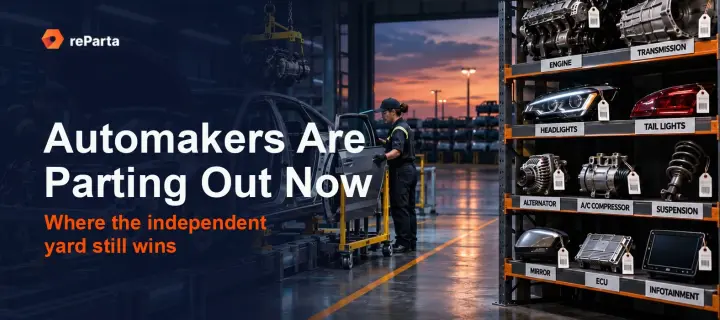
Automakers are building industrial dismantling lines and selling recovered OEM parts. Here is what VW, Stellantis and Renault are doing, and where independent salvage yards still win.
 Business
Calculate profit on a tow yard vehicle with two ledgers: full vehicle P&L and the forward-looking exit decision. Line items, worked ledger, metrics.
 Business
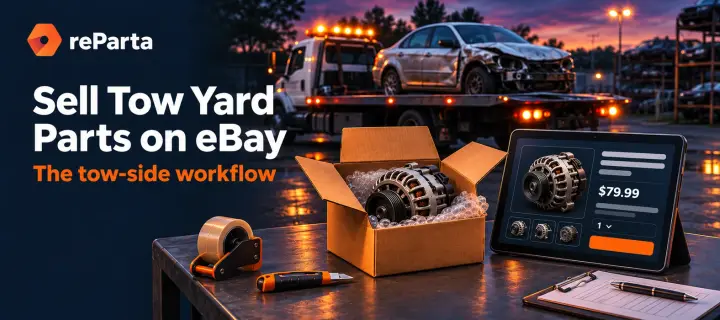
Sell tow yard parts on eBay without a listing clerk: from legally acquired vehicle to first sales, what towers do differently, and what to keep off eBay.
 Business
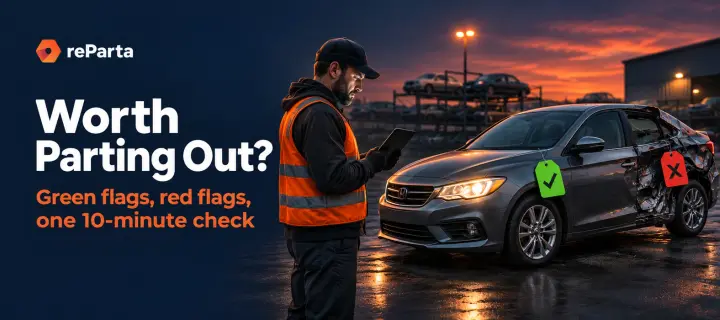
Tow yard vehicles worth parting out share a pattern: intact high-demand parts, steady demand, spare capacity. Green and red flags + a 10-minute check.
 Business
Towing software vs salvage yard software: they do different jobs. What each covers, where they meet, and when a tow yard needs the parts side too.
 Business
How towing companies sell used auto parts from legally acquired vehicles: auction vs part-out vs scrap, licensing and NMVTIS, a tow-yard workflow.
 Business
Tow yard auction vs part out vs scrap: compare future cash, labor, lot space and time-to-cash per vehicle, with a worked example and a decision matrix.
 Business
Slow auto parts sales? Find out if it's visibility, conversion or demand, protect cash, reprice and buy smarter. Includes the latest demand data.
 Business
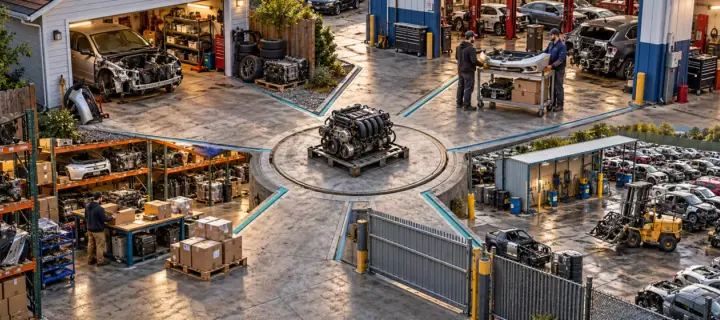
How to make money selling used auto parts at any level: a garage side hustle, collaborative selling without a yard, a growing business, or a full licensed recycler. Pick your path.
 Business
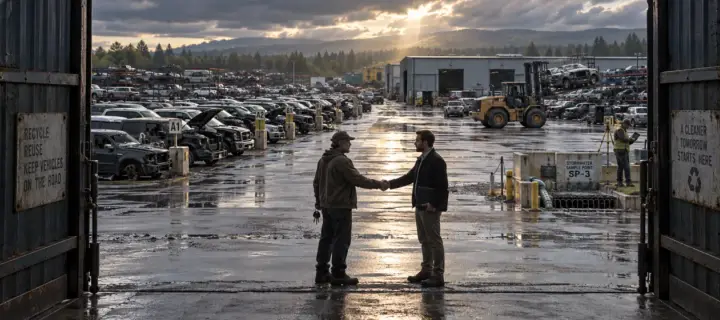
Salvage yard due diligence for buyers: how deal structure changes what you inherit, the environmental (CERCLA, Phase I ESA), license, inventory, financial, tax, and legal checks that decide whether an existing auto-recycling business is worth buying.
 Business
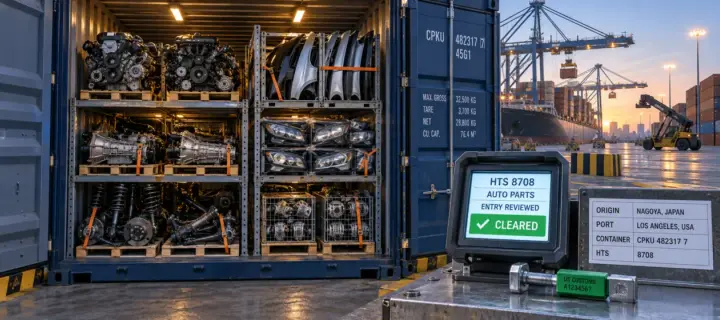
Importing auto parts into the US in 2026: a cross-border auto parts customs compliance checklist for resellers - HTS classification, the Section 232/301/AD-CVD tariff stack, customs value, origin and USMCA, the end of de minimis, ISF, and the NHTSA/EPA/IP traps.
 Business
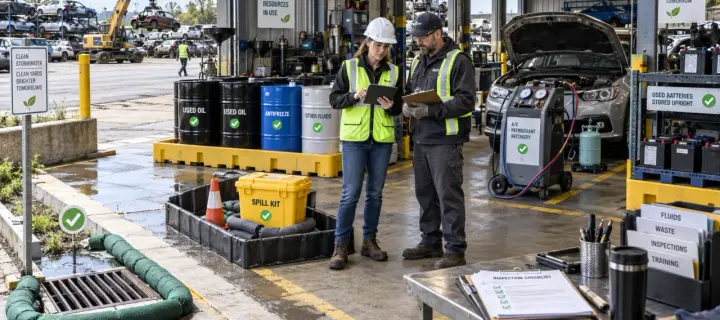
Salvage yard EPA compliance in plain English: industrial stormwater and SWPPP, used oil, hazardous waste, SPCC spill plans, refrigerant recovery, and CERCLA.
 Business
Salvage yard zoning in plain English: industrial districts and conditional-use permits, a site diligence checklist, Phase I ESA under ASTM E1527-21, and the CERCLA liability protections a Phase I preserves.
 Business
Running a US auto-parts operation as an E-2 visa business or via an L-1A transfer: qualifying capital and enterprise nationality, the substantial and non-marginal tests, the L-1A new-office and owner-operator issues, and what to confirm with an immigration attorney.
 Business
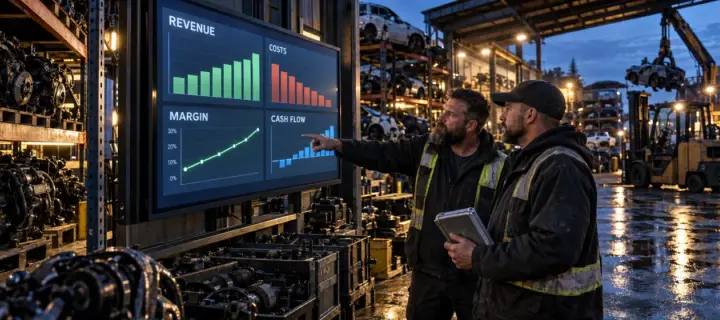
The salvage yard financial model in plain English: the three views it needs (donor pre-bid, operating contribution, accounting P&L and cash flow), the unit-economics math, and the KPIs that decide whether an auto-recycling business makes money.
 Collaborative
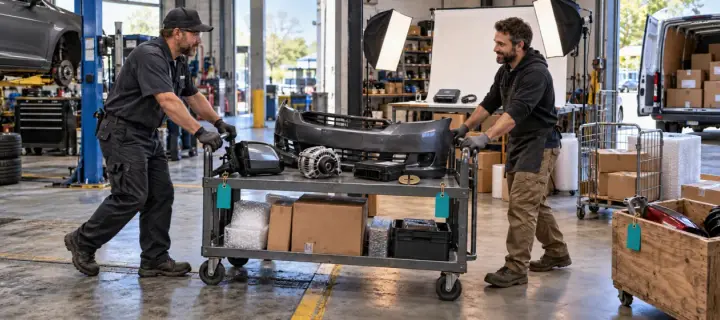
You can sell used auto parts without a yard: no donors to buy, no fluids to drain, no license-heavy footprint. Here is the low-inventory model, honestly, in early access.
 Business
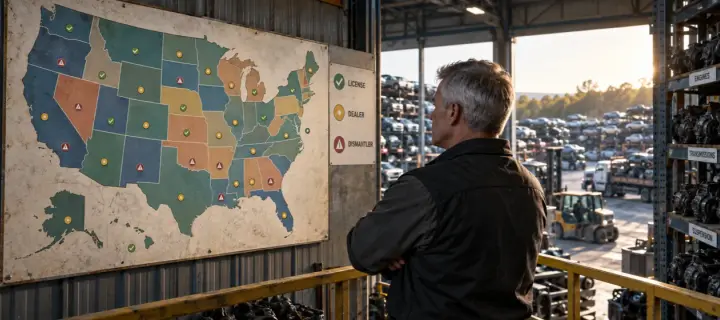
Do you need a dismantler license to sell used auto parts in 2026? A state-by-state guide to which states require one, who issues it, and how to apply.
 Business
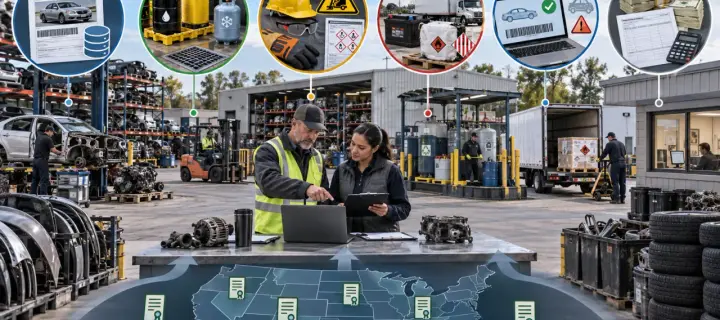
The federal regulations for auto recyclers stack on top of your state license: NMVTIS, EPA, OSHA, DOT hazmat, recall screening, and IRS cash reporting.
 Business
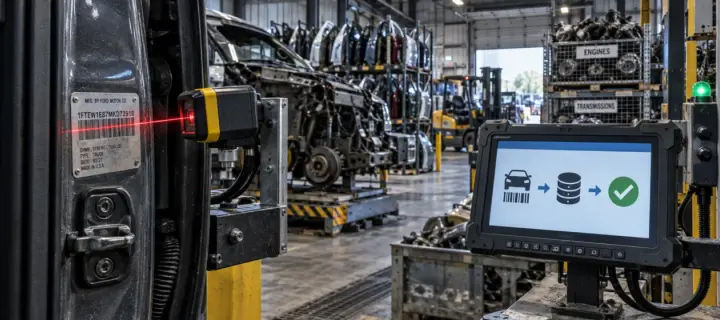
NMVTIS reporting is the federal duty most small yards miss: 5+ junk or salvage vehicles a year means monthly reporting. What to report, how, and the penalties.
 Business
Salvage yard insurance in plain English: general liability, products liability, garagekeepers, pollution, property, auto, and workers' comp - what each form does, the exclusions that bite, and the questions to ask a licensed broker.
 Part-out
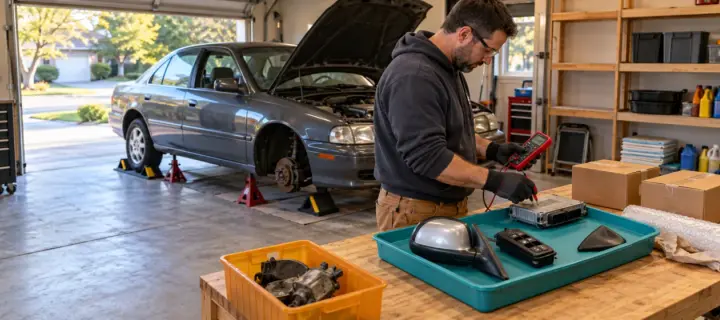
Parting out cars as a side hustle: what you can legally do from a garage, realistic side income, what to pull first, where to sell, and when it stops being a hobby.
 Business
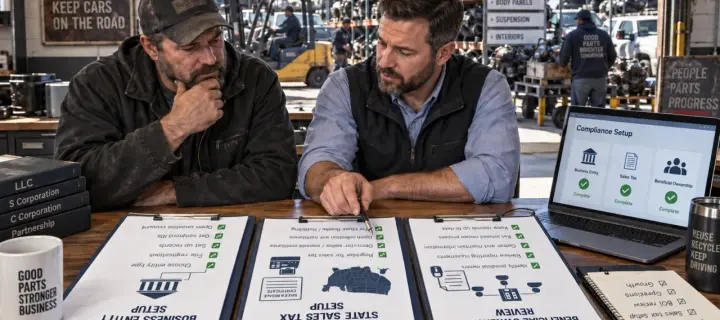
Used auto parts business taxes: the entity and EIN stack, sales-tax nexus and marketplace rules, BOI reporting status, and inventory basics.
 Business
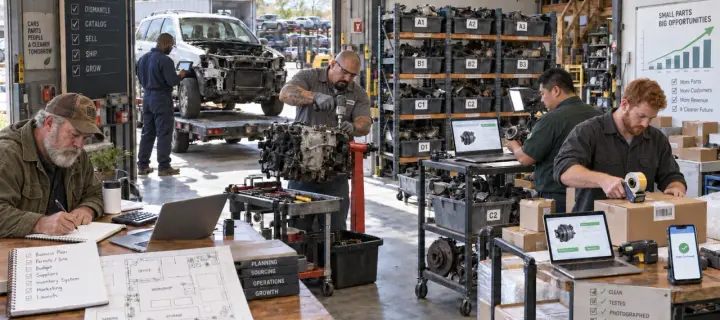
A compliance-first guide to starting a used auto parts business: models, licensing, federal rules, zoning, tax, insurance, and the system that runs it.