Salvage yard due diligence: the M&A buyer's checklist for buying an existing yard - environmental, license, inventory, and financial risk
Buying an existing salvage yard can beat starting one from scratch - the site, the operating history, the inventory, and the customers already exist. But depending on how the deal is structured, the buyer can also acquire, or become exposed to, someone else’s contaminated soil, permit obligations, title and reporting failures, employee liabilities, unfavorable contracts, and inventory whose recorded value real sales will not support. Salvage yard due diligence is different from vetting most small businesses, because two risks ordinary buyers overlook - environmental exposure and unsupported inventory value - are the two that most often decide the deal. A “salvage yard for sale” listing is only where the search starts; the listing price and the seller’s summary are the opening claim, and real diligence begins once you have a target.
The analysis also shifts with the structure. An asset buyer who takes the real estate has a different risk profile from one who buys only equipment and inventory, and an equity buyer acquires the legal entity that keeps its history. Licenses, permits, marketplace accounts, zoning rights, and contracts do not all follow the same transfer rules. This checklist identifies the workstreams and the questions to assign to an M&A attorney, a CPA, a qualified Environmental Professional, and the licensing agencies before closing. It is general information, not legal, environmental, tax, or financial advice. This is a spoke of how to start a used auto parts business, written for the buy-don’t-build path.
How to run salvage yard due diligence, in order
Front-load the inexpensive, deal-killing screens before you spend on full financial and legal work:
- Deal structure and scope (assets, equity, real estate, or lease).
- Environmental feasibility and contamination exposure.
- License, zoning, and permit transferability.
- Inventory reality and vehicle title / NMVTIS reconciliation.
- Financial, tax, and working-capital quality of earnings.
- Legal, title, liens, contracts, people, and deal protections.
Deal structure changes what you inherit
Before anything else, fix what is being bought, because it changes every answer below:
- Asset purchase, with the real estate. You become the current owner of the land and take on its environmental profile directly; you usually need your own licenses and permits.
- Asset purchase, without the land (equipment and inventory only). You are not the site’s current owner, but successor-liability, operator, and assumed-liability theories can still reach you, and you generally re-apply for licenses.
- Equity or stock purchase. The entity stays the same and keeps its liabilities, licenses, and history - which is exactly why you diligence it harder; a change of control may still trigger agency approvals.
- Lease. A tenant can carry operator exposure and, in some cases, pursue its own landowner protections.
Deal structure and tax treatment are legal and accounting decisions - assign them to counsel and a CPA rather than assuming an asset deal makes liabilities disappear.
Environmental: where salvage yard deals live or die
Under CERCLA, the current owner or operator of a facility where hazardous substances were released can face cleanup liability even without causing the contamination. Two important qualifiers, though: CERCLA contains a petroleum exclusion that can remove gasoline, diesel, and their ordinary constituents from the federal hazardous-substance definition, and separate state cleanup laws, plus programs like RCRA, the Clean Water Act, and underground-storage-tank rules, can impose broader obligations. So petroleum contamination is still a serious risk, just often through routes other than CERCLA. PFAS is now a live federal exposure where a source is plausible: the EPA designated PFOA and PFOS as CERCLA hazardous substances effective July 8, 2024, which raises the importance of a site-specific PFAS inquiry (fire-suppression history, neighboring uses, materials handled) rather than assuming every yard has it.
The protection that makes buying contamination-risk property manageable is the Bona Fide Prospective Purchaser (BFPP) status, and it is conditional and self-implementing - the EPA does not pre-approve you, you carry the burden of meeting every criterion, and it can be challenged later. It requires, among other threshold criteria, completing All Appropriate Inquiries before you acquire and having no disqualifying affiliation with a liable party, plus ongoing continuing obligations (appropriate care with the contamination, complying with land-use controls, cooperating with response actions). It shields specific federal CERCLA liability; it does not clean the site, remove state-law liability, or guarantee you pay nothing - a protected buyer can still spend on monitoring, controls, and state obligations, and EPA-funded cleanup can attach a windfall lien.
All Appropriate Inquiries in practice means a Phase I Environmental Site Assessment to the current ASTM E1527-21 standard, which the EPA recognizes as satisfying the AAI rule, overseen by a qualified Environmental Professional. Timing matters: the assessment generally must be completed or updated within one year before acquisition, with certain components (interviews, government-record and lien review, site reconnaissance) within 180 days - and the clock runs to taking title, not to the LOI. A Phase I is non-intrusive and identifies Recognized Environmental Conditions; it does not sample or prove the site is clean. A finding may lead to more records review, agency consultation, targeted sampling, or a Phase II ESA, and even a Phase II may confirm a release without fixing its full extent or cost.
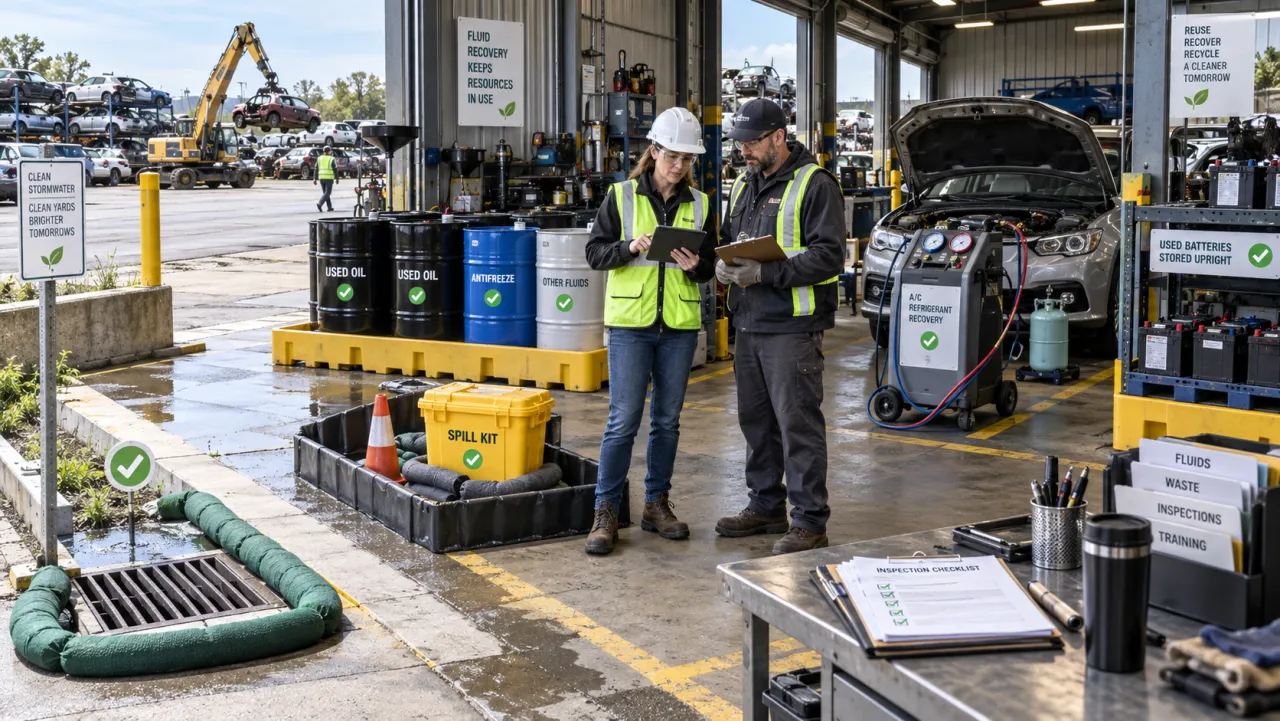
Ask for the full environmental file, not just a Phase I: prior Phase I and II reports and reliance letters, spill and release reports, tank registrations and closure records, groundwater monitoring, remediation orders, environmental liens and deed restrictions, used-oil and waste manifests, stormwater inspections and the SWPPP, SPCC plan, and any notices of violation or consent orders. We walk the site-and-Phase-I question in salvage yard zoning and Phase I ESA and the operating layer you inherit in salvage yard EPA compliance.
Licenses and permits do not all transfer the same way
The right question is not “does the license transfer” but “what happens to each authorization under this structure.” In an asset deal a new entity commonly needs its own license - California’s DMV dismantler license and Texas’s TDLR recycler license are new-applicant processes that can pull in zoning verification, a stormwater permit, an environmental ID, insurance, and background checks. In an equity deal the licensed entity can remain, but a change of owners, officers, name, or location may still require advance approval or amendment. Build a license and permit matrix (authorization, issuer, holder, expiration, change-of-control rule, approval time, and whether it is a closing condition), and confirm each in writing. Start from the state-by-state licensing guide.
Two related items:
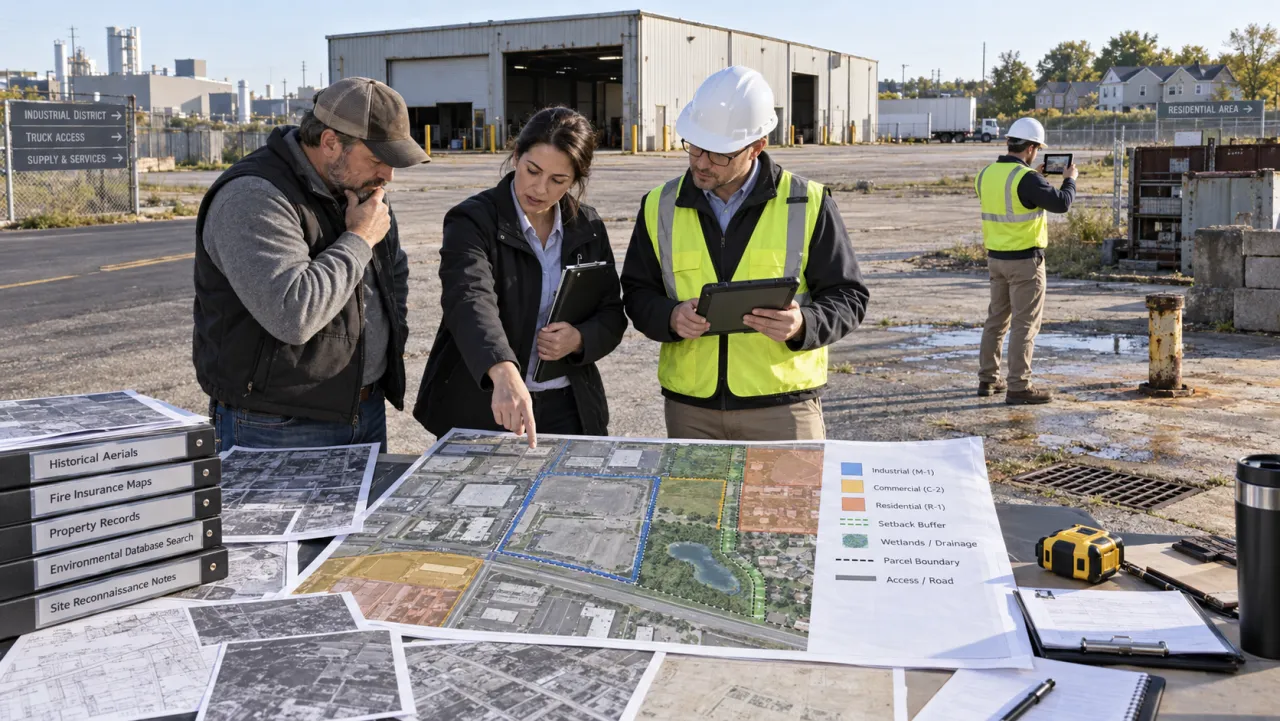
- Zoning nonconforming use. Many yards run as a legal nonconforming (“grandfathered”) use, which can be lost through abandonment, discontinuance beyond a locally defined period, expansion, or a change of use. Get written zoning verification, a zoning opinion from counsel, and the certificate of occupancy, and confirm whether a Conditional Use Permit runs with the land or is personal to the operator - do not assume the municipality will simply certify that status survives the sale.
- Environmental permits. Auto salvage commonly falls within industrial-stormwater Sector M, but the program is often state-delegated, and a no-exposure certification may be available where all industrial materials and activities are kept under cover; determine whether coverage is federal, state, no-exposure, or another status, and review the SWPPP, monitoring, and violations. The SPCC rule can apply based on more than aggregate aboveground oil capacity over 1,320 gallons: facility type and whether a discharge could reasonably reach navigable waters matter too. Refrigerant is usually a venting-prohibition, recovery, and technician-certification question rather than an air permit, though cutting and crushing may need air permits. The federal-regulations guide covers this layer.
What conveys with the yard, and what does not
Sort every asset into “comes with the deal,” “must be re-earned,” and “confirm”:
| Item | Does it come with the deal? |
|---|---|
| Dismantler / recycler license | Asset deal: apply in your own name. Equity deal: entity keeps it, but change of control may need approval |
| Nonconforming zoning status | Confirm in writing; can lapse on discontinuance, expansion, or change of use |
| Environmental permits (stormwater, SPCC, air) | Confirm each: transferable, consent-required, or a new filing |
| NMVTIS reporting registration | Asset deal: register as the new reporting entity. Equity deal: update credentials and responsible persons |
| eBay account and feedback | Not transferable in an asset sale (eBay ties the account and feedback to the holder); confirm equity-change effects with eBay |
| Real property and equipment | Per the purchase agreement, after lien and title search; verify owned vs leased |
| Historic environmental liability | Depends on structure and who owns the land; an equity buyer takes the entity’s history |
Inventory: what you are actually buying
Inventory is the central valuation and working-capital risk in a salvage deal. Salvage systems often carry parts at listing prices, so the stated value can sit well above what the parts realistically bring. Do not accept the number:
- Verify physically. Run floor-to-sheet testing (found parts back to records) and sheet-to-floor testing (records to a physical part), with VIN and donor traceability, location and grade accuracy, and cutoff testing around closing. Have an independent party observe the count.
- Value it recoverable, and label it managerial. Estimate value from expected realized price times category sell-through over a defined horizon, net of fees, fulfillment, returns, storage, and disposal. This is an acquisition-underwriting estimate for negotiation, not the accounting carrying value, the tax basis, or the closing working-capital number, which your CPA sets - the same discipline as the salvage yard financial model and how to value a salvage car for parts.
- Reconcile titles and reporting. Confirm donor vehicles have proper title and salvage documentation and that acquisition records, titles, NMVTIS reports, and physical inventory reconcile. The NMVTIS duty depends on structure: an asset buyer registers as the new reporting entity, an equity buyer inherits the entity’s reporting account and its history, and whether a past reporting gap remains the acquired entity’s problem or could reach the buyer is a question for counsel. Post-close cleanup is what inventorying a salvage yard is about. See also NMVTIS reporting for dismantlers.
The financial side of salvage yard due diligence
Quality of earnings on a yard has to go deeper than a revenue figure:
- Verify revenue. Reconcile bank deposits, tax returns, the general ledger, and marketplace statements; separate gross merchandise value from actual revenue; strip out sales tax and buyer-paid shipping; and analyze refunds, credits, and chargebacks. Decompose the mix - parts, scrap tonnage, cores, catalytic converters, whole-vehicle - since scrap and catalytic revenue are commodity-price-driven and can flatter a trailing-twelve-month number.
- Normalize margin and earnings. Test whether donor acquisition cost sits in inventory or was expensed, quantify unrecorded processing labor and return reserves, and scrutinize every EBITDA or seller’s-discretionary-earnings add-back, owner compensation, and related-party rent (does the seller also own the land?).
- Check working capital and the balance sheet. Set an inventory cutoff and a working-capital peg; review AR aging, AP completeness, accrued payroll, and any environmental reserves or deferred maintenance.
- Do tax diligence. Pull federal, state, and local returns; review sales and use tax, payroll tax, worker classification, and economic-nexus and marketplace-facilitator treatment on online sales. In some states an asset buyer can inherit successor liability for unpaid sales, use, or withholding tax without a tax-clearance certificate, and asset deals raise purchase-price allocation (IRC Section 1060 and Form 8594). Route all of it to a CPA. Coverage and entity basics are in salvage yard insurance and used auto parts business taxes.
- Pull multi-year insurance loss runs - they reveal claim history, environmental incidents, and where premiums are heading.
Legal, title, contracts, and people
- Liens and title. Search UCC filings in the state of organization, fixture and equipment filings, vehicle titles, tax and judgment liens, and mechanic’s liens; get a real-property title commitment and survey, easements, access, environmental liens, and flood or wetland status; and require payoff letters and releases at closing.
- Litigation and enforcement. Pending or threatened suits, environmental enforcement, and employment claims.
- Equipment and contracts. Verify owned versus leased and financed equipment (crushers, balers, forklifts, cranes), and review scrap-buyer, tow, core-buyer, and catalytic-buyer contracts for pricing, term, exclusivity, and assignability or change-of-control consent.
- People. Employee census and compensation, wage-and-hour and overtime, independent-contractor classification, benefits and accrued PTO, open workers’ comp claims and the experience modification (which is not automatically transferable), OSHA history, operator qualifications, key-person retention, and I-9 review through counsel.
Deal protections and the first 100 days
None of these is guaranteed, but a real M&A deal asks for them: representations and warranties (including environmental and title reps) with disclosure schedules, indemnification with an escrow or holdback, a special environmental indemnity where warranted, representations-and-warranties or environmental insurance, and closing conditions for the licenses, permits, landlord, lender, and platform consents you identified. For contaminated sites, counsel may explore a state voluntary-cleanup or prospective-purchaser agreement. Then plan the transition: licenses live before you operate, NMVTIS reporting continuity, an inventory recount, systems and data migration, and pricing and controls from day one.
Where reParta fits
reParta does not broker deals, value a business, perform legal, environmental, or financial diligence, or audit a seller’s books - buy on your advisors’ work. Where it earns its place is the day after closing, when you own a yard whose inventory often lived on paper, in a spreadsheet, or in the last owner’s head. reParta turns that inherited pile into a system you can run and sell from:
- Every part tied to its donor VIN with its cost, buyer fees, and shipping, so you know what each vehicle you bought actually holds and what it cost.
- Fitment and interchange on every part - reParta records the vehicles a part fits and its part and interchange numbers, so listings are accurate compatibility claims and you bleed far less margin to wrong-fitment returns, the single biggest return driver in this business.
- Per-donor profit and loss from real used-market data - what parts sell for, fees, and returns roll up per donor, so you see each vehicle’s true economics instead of the previous owner’s estimate.
- Cross-channel listing that helps keep a sold part from sitting live on eBay and Facebook at once.
Those reports support your decisions; they do not set your accounting or tax basis, replace a physical inventory count, or validate the seller’s historical financials. You inherit the pile; reParta is how you turn it into catalogued, fitment-tagged, sellable stock you can actually run.
This guide is general information, not legal, environmental, tax, or financial advice. CERCLA and state cleanup liability, license and permit transfer, zoning, tax, and deal structure depend on your state, your specific site, and the transaction, and they change. Engage an M&A attorney, a CPA, and a qualified Environmental Professional, and complete a Phase I ESA to the current standard before you close.
You just bought the yard - now see what you actually own. reParta turns an inherited, untracked pile into a running system: every part tied to its donor VIN with cost, fees, and shipping, matched to the vehicles it fits so listings are accurate and wrong-fitment returns drop, with per-donor profit and cross-channel listing that keeps a sold part from sitting live on eBay and Facebook at once. Start a free 14-day trial - no card required - or see pricing.
Frequently asked questions
What is the biggest risk when buying a salvage yard?
Environmental exposure. Under the federal cleanup law (CERCLA), the current owner or operator of contaminated land can face cleanup liability even without causing it, and decades of yard operations concentrate fuels, oils, solvents, and lead - though CERCLA has a petroleum exclusion and separate state cleanup laws can reach further. A buyer manages that exposure through the Bona Fide Prospective Purchaser protection, which is conditional: it requires completing All Appropriate Inquiries (a Phase I ESA) before acquiring the property and then meeting ongoing continuing obligations. It does not mean the site is clean or that you will pay nothing. Treat environmental review, not price, as the first gate, with a qualified environmental professional and counsel.
Does a salvage yard license transfer to the buyer?
It depends on the deal. In an asset purchase, a new entity usually has to qualify and apply for its own dismantler or recycler license (California's DMV dismantler and Texas's TDLR recycler license are new-applicant processes). In an equity or stock purchase the licensed entity can stay the same, but a change of owners, officers, name, or location may still require advance notice, amendment, background checks, or approval. Do not assume the license simply survives closing - build a license and permit matrix, confirm each agency's change-of-control rule in writing, and budget the lead time so you are not operating unlicensed on day one.
What is a Phase I Environmental Site Assessment and when do I need it?
A Phase I ESA is a non-intrusive investigation - records review, a site visit, and interviews - overseen by a qualified Environmental Professional, that identifies Recognized Environmental Conditions (the presence or likely presence, or a material threat, of a release). It does not sample soil or groundwater. To support the CERCLA liability protections it must meet ASTM E1527-21 and the All Appropriate Inquiries timing: generally completed or updated within one year before you acquire the property, with certain parts within 180 days. A Recognized Environmental Condition may lead to more records review, agency consultation, targeted sampling, or a Phase II ESA - it is a trigger analysis, not a clean bill of health, and one Phase II may confirm a release without defining its full cost.
How do I value a salvage yard's inventory in due diligence?
Not by the seller's stated number, and not as an accounting or tax figure. Salvage systems often carry parts at listing prices, so the reported value can be well above what the parts realistically bring. For acquisition underwriting, estimate recoverable value from physical verification, condition, historical realized prices, category sell-through over a defined horizon, and selling, return, and disposal costs - a managerial estimate, not the accounting carrying value or tax basis, which your CPA sets. Also test that donor vehicles have proper titles and that NMVTIS reporting reconciles, because gaps are both a legal and a valuation problem.
Should I buy the assets or the company?
That is a decision for your M&A attorney and CPA, and it changes your risk. An asset purchase can reduce exposure to some historical company liabilities, while an equity or stock purchase acquires the entity with its liabilities intact. But environmental risk does not follow that rule cleanly: a buyer who takes title to the land becomes its current owner, a buyer who operates the site may face operator exposure, and successor-liability and assumed-liability theories can still reach an asset buyer. Asset structure alone does not eliminate environmental liability - the Phase I and the Bona Fide Prospective Purchaser protections manage it. Get structure and tax treatment from professionals.