Salvage yard EPA compliance: stormwater, used oil, SPCC, and refrigerant
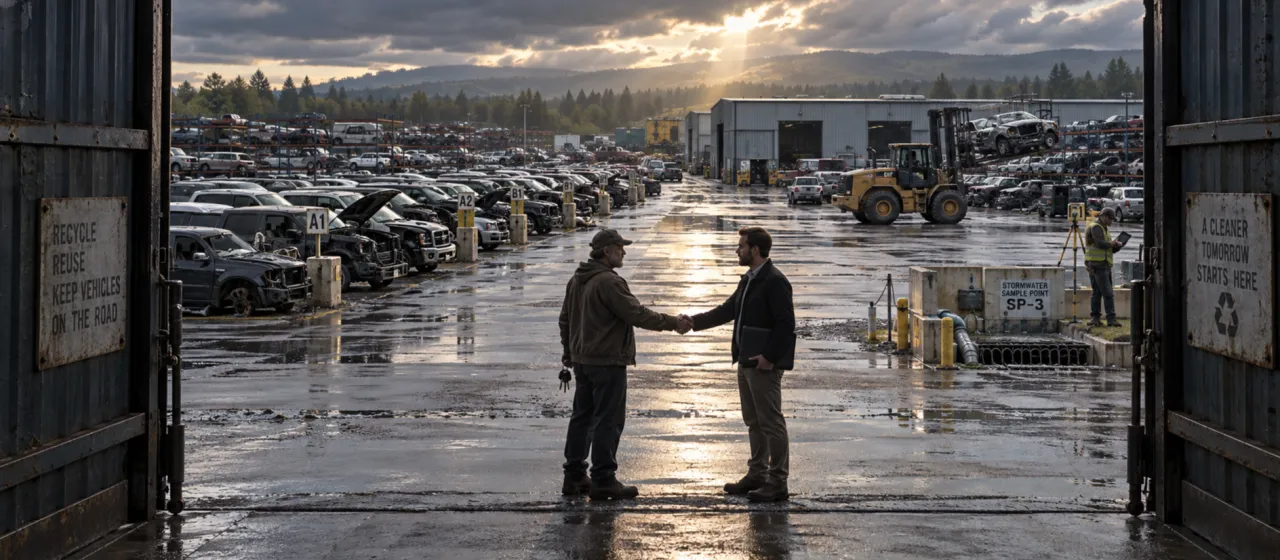
To the EPA, a salvage yard is not a store - it is an industrial site handling oil, fuel, coolant, batteries, and refrigerant. That means salvage yard EPA compliance is not one permit but a stack of federal programs, each triggered by something you do, and most of them run again at the state level, often stricter. This guide maps each program to what a small yard actually has to do, with links to the official EPA sources.
It is a starting point, not legal or environmental advice - confirm the current rules with the EPA and your state environmental agency for your exact site. This sits inside the broader federal regulations for auto recyclers; for the state license underneath it, see the state-by-state licensing guide, and for the whole startup path, how to start a used auto parts business.
What salvage yard EPA compliance actually covers
Salvage yard EPA compliance breaks into six areas that do most of the work. Each has its own trigger and its own paperwork:
- Industrial stormwater - a permit and a written SWPPP (auto salvage is Sector M)
- Used oil - storage, labeling, and recycling under 40 CFR Part 279
- Hazardous waste - generator rules for antifreeze, solvents, and some fluids
- SPCC - a spill-prevention plan once oil storage passes the threshold
- Refrigerant - recovery and the ban on venting
- Other materials - batteries, tires, and mercury switches
Run through them in order and you have most of the picture - then check the smaller programs at the end that catch yards off guard.
Stormwater: Sector M and your SWPPP
Rain that falls on a yard picks up oil sheen, metal, and sediment and carries it off-site, so the EPA regulates it. Auto salvage is classified under the industrial stormwater program as “Sector M,” which means that if industrial materials or activities are exposed to precipitation you generally need coverage under a stormwater permit (the Multi-Sector General Permit where EPA is the permitting authority) and a written Stormwater Pollution Prevention Plan (SWPPP) completed before you file the notice of intent.
There is one important exception: a facility that keeps all industrial materials and activities under a storm-resistant shelter - out of contact with rain, snow, snowmelt, and runoff - can qualify for the conditional “no exposure” exclusion and file a No Exposure Certification (renewed about every five years) instead of a permit. For a typical open yard - donor cars, engines, tanks, and batteries sitting outside - that is hard to achieve, and exposing any part of the operation loses the exclusion for the whole site. But it is a real option worth knowing.
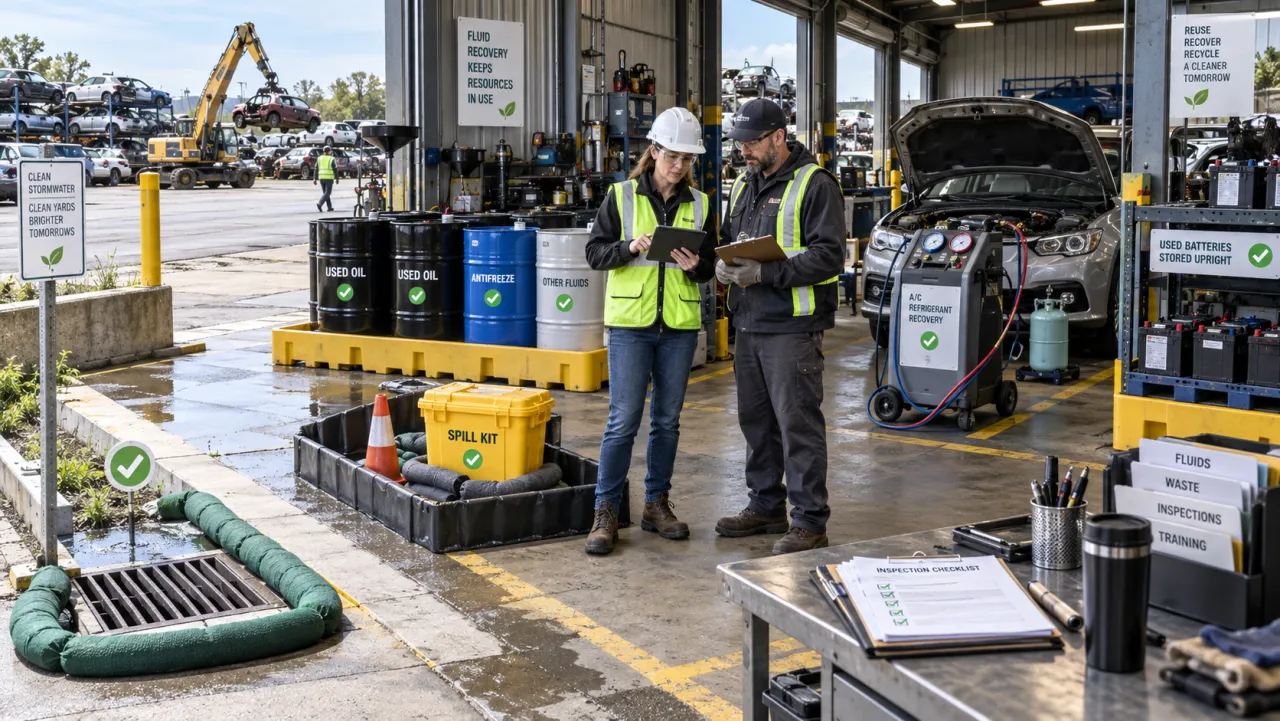
The SWPPP is the operational heart of it: it documents where fluids are handled, how you contain drips and spills, how often you inspect, and the good-housekeeping steps that keep contaminated runoff from leaving the site. Many states run their own delegated stormwater program, so check whether you file with the EPA or a state agency - and expect the state version to be at least as strict.
Used oil: 40 CFR Part 279
Every donor vehicle gives up engine oil, and used oil is regulated under 40 CFR Part 279. The core rules are simple to follow and easy to fail an inspection on:
- Store used oil in sound containers and aboveground tanks, in good condition and not leaking.
- Label every container and tank clearly with the words “Used Oil” - not “waste oil,” not the brand name.
- As a yard policy, do not mix used oil with solvents, brake cleaner, gasoline, antifreeze, or hazardous waste. The regulatory status of a mixture depends on the waste involved, but used oil found to contain over 1,000 ppm total halogens is presumed to have been mixed with a listed halogenated hazardous waste - a presumption you can rebut with documentation, but far easier to just never create.
- Send it off with a used-oil collector, or self-haul up to 55 gallons at a time in your own vehicle to a registered collection center (40 CFR 279.24). Federally, a used-oil generator does not need an EPA ID number, a manifest, or Part 279 recordkeeping just to generate it - those attach to transporters and processors - though your state may add rules, so keep your disposal receipts anyway.
Hazardous waste and the other fluids
Beyond oil, a yard generates antifreeze, brake and power-steering fluid, solvents, and parts cleaner, and some of these can be hazardous waste - but none is automatically hazardous just because it came out of a car. You have to make a hazardous-waste determination for each stream: is it a listed waste, does it exhibit ignitability, corrosivity, reactivity, or toxicity, is it contaminated with metals or solvents, does an exclusion apply. Then how much regulation you face depends on your generator category, set by how many kilograms you generate per calendar month: a VSQG generates up to 100 kg, an SQG 100 to under 1,000 kg, and an LQG 1,000 kg or more (or more than 1 kg a month of an acute hazardous waste). The category drives your EPA ID, storage limits, and paperwork. When you ship hazardous waste off-site, use a transporter that has an EPA ID number and moves it under a manifest to a permitted treatment/storage/disposal facility - the transporter carries an EPA ID, not a RCRA permit; the permit belongs to the receiving facility. States frequently classify materials more strictly than this federal baseline. One handling note that saves money: a non-terne-plated oil filter that has been gravity hot-drained (and not mixed with listed waste) is excluded from hazardous-waste rules under 40 CFR 261.4(b)(13).
SPCC: the spill-prevention plan
Once you store oil in quantity, the Spill Prevention, Control, and Countermeasure (SPCC) rule can apply. It kicks in for a non-transportation facility with more than 1,320 US gallons of aggregate aboveground oil-storage capacity - the containers’ rated capacity, not how full they are, counting only containers of 55 gallons or more - or more than 42,000 gallons completely buried, where a spill could reasonably reach navigable waters. If it applies, you need a written SPCC plan; bulk-storage containers need sized secondary containment (dikes, berms, or double-walled tanks) able to hold the largest container plus rainfall, and other oil-handling areas need general containment sized to the spill you can expect there. A smaller facility with 10,000 gallons or less of aggregate aboveground capacity and no single container over 5,000 gallons may qualify as a “Tier I” facility and self-certify its own plan without a professional engineer - provided that, in the three years before it certifies the plan, it has had no single oil discharge over 1,000 gallons and no two discharges over 42 gallons each within any twelve months reaching navigable waters. Bulk oil, fuel, and used-oil tanks all count toward the threshold, so a growing yard can cross it without noticing.
Refrigerant: recover, never vent
Air-conditioning systems hold refrigerant, and intentionally venting it is prohibited under the Clean Air Act. Two different rules get confused here. Paid motor-vehicle A/C service (repair or charging for consideration) requires a Section 609-certified technician. But recovering refrigerant just to prepare a vehicle for scrapping is disposal, not service - the person doing it does not need a 609 certification, only EPA-approved recovery equipment, and the last business in the disposal chain must either recover the refrigerant or keep a signed statement confirming it was already recovered. Build recovery into your depollution flow and keep records of quantities and equipment. Once recovered, refrigerant does not have to go to a reclaimer: you can recycle it on-site for reuse in your own vehicles, or send it for reclamation - an EPA-certified reclaimer is required specifically when you sell used refrigerant to a new owner for reuse.
Batteries, tires, and mercury switches
Lead-acid and lithium batteries, waste tires, and mercury switches each carry their own handling, storage, and disposal rules, many of them state-administered. Batteries must be stored to prevent leaks and shorts and recycled through proper channels; tires often require a state waste-tire registration and manifested disposal; and mercury switches should be removed and managed under the applicable recovery program. Track each stream so you can show where it went.
The programs that catch yards off guard
The six big areas are not the whole list. Several more can apply depending on what your yard does, and they are the ones inspectors find missing:
- Wastewater and floor drains. Water from washing parts or vehicles, plus coolant and degreasers, is not stormwater and is not covered by a Sector M permit. Sending it to a storm drain, the ground, or a septic system can be a separate violation; discharging to a sanitary sewer usually means pretreatment and local sewer limits. Know where every drain goes.
- Underground storage tanks (UST). Buried gasoline or diesel tanks bring in 40 CFR Part 280 and state rules - release detection, corrosion protection, spill/overfill controls, financial responsibility, and closure. SPCC does not replace UST compliance.
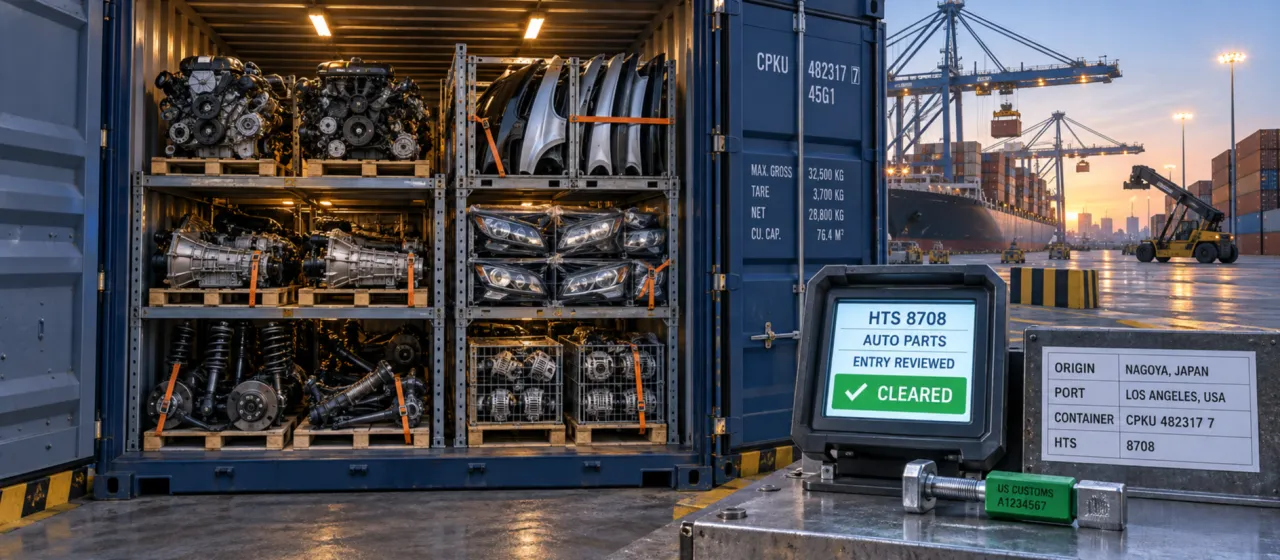
- Clean Air Act anti-tampering. Selling or installing used engines, ECUs, or catalytic converters can run into the ban on tampering and defeat devices - a used catalytic converter can be resold for reinstallation only if it meets EPA’s aftermarket conditions. We cover this in federal regulations for auto recyclers.
- Air permits. Crushing, torch cutting, painting, and solvent cleaning can trigger state or local air permits or emission standards.
- EPCRA and spill reporting. Storing enough fuel, oil, or lead-acid batteries can trigger safety-data-sheet inventory and Tier II reporting, and an oil discharge that reaches water may require an immediate call to the National Response Center - the SPCC plan is not the only spill duty.
The long-tail liability: CERCLA
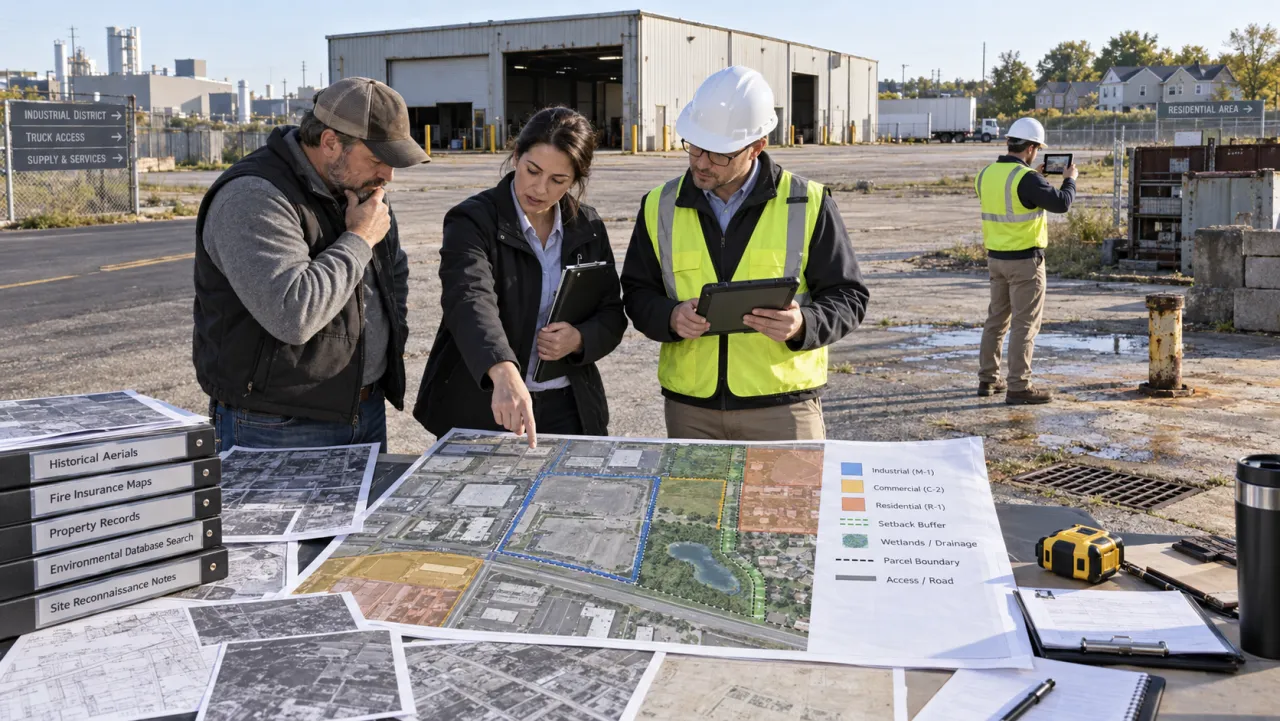
The reason all of this is worth doing well is not just fines. Mishandled batteries, solvents, mercury, and fluids contaminated in service are Superfund (CERCLA) hazardous substances and can create long-term cleanup liability that follows both the operator and the property owner for years. Clean petroleum and fuel sit under CERCLA’s statutory petroleum exclusion - but that is not a free pass: used oil that has picked up hazardous constituents in the engine can fall outside it, and the Clean Water Act, RCRA, and state cleanup laws still reach a spill CERCLA does not. It is also why a Phase I Environmental Site Assessment before you buy or lease a yard is worth the cost - it is a necessary part of the CERCLA landowner protections, but only if you also do it before acquiring, meet the “continuing obligations” afterward, and have no disqualifying tie to whoever caused the contamination. We walk the whole site decision through in salvage yard zoning and Phase I ESA. Clean handling from day one is the cheapest insurance against a six-figure cleanup order later.
How salvage yard EPA compliance stacks with your state
Almost every program here has a state twin. Many states are delegated to run their own stormwater, hazardous-waste, and waste-tire programs, and those versions are frequently stricter than the federal floor - shorter timelines, lower thresholds, extra registrations. The federal rules are the minimum, not the ceiling. When you contact your state environmental agency, describe your address, volume, fluids, and storage, and ask which permits and registrations you need before you take in the first car.
Where reParta fits
reParta does not file your SWPPP or run your depollution - environmental compliance is the yard’s job, and no software replaces it. What reParta does is take the inventory and sales side off your plate so you can give the yard the attention it needs: every part tied to its donor VIN and title, stock synced across eBay and Facebook for double-sale protection, and per-donor profit so you know which cars actually paid off. The cleaner your donor records, the tighter your own recordkeeping stays across the whole operation.
This guide is general information, not legal or environmental advice. Environmental requirements depend on your site and operation and can change, and states add their own rules on top. Confirm the current rules with the EPA and your state environmental agency - and a licensed environmental professional where the stakes call for it - before you rely on any of this.
Running the yard, not drowning in the back office? reParta keeps every part tied to its donor VIN and title, syncs stock across eBay and Facebook for double-sale protection, and shows per-donor profit so you buy on real numbers. Start a free 14-day trial - no card required - or see pricing.
Frequently asked questions
What EPA rules apply to a salvage yard?
A salvage yard is an industrial site to the EPA, so several programs can apply once you dismantle vehicles: industrial stormwater (auto salvage is 'Sector M', requiring a permit and a written SWPPP), used oil under 40 CFR Part 279, hazardous-waste generator rules for antifreeze/solvents/other fluids, the SPCC spill-prevention rule for larger oil storage, and the Clean Air Act rules on refrigerant. Most states run their own delegated versions that can be stricter, so confirm with your state environmental agency.
Do salvage yards need a stormwater permit?
Usually yes, if industrial materials or activities are exposed to the weather. Auto salvage falls under EPA's industrial stormwater program as 'Sector M,' which requires coverage under a stormwater permit and a written Stormwater Pollution Prevention Plan (SWPPP) before you file the notice of intent - or your state's equivalent. The exception is the conditional 'no exposure' exclusion: a yard that keeps all parts, fluids, and activity under a storm-resistant shelter can file a No Exposure Certification instead, though that is hard for a typical open yard to achieve.
How do salvage yards have to handle used oil?
Used oil is regulated under 40 CFR Part 279. Store it in sound containers and aboveground tanks marked clearly with the words 'Used Oil,' and as a yard policy keep it out of solvents and hazardous waste - used oil over 1,000 ppm total halogens is presumed (rebuttably) to have been mixed with a listed hazardous waste. Send it off with a used-oil collector, or self-haul up to 55 gallons yourself to a registered collection center. Federally a generator doesn't need an EPA ID, a manifest, or Part 279 recordkeeping, but keep your receipts and check your state, which may add rules.
When does the SPCC rule apply to a salvage yard?
The Spill Prevention, Control, and Countermeasure (SPCC) rule can apply once your facility has more than 1,320 US gallons of aggregate aboveground oil-storage capacity - counting only containers of 55 gallons or more - or more than 42,000 gallons completely buried, and there is a reasonable expectation that a spill could reach navigable waters. If it applies, you need a written SPCC plan and sized secondary containment.
Can a salvage yard vent refrigerant from A/C systems?
No. Intentionally venting refrigerant is prohibited under the Clean Air Act, and you must recover it with EPA-approved equipment before scrapping a vehicle. Paid A/C service requires a Section 609-certified technician, but recovering refrigerant only to prepare a vehicle for disposal does not - only the equipment must be approved, and the last business in the disposal chain must recover it or keep a signed statement that it was already recovered. Recovered refrigerant can be recycled on-site for your own vehicles or reclaimed; a certified reclaimer is required when you sell used refrigerant to a new owner.
What environmental liability does a salvage yard carry long-term?
Beyond permits and fines, improper handling of fluids, batteries, and other materials can create long-term cleanup liability under the federal Superfund law (CERCLA) - which is why buttoned-up environmental practices, and a Phase I Environmental Site Assessment before you buy a property, matter. Contamination on a site can follow the operator and the owner for years.