What is auto dismantling? A modern operator's overview
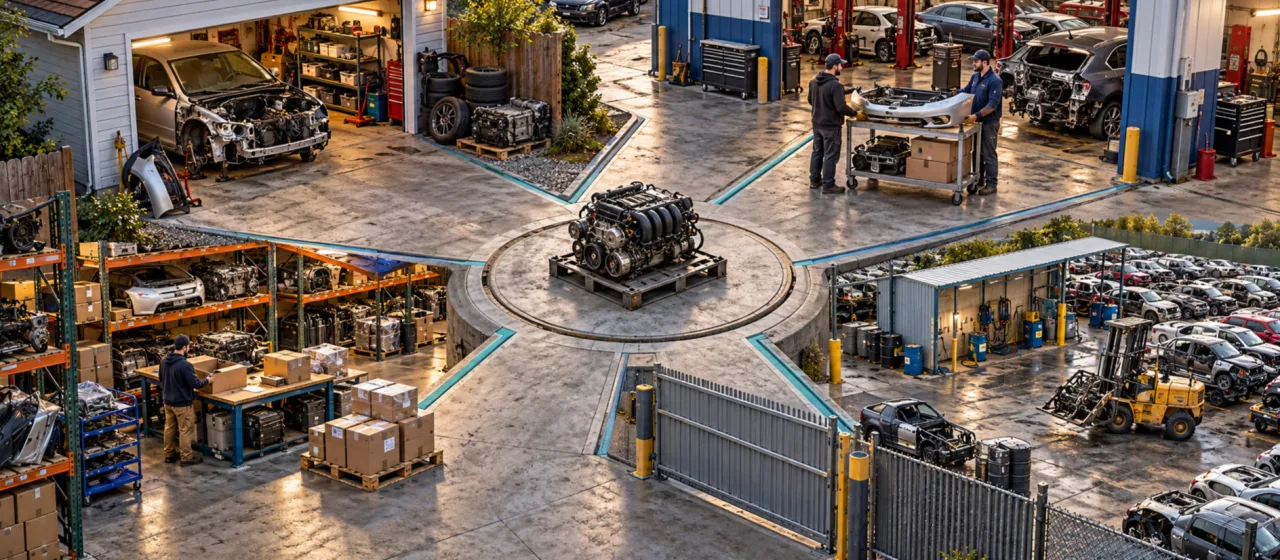
Auto dismantling is the business of taking in end-of-life, wrecked, or salvage vehicles, safely removing the reusable parts and recoverable materials, and returning the rest of the car to the metals stream. It sits at the front of the automotive reuse and recycling chain, and the modern version runs much closer to an e-commerce business than the junkyard stereotype. The simplest way to think about it: dismantling is reuse-first recycling. The goal is to capture a part’s remaining working value before the car is reduced to its material value.
Dismantler vs. scrapyard vs. junkyard
An auto dismantler (the business is also called an auto recycler) is the operator that buys whole vehicles and takes them apart for resale, so to auto dismantle a car is to strip its reusable parts before the shell goes to metal recovery. The biggest auto dismantlers run it like an e-commerce operation. These labels overlap in law and in everyday use, though, so treat them as points on a spectrum rather than separate industries:
- Scrap processor or shredder - mostly about the metal. A scrap processor sorts and aggregates material; a shredder mechanically reduces the stripped hull and separates ferrous, nonferrous, and residual material, sold by weight.
- Self-service or U-pull yard - vehicles are set out in a lot and customers bring their own tools to pull parts at lower prices. Lower labor cost, lower price per part.
- Full-service dismantler or auto recycler - staff pull, clean, test, grade, warranty, catalog, and shelve parts, so the buyer gets a ready component.
Many operators run a hybrid: pull the high-value, high-demand parts in-house first, then push the rest of the car to the self-serve lot before it goes to scrap. Value rises as you move from metal toward a tested, well-listed part, because the buyer is paying for a working component, not raw material. That is the entire economic reason the industry exists.
Seven used-parts business models, from resale to auto dismantling
One reason people disagree on what is auto dismantling is that it is not a single business - it is a family of related models, and the one you pick decides your licensing, capital, and margins. “Selling used auto parts” can mean anything from flipping a few parts out of a spare bedroom to running a licensed industrial yard, and the legal footprint is completely different at each level. The most dangerous assumption is that forming an LLC, getting an EIN and a sales-tax permit, or buying an auction membership lets you start buying wrecked cars and taking them apart. In most states those are separate things: a dismantler or recycler license, local zoning approval, and environmental permits are their own prerequisites, and which ones apply turns on what you actually do, not on what you call the business.
Only some of these are auto dismantling in the strict sense - taking apart whole vehicles (the licensed recycler, the self-service yard, and a salvage rebuilder that parts out its own donors). The rest are adjacent used-parts businesses that never process a whole car. Here they are, roughly from lowest to highest regulatory load:
- Garage reseller - already-pulled parts. You buy parts that were already removed and documented, inspect and test them, and resell them. You do not buy whole junk or salvage vehicles, drain fluids, or take in customer cars. This is the most realistic start from home and the lowest-risk model, but it is not automatically license-free: many states still require a secondhand-dealer, scrap-dealer, or used-parts license once you deal in used parts as a business, and the safe harbor for buying already-removed parts is narrow (California, for example, only excludes parts taken from vehicles the DMV approved for dismantling). See whether you need a license to sell used auto parts.
- Online store - new or remanufactured parts. Lower environmental risk because you never handle a wreck, but you take on vendor authorization, warranty, counterfeit, product-liability, and import exposure instead. What to stock is its own question; start with the most profitable car parts to sell.
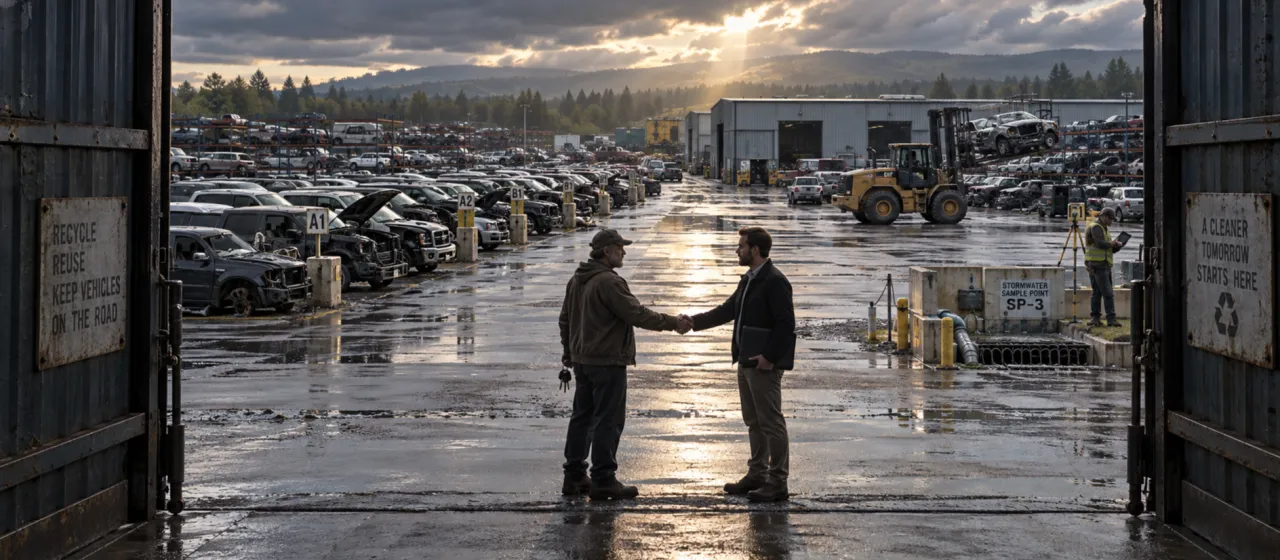
- Licensed dismantler or used-parts recycler. You buy donor vehicles, depollute them, dismantle, test, and sell the parts. This is an industrial operation, not just e-commerce: a state recycler or dismantler license, zoning or a conditional-use permit, title recordkeeping, and NMVTIS reporting - and, depending on the facility, its location, activities, stored materials, discharges, and whether it has employees, stormwater and waste permits, refrigerant handling, fire code, and OSHA workplace-safety rules can apply on top. This is the model most of this guide is about.
- Self-service or pick-and-pull yard. Customers pull their own parts off cars set out in the lot. Everything the licensed recycler needs, plus premises liability, visitor controls, vehicle stabilization, and a traffic plan, because the public is on your yard, which is where salvage yard insurance gets heavier.
- Salvage vehicle dealer or rebuilder. You sell whole salvage or rebuilt vehicles rather than parting them out. The licensing and the title-branding rules (salvage vs. nonrepairable vs. rebuilt) differ from a dismantler license, so a dismantler license does not let you retail rebuilt cars, and a dealer license does not let you run a dismantling yard.
- Repair shop that also sells parts. Pulling and selling parts alongside repair work can add repair-facility registration, garagekeepers coverage, and rules for handling customer vehicles, depending on your state.
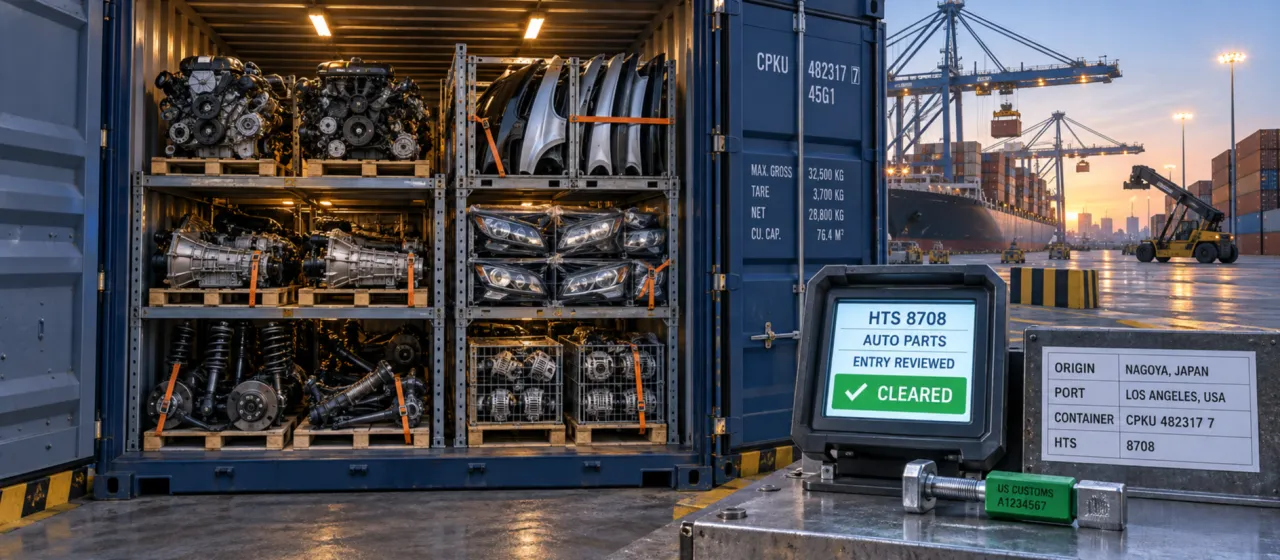
- Importer or exporter. Sourcing parts across the border adds customs, HTS classification, country-of-origin rules, duties, sanctions screening, product compliance, and international logistics on top of whatever domestic model you run. See importing auto parts.
So what is auto dismantling in practice? It depends which of these seven models you run, because each turns salvage into revenue a different way. This matrix is the quick version:
| Model | What you buy | What you do | Typical site | Main license & risk load |
|---|---|---|---|---|
| Garage reseller | Already-removed parts, with invoice and traceability | Inspect, test, photo, store, sell | Home or small unit, if zoning/HOA allow | Entity, EIN, sales-tax permit, local business license; possible used-parts/secondhand license; product liability |
| Online new/reman | New or remanufactured stock | Retail and wholesale resale | Office or warehouse | Vendor authorization, warranty, counterfeit and product-liability exposure, import rules |
| Licensed recycler | Whole junk/salvage/nonrepairable vehicles | Depollute, dismantle, catalog, sell | Industrial yard | State recycler/dismantler license, zoning/CUP, NMVTIS, stormwater/waste, refrigerant, fire, OSHA |
| Pick-and-pull | Donor vehicles | Customers pull their own parts | Large industrial yard | All of the recycler’s, plus premises liability, visitor controls, traffic plan |
| Salvage dealer/rebuilder | Salvage or rebuilt vehicles | Repair and sell whole cars | Licensed facility | Dealer/rebuilder license, title branding, inspections, odometer/disclosure, consumer law |
| Repair + parts | Customer cars and donors | Repair, plus pull and sell parts | Licensed repair facility | Repair-facility registration, garagekeepers, customer-vehicle rules (state-specific) |
| Importer | Parts and assemblies from abroad | Import and US distribution | Warehouse | Importer of record, HTS/origin/duty, customs bond, admissibility, IP/counterfeit, product liability |
A few specifics trip people up, so pin them down. California defines a dismantler broadly - dealing in used motor vehicle parts as a business can itself require the license - and its application pulls in a CDTFA seller’s permit, a state stormwater permit, a CalEPA ID, zoning verification, fingerprints, and site photos. Texas requires a Used Automotive Parts Recycler license, administered by the Texas Department of Licensing and Regulation (not the DMV), to run a used-parts recycling business, along with proof of at least $250,000 (combined single limit) of general liability or garage liability coverage. NMVTIS reporting applies once a business that meets the federal junk or salvage yard definition handles five or more junk or salvage automobiles in a year, filed at least monthly, either directly or through a participating state system. And on the environmental side, intentionally venting regulated refrigerant is illegal under the Clean Air Act’s venting prohibition; MVAC service is governed by Section 609 (technician and equipment certification), and at end of life the Section 608 safe-disposal rules put the responsibility on the final party in the disposal chain to confirm the refrigerant was recovered.
That is why what is auto dismantling has no single answer - a garage reseller and a licensed recycler are both “dismantling” in the loose sense, at wildly different scale, cost, and risk. Pick the model before you spend a dollar, because it sets everything downstream; if you are mapping out a launch, the used auto parts business start-up guide walks the whole decision. reParta is built for the models that catalog and sell used parts across channels - the licensed recycler most of all, and the garage reseller for everything except bidding on whole cars - but it is operations software, not a licensing or compliance service. None of this is legal advice: licensing turns on your state and your actual activity, so confirm the specifics with your state motor-vehicle authority and a local attorney.
How a modern auto dismantling operation works
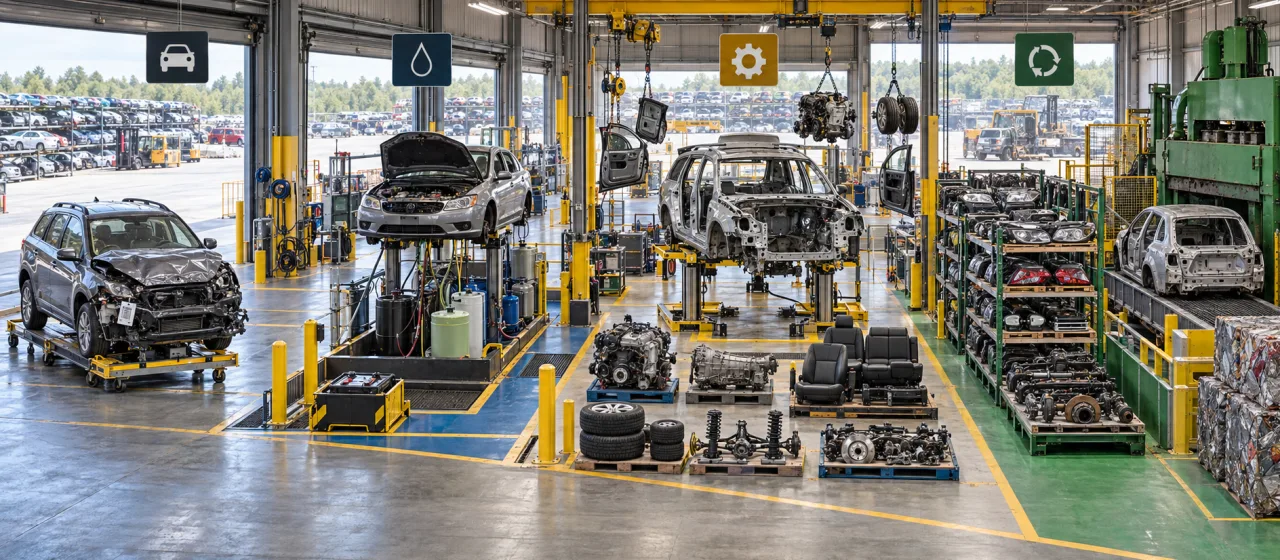
A donor vehicle moves through a chain of custody, and the order matters. The dangerous mistake is jumping straight to pulling parts before the car has been made safe.
- Intake and title. The vehicle is received and its ownership and title status is established and recorded before anything is touched. This is also what feeds your reporting duties: junk yards, salvage yards, and auto recyclers generally must report qualifying salvage vehicles to the federal NMVTIS system, usually monthly, once they handle five or more such vehicles a year.
- Depollution and hazard isolation. Before teardown, drain and capture the fluids (oil, coolant, brake fluid, fuel), recover the A/C refrigerant with certified equipment (venting it is illegal under the EPA’s Clean Air Act rules), disconnect and remove the battery, safely isolate any high-voltage battery on a hybrid or EV, and account for undeployed airbags and other pyrotechnic devices. This protects your crew and the environment, and it is required, not optional.
- Dismantle and test. Now pull parts in a planned order, cleaning and functionally testing and grading them so buyers know exactly what they are getting. Pull first where the reuse value clearly beats scrap. For which parts those tend to be, see the most profitable car parts to sell.
- Catalog and inventory. Record each part with fitment, condition grade, photos, and a shelf location so it is findable and sellable. Because a listing is only as good as its fitment, structured fitment beats an AI’s guess at what a part fits - it keeps returns down and protects your seller metrics. This is where a real system replaces the notebook; see how to inventory a salvage yard.
- List and sell. Offer parts across your channels - counter, online marketplaces, B2B networks - priced against the real used market.
- Fulfill. Pick, pack, and ship the sold part, and handle returns and warranty.
- Close the donor. Once the worthwhile parts are out, send cores to the right buyers and the stripped shell to a scrap processor for material recovery, then record the final disposition. The donor is not done until the hull is gone and the books are closed.
A note on 2026: as of September 24, 2026, eBay prohibits listing airbags and airbag covers - new, used, deployed, rebuilt, or recalled - for all US sellers (an eBay marketplace rule, not a change to the parts themselves; separate federal and state safety laws also apply). Used catalytic converters are sharply restricted for reuse under federal emissions rules: one pulled from a salvage car generally cannot be sold as a replacement unit just because it looks functional, since applicable testing, labeling, documentation, installation, and state requirements have to be met, so many dismantlers move recovered converters only into authorized recycling channels. Factor both in when you plan a teardown.
What separates the dismantlers who profit
Three habits, consistently:
- Buying with numbers, not gut feel, so the margin is there from the start.
- Accurate fitment, so parts get found by the right buyers and come back less often.
- Multichannel selling without double-selling - listing across channels, but removing a part everywhere the moment it sells on one.
The honest caveat: profit is not automatic on every part. Labor to pull, clean, and test, plus storage, listing effort, and the risk a part never sells, can leave a slow mover worth less than scrap. The skill is choosing where reuse value clearly beats scrap-by-weight and sending the rest to material recovery - and then seeing the result per car, which is what per-donor profit and loss is for. That third habit, no double-selling, is where a lot of growing yards lose money and reputation.
The tools behind a modern operation
Running this on a spreadsheet stops working fast. The modern auto recycler software stack ties buying, inventory, fitment, and selling into one flow, and choosing the right dismantler software comes down to your size, volume, and channels.
Here is how reParta covers that chain. Pre-bid ROI takes a VIN and your max bid and projects the parts list off that donor, a projected net estimate, and a risk score, priced against real used-market prices, so you buy with numbers instead of gut feel. It is a decision estimate, not a guarantee, and it does not scrape live auctions. reParta’s U.S. vehicle dataset decodes the donor from its VIN - year, make, model, and the likely trim and powertrain - so you know what the car is; option- dependent parts should still be checked against the build label or the physical vehicle. reParta then matches each part to the vehicles it fits using its own structured fitment data, and its built-in interchange and OEM part-number cross-reference flags when a part off one donor also fits other vehicles, though drivetrain, engine code, and production dates still call for a check on close cases. If the vocabulary is new, start with the recycler’s guide to fitment and interchange. Finally, multi-channel sync keeps your listings aligned: when a part sells on one channel it is removed from the others, which cuts the risk of a double sale. eBay runs on your own account through eBay’s native API, so the delist fires automatically when the sale is recorded; Facebook Marketplace has no public listing API, so it is assisted through the reParta browser extension - guided listing and delisting rather than fully automated. It all lives inside one auto parts inventory management software.
Who auto dismantling is (and isn’t) for
If you run a pure scrap operation (crush and weigh) or a self-service U-pull where customers do the pulling, this retail-style, e-commerce workflow is more than you need. It is built for the dismantler who treats parts as an online business: buy with numbers, make the car safe, catalog by fitment and interchange, and sell across channels without double-selling.
Auto dismantling rewards the operators who treat it like the e-commerce business it has become. Start a free 14-day trial - no card required - or see plans and pricing: Garage at $49/mo, Yard at $299/mo, and Yard Pro at $599/mo.
Frequently asked questions
What is auto dismantling?
Auto dismantling is the business of taking in end-of-life, wrecked, or salvage vehicles, safely removing the reusable parts and recoverable materials, and returning the rest of the car to the metals stream. It is reuse-first recycling: the goal is to capture a part's remaining working value before the vehicle is reduced to its material value. The modern version runs closer to an e-commerce business than the junkyard stereotype, with parts pulled, tested, graded, cataloged by fitment, and sold across channels.
What is an auto dismantler?
An auto dismantler is the business (and, loosely, the person) that does auto dismantling: it buys whole junk or salvage vehicles, depollutes and takes them apart, and sells the used parts, sending the shell to metal recovery. The term is used interchangeably with auto recycler. Licensed auto dismantlers operate as an industrial business, distinct from a scrapyard that mainly handles metal or a self-service yard where customers pull their own parts.
How is a dismantler different from a scrapyard or junkyard?
The terms overlap in law and everyday use, but on a spectrum: a scrapyard or shredder is mostly about the metal, where cars are reduced and sold by weight; a self-service or U-pull yard sets cars out for customers to pull their own parts at low prices; a full-service dismantler pulls, tests, grades, catalogs, and sells parts as ready components. Many operators run a hybrid. A clean, tested, well-listed part sells for far more as a replacement component than the same metal by the pound.
What does the auto dismantling process look like?
Intake and title, then depollution and hazard isolation (drain and capture fluids, recover A/C refrigerant with certified equipment, disconnect the battery and isolate any high-voltage battery, account for undeployed airbags), then dismantle and test, catalog with fitment, list and sell, fulfill, and finally close the donor by sending cores and the stripped shell to material recovery. Depollution comes before teardown for safety and environmental reasons, not after.
What separates the dismantlers who actually profit?
Buying with numbers instead of gut feel, accurate fitment so parts reach the right buyers and come back less, and multichannel selling without double-selling: listing across channels but removing a part everywhere the moment it sells on one. Profit is not automatic on every part, so the discipline is choosing where reuse value clearly beats scrap-by-weight and handling the rest as material.
Do I need a license to dismantle cars and sell parts from my garage?
It depends on your state and on what you actually do. Reselling a few parts you already own is treated differently from operating as a business that buys vehicles to part out. Many states require a dismantler, recycler, secondhand-dealer, or used-parts license once you deal in used parts commercially, plus local zoning and environmental permits, and the license turns on your activity, not on what you name the business. The lowest-risk path is buying only already-removed parts from licensed suppliers and never taking in whole junk or salvage vehicles, but even that can require a license depending on the state (California, for example, only exempts parts taken from vehicles the DMV approved for dismantling). This is general information, not legal advice: reParta does not provide licensing or legal advice and does not obtain permits or file NMVTIS - it is business-operations software. Confirm with your state motor-vehicle authority and a local attorney.
What are the different used-auto-parts business models?
Selling used auto parts spans about seven license-tiered models: a garage reseller of already-pulled parts, an online store of new or remanufactured parts, a licensed dismantler or recycler that buys and parts out donor vehicles, a self-service pick-and-pull yard, a salvage vehicle dealer or rebuilder, a repair shop that also sells parts, and an importer or exporter. Each carries a different capital requirement, license load, and margin profile, and choosing the model is the first real decision because it sets your compliance footprint. reParta fits the models that catalog and sell used parts across channels - the licensed recycler most of all, and the garage reseller for everything except bidding on whole cars.