How to cut wrong-fitment returns on used auto parts
A return is the most expensive kind of sale. You pay the shipping both ways, you lose the listing time, you take the account-health hit, and you still have the part. In used auto parts, fitment mistakes are one of the most common - and most controllable - reasons a part comes back. eBay even makes “doesn’t fit my vehicle” a named return reason, so it is a recognized, structural driver. The good news: unlike a part that genuinely fails, a fitment return is usually preventable before the item ships. Here is how to drive it down.
Why used parts get returned
Not every return is a fitment return, and it is worth being honest about that: returns come from hidden damage, incomplete descriptions, buyer’s remorse, and outright abuse too. But fitment is the category you can most directly engineer out, because most fitment returns trace back to a short list of repeatable errors rather than bad luck. Name the cause and you can fix the process behind it.
The causes of a wrong-fitment return
Sort every return you get into one of these buckets, because each has a different fix:
- Seller misidentification. Wrong part pulled, wrong side (left/right), or the wrong number tagged to the listing. Fix: read the casting, OEM, and interchange numbers off the actual part and verify the side before it leaves the shelf.
- Fitment mapping error. A bad application or qualifier, an ignored supersession, or a missed “with/without” option (for example, with tow package). Fix: keep a verified interchange and qualifier list, and resolve OEM numbers and supersessions before you list.
- Buyer vehicle or input error. The buyer gave the wrong VIN, trim, or engine and picked the wrong part. Fix: confirm the exact year, make, model, trim, and engine, and state the qualifiers plainly so the buyer catches the mismatch.
- Conditional install. The number matches but the part needs coding, calibration, a bracket swap, or a sensor transfer to work. Fix: flag the install condition in the listing (“requires programming to your VIN”).
- Condition or description. A hidden defect, a cracked tab, or an incomplete assembly missing a connector or bracket. Fix: honest defect photos and an explicit “includes / does not include” line.
- Catalog or platform error. The marketplace catalog maps the part to the wrong vehicles. Fix: cross-check the platform’s auto-compatibility against your own interchange and override bad data.
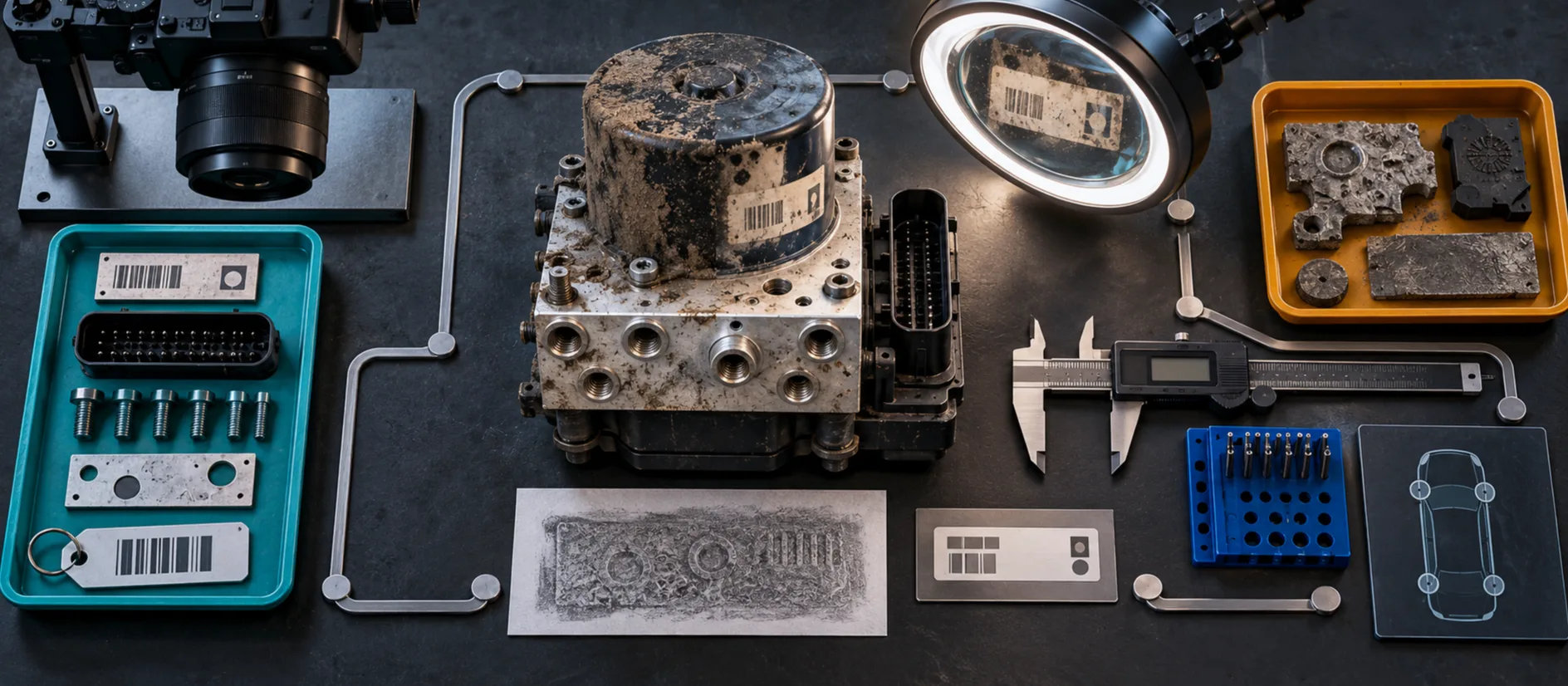
- Fraud, abuse, or unknown. A buyer swaps in their broken part, or “doesn’t fit” masks remorse. Fix: mark or serialize parts and document condition at ship so you can contest it.
The workflow to reduce wrong-fitment returns
Prevention is a system, not a habit that depends on who listed the part:
- Identify the donor precisely. Decode the VIN and record year, make, model, trim, engine, and build qualifiers. Errors here poison everything downstream.
- List by verified interchange - as a lead, not a guarantee. Use interchange to find candidate vehicles, then confirm the specifics. Present it to the buyer as “fits these applications, confirm your vehicle,” never “guaranteed to fit.”
- Flag the gotchas so a buyer self-selects out. State the side, options, and any needed calibration up front. A buyer who bails before buying is not a return. Help them confirm the part will fit first.
- Use complete item specifics and honest photos. Fill every fitment field the platform offers - on eBay, load them into the structured compatibility data, not the title - and photograph the real part number and any wear. Structured compatibility also lets eligible listings qualify for eBay Guaranteed Fit, which confirms the match to the buyer at purchase (though it excludes freight items like engines and bumpers, so it is a front-end check, not a safety net for your big parts).
- Close the loop. Record the reason for every return, find the root cause, then fix the master mapping and every affected listing, not just the one that came back. One mapping error usually sits on many listings, so fixing only the returned one leaves the rest to fail. This is the lever most yards never pull.
For the full vocabulary behind steps 2 and 4, see the recycler’s guide to fitment and interchange.
The electronics and module caveat
ECUs, transmission and body modules, and ADAS components (radar, cameras) often will not work on a matching part number alone. Many need programming or flashing to the buyer’s VIN, immobilizer or key pairing, or calibration after install, and some are anti-theft-locked to their original vehicle. A physically identical, correct-number module can still fail to run, which reads as a fitment failure to the buyer and drives a return even though you shipped the right part. The honest move is to disclose it: label these listings as requiring dealer or locksmith programming or calibration, and say so before the sale rather than absorbing the return after.
The real cost of a return
“Just refund it” is never free. A return can cost you the outbound and return shipping when the reason makes you responsible, the labor to receive and inspect and re-shelf or scrap, the lost resale value on a part that comes back used or incomplete, and a dent to your seller metrics that quietly lowers future visibility. On eBay, the variable final value fee is credited proportionally on an eligible refund, but the fixed per-order fee is not returned, and if eBay steps in and closes the case there is no fee credit at all. Returns and “item not as described” cases also feed your service metrics, where a high rate can add a surcharge on top. Add it up and preventing a return is almost always cheaper than processing one - which is the whole argument for spending the time on accurate fitment up front. Selling on eBay in general? The full eBay playbook puts this in context.
How reParta cuts fitment returns
reParta fills each listing’s fitment and item specifics from its own structured data instead of leaving them to be guessed. Its built-in OEM cross-reference and interchange (reParta’s own data) map a part to the vehicles it actually fits, while the U.S. vehicle-configuration dataset does a separate job: it identifies the donor by year, make, model, trim, and powertrain, so you know exactly what you pulled the part from. reParta applies both at catalog time, so listings go out with accurate, structured compatibility rather than an AI’s approximated fitment - and AI-guessed fitment is exactly what ships wrong-fit parts that come back and drag down your eBay service metrics. It is a structural fix to how the listing is built, designed to reduce the wrong-fitment returns that come from guessed compatibility, not a promise of any specific number. Every return that does happen flows into reParta’s per-donor profit and loss, so the losses become visible by listing and by donor instead of hiding in the aggregate. It all lives in one auto parts inventory management software.
You cannot eliminate returns. But most fitment returns are a data problem, and data problems are the kind you can actually fix. Start a free 14-day trial - no card required - or see plans and pricing.
Frequently asked questions
What causes wrong-fitment returns on used auto parts?
A handful of repeatable errors: the donor was identified loosely so the fitment was wrong from the start; the listing matched on year, make, and model but missed a trim or engine difference; a sub-variation inside an interchange group (a connector, sensor, or bracket) did not match; an electronic part matched on number but needed programming or calibration; or the buyer ordered for the wrong vehicle and the listing did not help them catch it. Most of these are visible before the part ships, which is what makes them controllable.
How do I reduce returns when selling used parts?
Identify the donor precisely, list by verified interchange as a lead you confirm rather than a guarantee, flag the gotchas so a mismatched buyer self-selects out, and fill complete item specifics with honest photos. Then close the loop: record the reason for every return, find the root cause, and fix the master mapping and every affected listing, not just the one that came back. One mapping error usually sits on many listings.
Does eBay Guaranteed Fit stop fitment returns?
It helps at the front end: with structured compatibility, the buyer selects their vehicle and sees a confirmation before buying, and if a confirmed-match part draws a 'doesn't fit my vehicle' return eBay can cover the return label. But it excludes international, oversized and freight items (like engines and bumpers), multi-package returns, and tires and wheels, so it does not protect the big items yards care most about. Treat it as one layer on top of accurate listings, not a replacement for them.
How much does a fitment return actually cost?
More than the refund. You can pay outbound and return shipping when the reason makes you responsible, plus handling and inspection labor, lost resale value on a part that comes back used or incomplete, and a hit to your seller metrics. On eBay the variable final value fee is credited proportionally on an eligible refund, but the fixed per-order fee is not, and if eBay steps in and closes the case there is no fee credit at all. Preventing the return is almost always cheaper than processing it.