Will this used part fit? Understanding fitment compatibility
A used part fits when it matches the vehicle on more than year, make, and model: trim, engine and drivetrain, body style, build date, and sometimes the options package all decide it. Two cars that look identical can take different parts because of a trim or engine difference, which is why “2015 Civic” is not enough to answer “will it fit.” But even a full configuration match is only the starting point, not the final answer. This is part of the recycler’s guide to fitment and interchange; here is how to actually be sure.
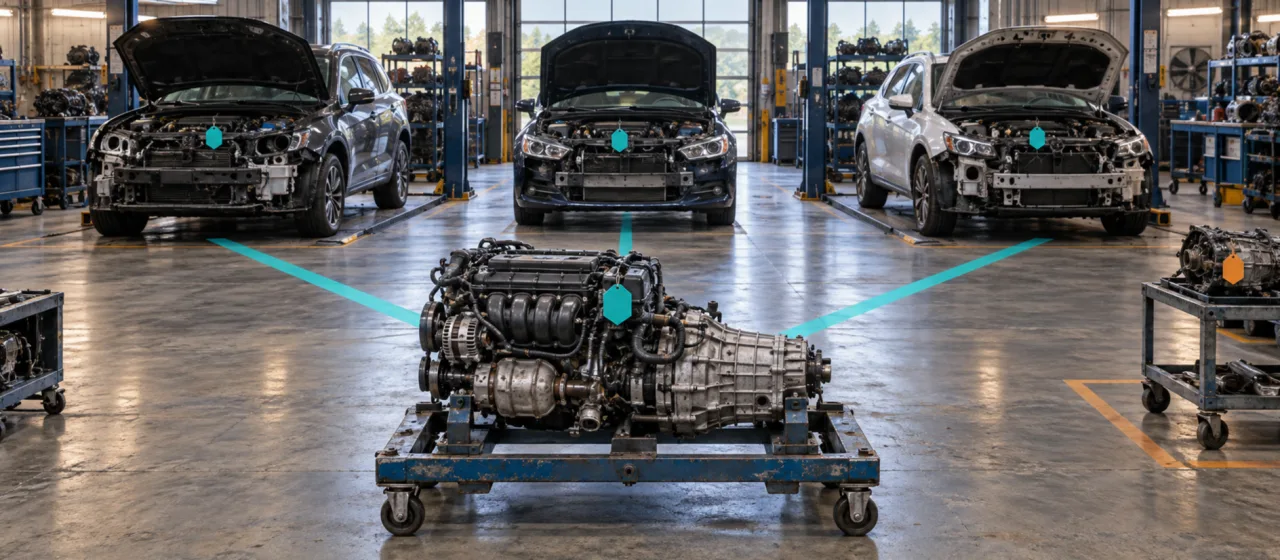
Fitment is more than year, make, and model
Buyers often assume that if the year, make, and model match, the part fits. Sometimes true, often not. The details that decide fitment include:
- Trim level - base versus higher trims often change parts, from mirrors to clusters.
- Engine and drivetrain - affects mounts, brackets, cooling, axles, and more.
- Body style - sedan versus coupe versus hatch changes panels, glass, and harnesses.
- Build date - mid-year production changes are common and split a single model year.
- Options - a feature package can change a connector, a sensor, or a whole module.
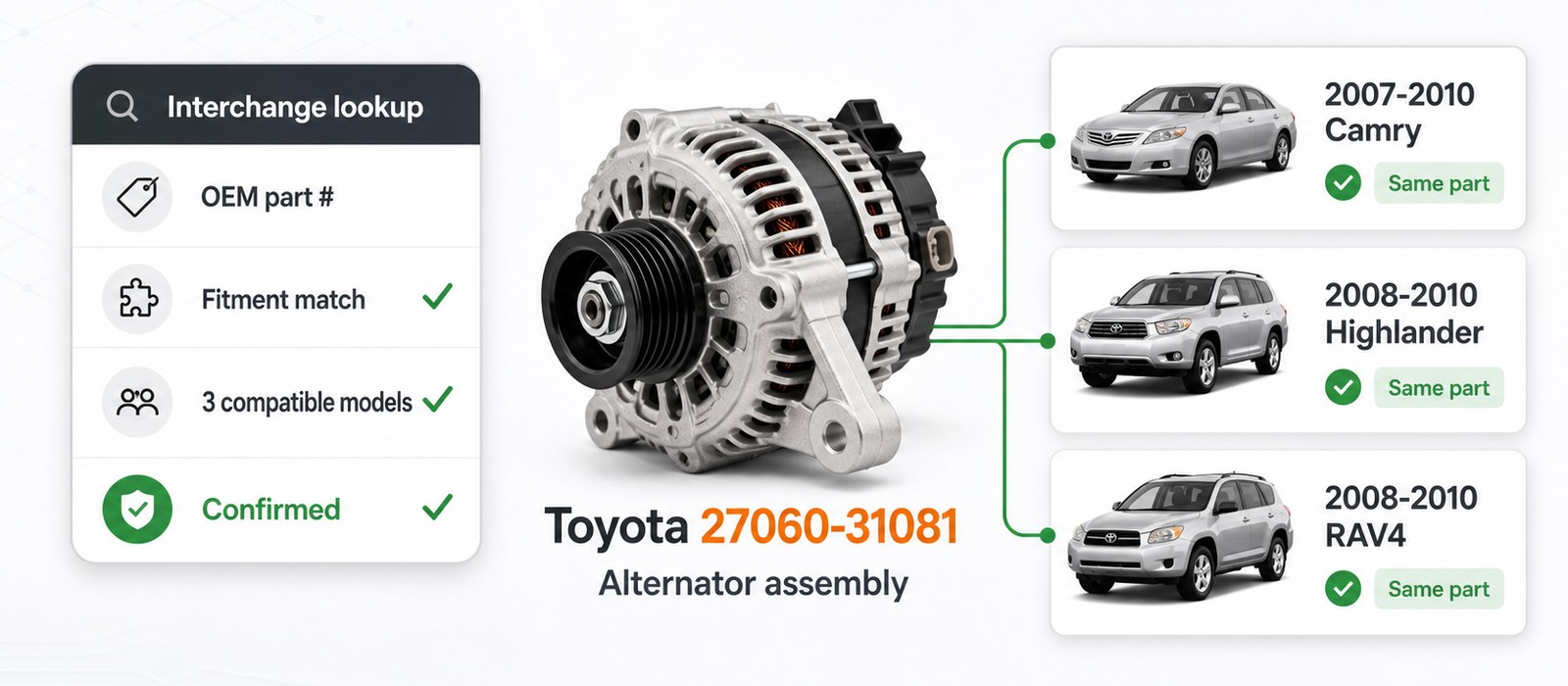
Manufacturers also reuse parts, so one part off your donor often fits several other vehicles; how auto parts interchange works covers why. The reach is real money, but each application still has to be confirmed, not assumed.
Donor configuration is context, not proof
Here is the trap that even careful sellers fall into: knowing the donor’s exact configuration tells you what the part came off, not that it fits every vehicle you want to list it against, and not even that the part in your hand matches the donor’s original spec. Identical-looking builds diverge by production and build-date splits, by option variance, and by prior repairs - a part replaced or mis-installed on the donor before you ever got it. And a VIN decode has limits of its own: NHTSA’s free VIN decoder is a strong identity tool, but it does not resolve every fitment-critical option and cannot certify the exact build of one physical car. Configuration matching narrows the field. It does not close it.
The evidence hierarchy
Treat “will it fit” as a question of evidence, from weakest to strongest. The higher you climb, the safer the answer:
- A visual or badge guess. The weakest - looks and a model name prove almost nothing.
- A year-make-model match. Better, still not enough on its own.
- A full configuration match - trim, engine, drivetrain, body, build date, options. This is context, the floor for a serious answer.
- The OEM service part number on the part. The number an OEM catalog actually sells and supersedes - not a casting or engineering number, which are foundry and design-stage marks that do not confirm the sold part. Which number is which is its own subject in the OEM part-number cross-reference guide.
- An interchange confirmation, with its qualifiers. A real interchange record maps the part to the other vehicles it fits and carries the notes that limit it - the layer a Hollander interchange number has represented for decades.
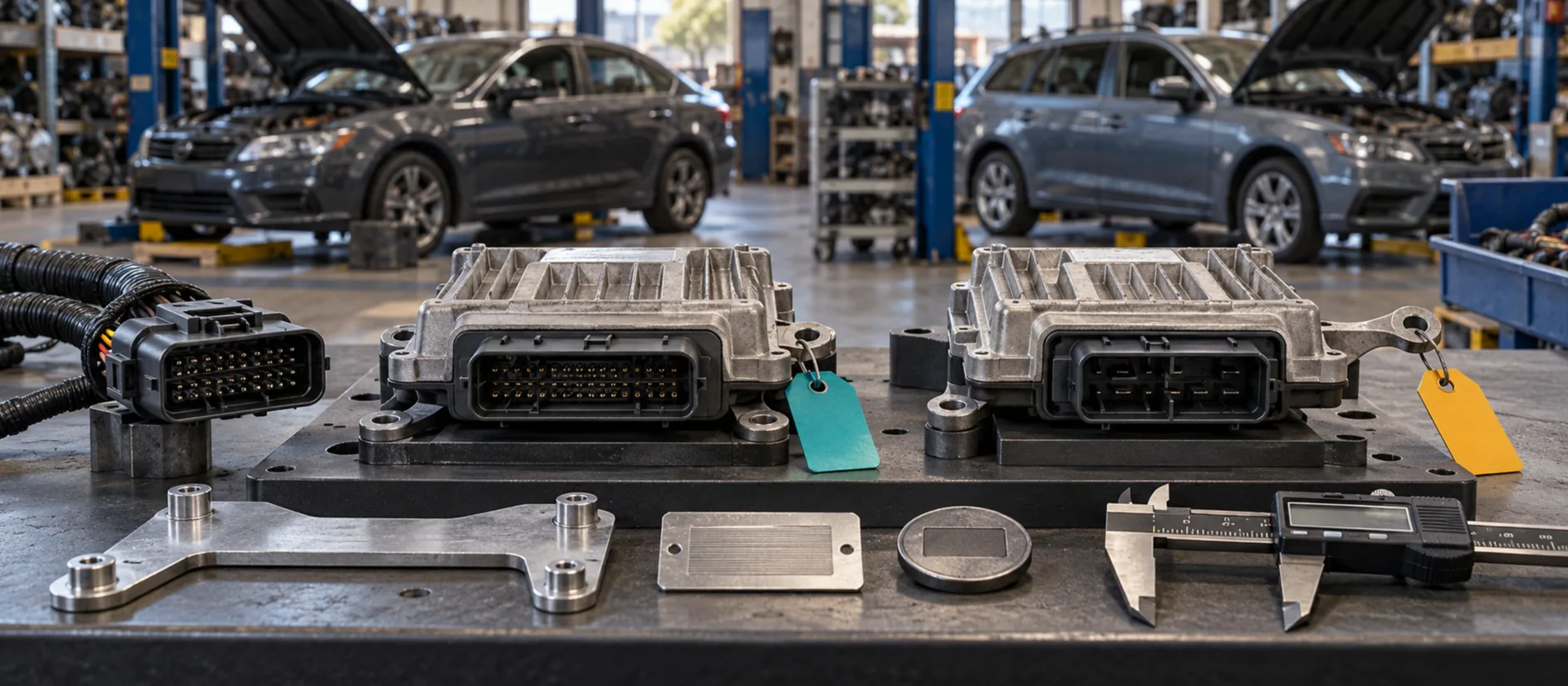
- A physical check. Mounts, connector and pin count, dimensions, sensors, included subcomponents. This is what catches the look-alike that everything else missed.
Distinguish donor identification from recipient proof: where the part came from is evidence about the part, not automatic proof it fits a buyer’s specific car. Build the application record on its own evidence.
Some categories need more than a look
A quick connector-and-bracket check is fine for a simple mechanical part. It is not enough - and can be unsafe or against the rules - for these:
- Electronic modules and ECUs - often need programming or coding to the receiving vehicle; a matching housing does not mean matching software.
- ADAS cameras, radars, and sensors - replacement typically requires calibration to the OEM procedure, or the system throws codes and does not work.
- Airbags and SRS - as of September 24, 2026, eBay prohibits airbags, inflators, and steering-wheel airbag covers for all sellers, and only approved sellers may list certain related control units and sensors. Confirm eligibility before you even think about fitment.
- Emissions parts - a used catalytic converter is only legal to sell for reuse if it is properly tested, recertified, and EPA-labeled; otherwise it is scrap.
For these, a config match is a starting point, not a green light. Give the buyer the OEM procedure or the escalation, not a false “it bolts on.”
How to be sure before you list
- Identify the donor precisely - year, make, model, trim, engine, body, build date.
- Confirm the part’s own identity - the OEM service number, not a casting or engineering number.
- Look up the interchange to find every confirmed compatible vehicle, and keep its qualifiers.
- Note the sub-variations - a connector, sensor, or bracket that could change the answer.
- Publish structured compatibility, not a free-text list. Marketplaces like eBay run a structured system (make, model, year, trim, engine) that powers the buyer’s vehicle filter, and fitment typed only into the description may never appear in that search. The seller is responsible for the accuracy even when a tool fills it in, so state only what you can stand behind. When it still goes wrong, the wrong-fitment returns playbook is the next step, and if you are not even sure what the part is yet, start with how to identify a used auto part.
How buyers should check before they buy
If you are buying, match on more than the badge. Confirm trim and engine, ask for the OEM service part number or the interchange (and which type of number it is), and check any connector or bracket against your own. A two-minute check beats a two-week return - and for a module, an ADAS sensor, an airbag, or an emissions part, ask about programming, calibration, or compliance before you commit.
How reParta answers “will it fit”
Fitment starts with knowing exactly what you pulled. reParta’s U.S. vehicle-configuration data identifies the donor down to year, make, model, trim, and powertrain, so a vague “2015 sedan” becomes the specific build the part actually came off. That is identification, not the fitment answer on its own. From there, reParta’s own built-in OEM cross-reference and part-level fitment maps that part to the vehicles it fits, then writes structured compatibility straight into your listing - the eBay year, make, model, trim, and engine fields buyers filter on. Where a sub-variation could flip the answer - an early versus late production change, a drivetrain or emissions split - reParta flags it so you confirm the detail instead of guessing, rather than pretending fitment is always black and white. You stay the final check; the software does the heavy lookup and keeps the edge cases visible. Automating that check well is its own buyer’s subject in the compatibility software guide. It runs the same whether you are one stall or a full yard, on Garage, Yard, and Yard Pro, inside one connected auto parts inventory management software.
One caution worth naming: a rising failure mode is fitment generated by AI or bulk tools that guess compatibility from a title or a partial number, with no OEM-application or interchange evidence behind it - confident, wrong, and the source of returns. Evidence-backed fitment, built from the donor, the OEM cross-reference, and a real interchange record, is the opposite of a guess.
Fitment is a trust problem solved with precision. The sellers who treat compatibility as a discipline tend to sell faster and return less, and the buyers who verify avoid the two-week return. Start a free 14-day trial - no card required - or see plans and pricing.
Frequently asked questions
How do I know if a used part will fit?
Match the vehicle on more than year, make, and model - trim, engine and drivetrain, body style, build date, and sometimes the options package decide fitment. But a configuration match is context, not proof: the strongest confirmation runs up through the OEM service number on the part, an interchange record with its qualifiers, and a physical check of the connector and bracket against the target. For modules, ADAS, airbags, and emissions parts, add coding, calibration, or compliance checks before you rely on it.
Why does the same part fit different cars?
Manufacturers reuse parts, so one part off a donor often fits several other vehicles, and interchange data maps those overlaps. Listing against every confirmed compatible configuration widens your buyers and, because the buyers who find it get a fitting part, cuts returns. The mechanics of how that overlap works are their own topic - the point here is to confirm each application, not assume it.
Is matching the full vehicle configuration enough to be sure a part fits?
Not on its own. Two vehicles with the same decoded year, make, model, trim, and engine can still take different parts because of a mid-year production split, an option difference, or a part swapped on the donor after the factory. A configuration match narrows the field; the OEM service number, an interchange confirmation, and a physical check are what actually prove it.
What should a buyer check before buying a used part?
Match on more than the badge: confirm trim and engine, ask for the OEM service part number (not just a casting or engineering number) or the interchange, and check any connector or bracket against your own. A two-minute check beats a two-week return - but for an electronic module, an ADAS sensor, an airbag, or an emissions part, the bar is higher, because those can need programming, calibration, or carry legal restrictions.
Does a text list of compatible cars work as well as structured fitment?
No. Marketplaces like eBay run a structured compatibility system (make, model, year, trim, engine) that powers the buyer's vehicle filter, so fitment typed only into the free-text description may never surface in a search for the right vehicle. Publish structured compatibility, keep the notes with it, and remember the seller is responsible for the accuracy, even when a tool fills it in.