What is a Hollander interchange number?
A Hollander interchange number is a code that groups auto parts by interchangeable application - parts that can physically fit and function on more than one vehicle, sometimes across different makes, models, or years. If two vehicles share the same interchange number for a given part, that part is a strong candidate to fit both. It is the long-standing industry reference for describing used-parts fitment, and it is a proprietary, trademarked database, not an open technical standard anyone can freely reproduce.
What a Hollander interchange number is
The Hollander Interchange is a commercial reference product. The database is maintained and licensed by Hollander, a Solera company; yards and software vendors pay to use it. It traces back to the 1930s, when the Hollander family began compiling lists of interchangeable parts, and it has built enormous depth over the decades since. When someone says a part’s “interchange number,” they mean its entry in this system: an identifier that says “for this purpose, these parts are the same.”
That is different from every other number you handle on a part, and mixing them up is where mistakes start:
| What it is | What it establishes | What it does not prove |
|---|---|---|
| VIN decode | The identity and build of one specific vehicle | Which used part is on the car, or that a part fits |
| Vehicle configuration (Y/M/M/trim/powertrain) | The application context a part must match | The specific part, or a part-to-vehicle match |
| OEM service part number | The exact factory component (and its supersessions) | Which other vehicles share it |
| Hollander interchange record | The set of interchangeable applications in the data | Fit for one car without checking qualifiers and notes |
| eBay compatibility | A seller- or catalog-entered fitment list | An independent guarantee - the seller is responsible |
Why it exists
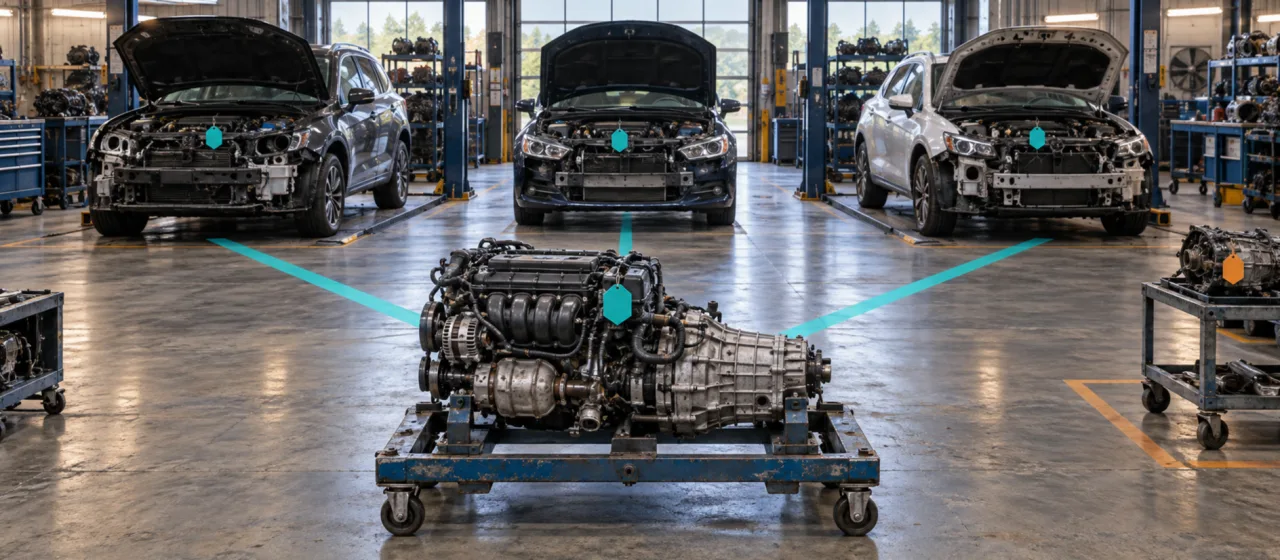
Manufacturers reuse parts across models and model years constantly. A headlight, a transmission, or a door might be identical across three model years and two trim levels, even though the numbers printed on them differ. Without a common code, you would have to memorize every one of those overlaps. The interchange number collapses all of that into a single identifier, so one lookup tells you the family of vehicles a part can serve.
How to read a Hollander interchange number
The number is not five magic digits. A real match depends on the full identifier - the part type plus the interchange value and any letter suffix - read together with the record’s application notes and qualifiers: side and location (left/right, front/rear), trim and option packages, engine and transmission, and physical sub-variations like connector type, sensor count, or bracket shape. Two vehicles can share a base number and still differ on a qualifier that matters. So the number narrows a large pool down to a short list of candidates, and then you verify. For the actual lookup and the other ways to find every car a part fits, see how auto parts interchange works, and for the full picture, the recycler’s guide to fitment and interchange.
Why it matters to a seller
Two big reasons:
- Reach. When you list a part by its interchange, it can be found by buyers searching for any of the vehicles that share it, not just the exact car it came off. That widens your pool of buyers well beyond a single make and model.
- Fewer returns. Fitment mistakes are a common cause of used-part returns. Selling by verified interchange instead of guesswork answers will this part fit before it ships, so the part actually fits when it arrives.
That second point matters more than it looks. AI that guesses fitment is exactly what drives wrong-fitment returns, and those returns drag down your eBay seller rating and defect metrics. Publishing from structured interchange and fitment data, instead of a guess, keeps the fitment you list the same as the fitment that ships. On eBay Motors specifically, compatibility comes from eBay’s parts catalog or is entered by the seller, and eBay is clear that the seller is responsible for its accuracy - it is not an independent guarantee that the part fits.
The catch
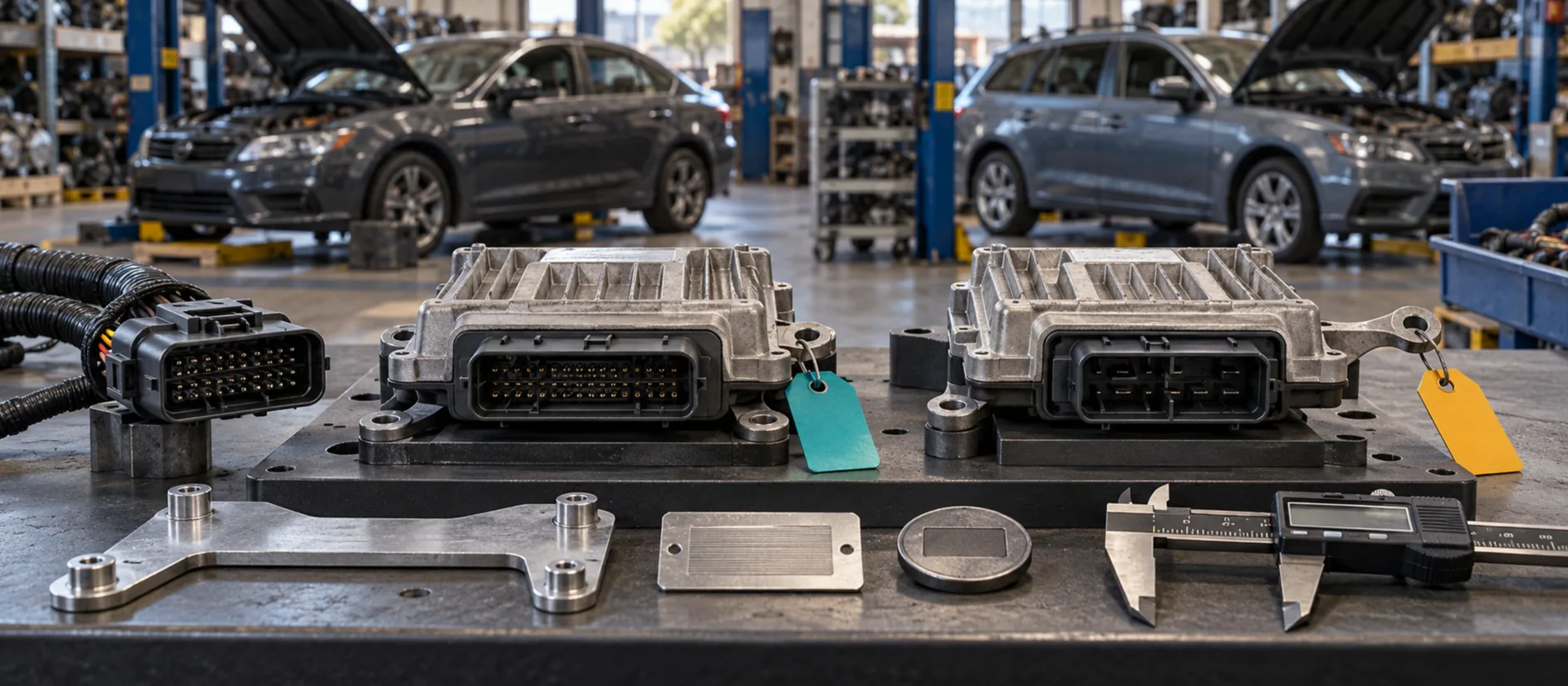
Interchange is powerful but not magic. Some parts have variations within an interchange group (a connector style, a sensor, a bracket, or calibration and programming on electronic modules) that decide whether the swap actually works. Good sellers treat interchange as the starting point and confirm the details that trip up buyers. And remember the interchange number is not the OEM part number: they answer different questions, which is why OEM part-number cross-reference is its own step.
How reParta handles fitment and interchange (honestly)
reParta does not license or resell the Hollander Interchange. It ships with its own built-in OEM part-number cross-reference and part-level fitment matching - data reParta builds and maintains itself. Three layers do the work together: a US vehicle-configuration dataset that pins down what the donor vehicle actually is (year, make, model, trim, powertrain), structured fitment data that says which vehicles a given part fits, and reParta’s own interchange and OEM cross-reference that tells you a part pulled off donor A will also fit car B. The configuration layer identifies the car; the fitment and interchange layers turn that into “this exact part fits these exact vehicles.”
The honest framing on Hollander: it is the established proprietary reference with decades of depth, and reParta built its own interchange rather than licensing anyone else’s. The difference is architecture, not a depth contest - reParta’s interchange is native to a workflow that also handles pricing and listing, so the fitment logic lives where you actually work instead of in a separate subscription you reconcile by hand. Because fitment and interchange are known before you buy, reParta can pair them with real used-market prices in Pre-bid ROI to show a projected net estimate per donor at the auction - a projection to guide bids, not a guaranteed number - and then list across channels with multi-channel sync so a sold part comes down everywhere. It all lives in one auto parts inventory management software.
Skip the separate interchange subscription and the manual cross-checks. Start a free 14-day trial - no card required - or see how reParta stacks up as a Hollander alternative. Interchange is the language of used parts, and reading it well is one of the highest-leverage skills in this business.
Frequently asked questions
What is a Hollander interchange number?
A code from the Hollander Interchange, a proprietary industry database, that groups auto parts by interchangeable application - parts that can fit and function on more than one vehicle, sometimes across different makes, models, or years. If two vehicles share the same interchange number for a part, that part is a strong candidate to fit both, but it is a starting point, not a guarantee: the real match depends on the full identifier, side, options, and sub-variations. The interchange traces back to the 1930s, when the Hollander family began compiling lists of interchangeable parts, and it is the long-standing industry reference for fitment.
Why does interchange matter to a used-parts seller?
Two reasons: reach (your part is found by buyers of every vehicle that shares the interchange, not just the car it came off) and fewer returns (you sell by verified fitment instead of a guess). The catch is sub-variations inside a group - a connector, a sensor, a bracket, or calibration on electronics - so the number narrows a large pool to a short list of candidates, and you confirm the specific part before you trust the fit.
Does reParta use the Hollander Interchange?
No. reParta does not license or resell Hollander's data. It ships with its own built-in OEM part-number cross-reference and part-level fitment matching, which reParta builds and maintains itself, alongside a US vehicle-configuration dataset that identifies the donor. Naming Hollander plainly: it is the established proprietary interchange reference, and reParta built its own rather than licensing anyone else's - wired directly into pricing and listing instead of a separate lookup.