Parting out cars as a side hustle: a realistic guide from your garage
Not everyone who sells used auto parts wants a yard, a license, and a payroll. A lot of people just want a side hustle: pull the good parts off a car, sell them online, pocket the difference. That is a real and reasonable way in - as long as you are honest about what you can do from a garage, what the income actually looks like, and where the hobby line sits.
This guide is the small end of the spectrum: parting out cars as a side hustle, done from a garage, without turning your life into a licensed yard. If you are weighing something bigger, start with all the ways to make money from used auto parts and come back.
Is parting out cars as a side hustle worth it?
Parting out cars as a side hustle works when you keep it small and buy right. The math is per-part, not per-car: one clean, in-demand part can be worth many times its scrap value, while a slow mover can cost more in labor, storage, and listing time than it ever returns. So the whole game is picking the few parts worth pulling and skipping the rest.
It is also not passive. Every part is work - pull, test, photograph, list, pack, ship, and handle the occasional return. Treat it as a small business, not a money printer, and it can add up. Treat it as easy money and the slow movers will bury you.
What you can (and cannot) do from a garage
Here is the part people skip, and it matters. Reselling parts you already own is very different, legally, from running a dismantling operation out of your driveway.
- Generally lower exposure: reselling lawfully acquired, already-removed parts.
- Still regulated even on a car you own: an occasional owner part-out may avoid some acquisition-related rules, but dismantling, fluid disposal, refrigerant, storage, title surrender, final shell disposal, sales, and licensing can all still apply. Owning the car is not an automatic exemption.
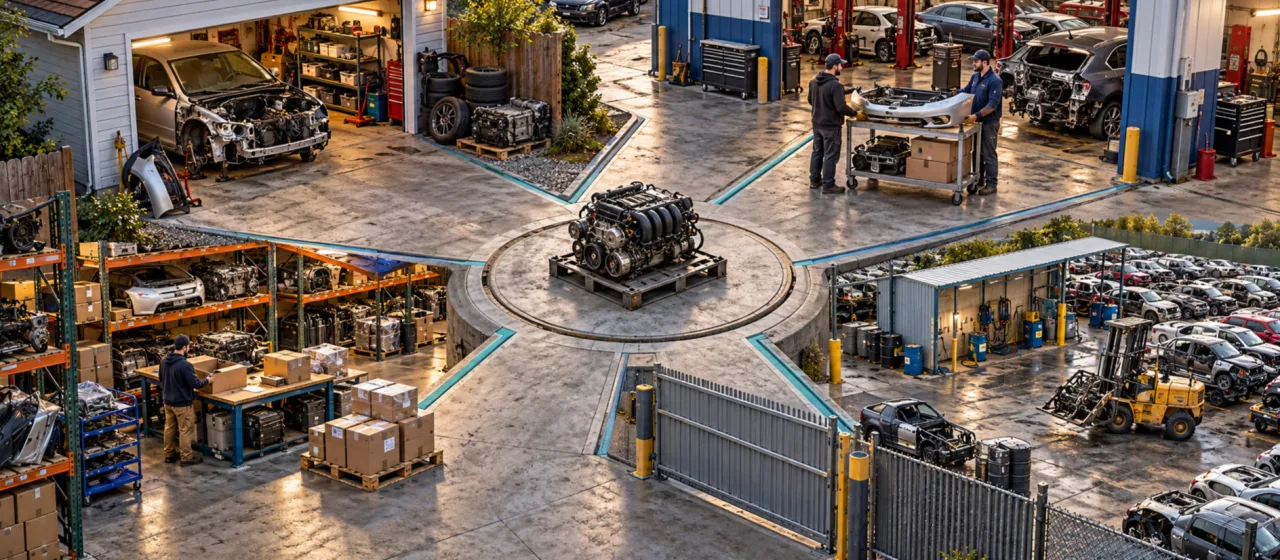
- Higher exposure: regularly buying whole junk or salvage vehicles to dismantle, draining and storing fluids, and keeping wrecked cars in a residential lot.
Many states require a dismantler, recycler, secondhand-dealer, or used-parts license once you are buying vehicles to part out as a business, and local zoning and environmental rules can restrict fluids, storage, and junk vehicles on residential property. The rules turn on what you actually buy, dismantle, store, and sell, plus state and local law - not on calling it a hobby. And on taxes: side-hustle income can be taxable even when the activity is small or part-time, and whether it is treated as a business or a not-for-profit hobby for federal tax purposes depends on the facts, including profit motive, not on the label. Keep records of what you buy, your fees, shipping, mileage, tools, and sales, and consult a tax professional. None of this is legal or tax advice - check whether you need a license to sell used auto parts for your state before you scale up.
Do not dismantle what you cannot handle safely
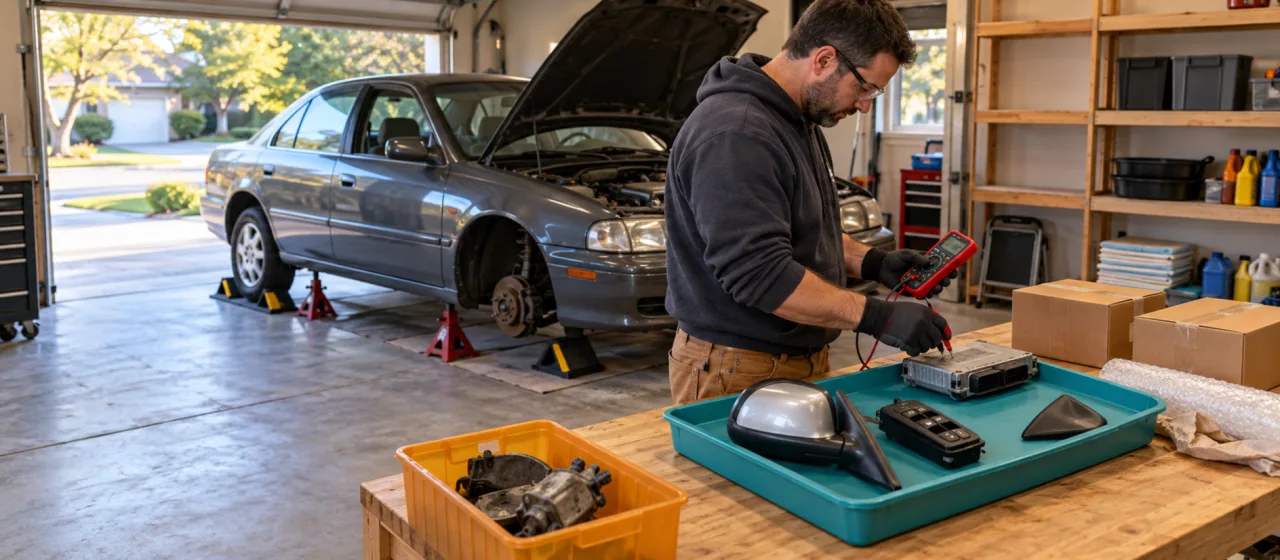
A car is a box of stored energy, and a home garage is not set up for all of it. Deliberately exclude the jobs that need training, equipment, and a lawful disposal route you do not have: do not work on high-voltage EV or hybrid systems, recover refrigerant, handle undeployed airbags or seatbelt pretensioners, cut structural members, or open fuel systems. Even the routine work needs care - support the vehicle on proper jack stands, isolate the battery, keep fuel vapor away from any hot work, wear eye and hand protection against sharp metal and glass, ventilate the space, store and dispose of fluids properly, and keep children and pets away from the work area. A garage side hustle should be built around the parts you can pull safely and skip the rest.
Buy the donor with numbers, not a gut feeling
The single biggest mistake in a parting-out side hustle is overpaying for the car. The honest math is not “add up the asking prices,” it is closer to this:
Expected net = realistic sold price × chance it actually sells - donor price - auction and buyer fees - towing - tools and consumables - marketplace and payment fees - shipping you subsidize - a return reserve - storage - fluid and shell disposal - the value of your own time.
The trap is sell-through: five parts listed at $200 is not $1,000 if only two sell in a reasonable time. Weight each part by how likely it is to sell and how long it will take, then decide your maximum bid. The pre-bid decision is the whole ballgame, and it is covered in depth in is parting out a car worth it and how to part out a car for profit.
If you are buying at auctions like Copart or IAA, the same discipline applies harder, because it is easy to get caught up in bidding - where to buy cars to part out walks the sourcing options for a small operator.
Pull the profitable parts first
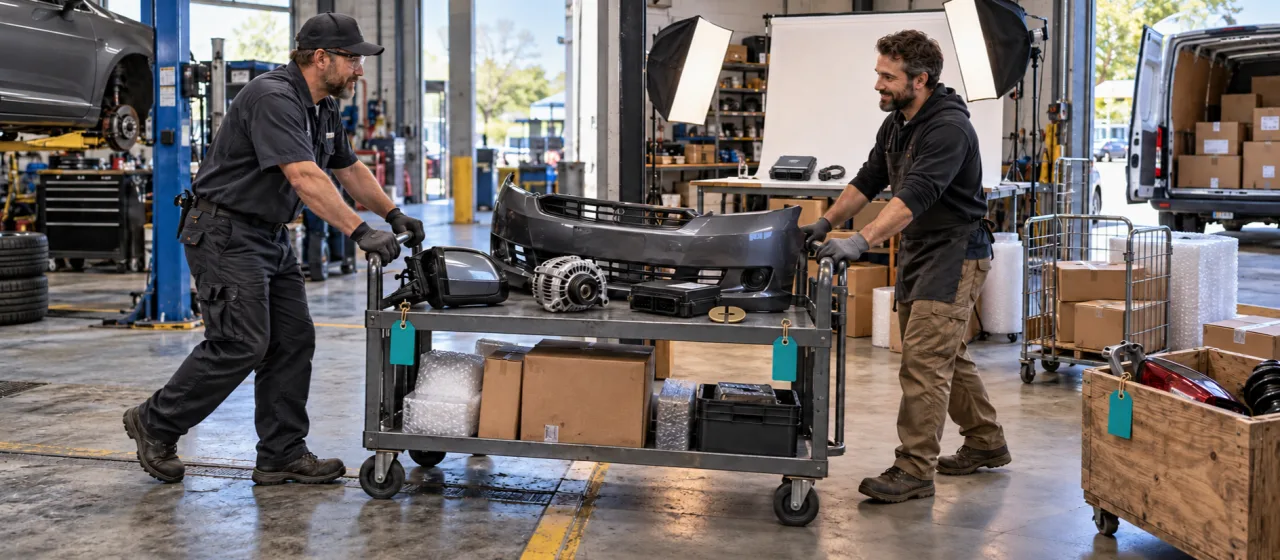
You do not have to strip the whole car. Pull the parts that clearly beat scrap and move quickly, and send the rest to a scrap or core buyer. The higher-value, in-demand components are the usual shortlist - see the most profitable car parts to sell - but for a garage seller, “expensive” is not the same as “right for you.” A part that is easy to pack, hard to damage in transit, simple to test, small to store, and low on fraud and return risk often beats a big-ticket door or engine. A module, mirror, switch, or trim piece can be a better side-hustle part than an assembly you cannot ship or store. Grade honestly to a standard, note the damage location, and photograph each part well the first time so you are not handling it again at listing.
Where to sell as a side hustle
For a garage operation, the practical channels are online marketplaces and local pickup. Facebook Marketplace is strong for local, heavy, or hard-to-ship parts - selling used car parts on Facebook Marketplace covers it - and eBay reaches a national buyer for shippable parts. Price against the real used market, not wishful thinking; how to price used auto parts shows how.
If you would rather sell without buying and holding a garage full of parts at all, there is a lower-commitment path worth watching: sell used parts without running a yard through reParta’s collaborative selling, which is in early access.
When parting out cars as a side hustle outgrows the garage
The signals are simple: you are buying cars regularly, parts are piling up faster than they sell, and the garage cannot hold it. That is usually the point where a license, proper zoning, and environmental compliance stop being optional, and where a real inventory system pays for itself. When you get there, how to inventory a salvage yard and the used auto parts business start-up guide map the next step.
How reParta helps a garage side hustle
Even at one car a month, the difference between a tidy side hustle and a garage full of unsold parts is a system. reParta’s Garage plan is built for this scale: catalog each part with its fitment so buyers find it, price it against real used-market prices, list it on your own eBay account with assisted Facebook listing, and see your profit per car so you know which donors were worth it. Be honest about the math, though: at one donor a month, the subscription pays for itself only if the time it saves, the extra sell-through, the better pricing, or the mistakes it avoids add up to more than it costs. It is a decision estimate on the buying side and an organizer on the selling side, not a guarantee of any income.
Done right, parting out cars as a side hustle is a small, profitable operation, not a garage full of unsold bumpers. Keep it small, buy with numbers, pull the parts that pay, and sell where the buyers are. Start a free 14-day trial - no card required - or see plans and pricing; most people doing this start on Garage at $49/mo.
Frequently asked questions
Is parting out cars a good side hustle?
It can be, if you keep it small and buy right. The people who make steady money from parting out cars as a side hustle treat it like a business on a small scale: they buy donors (or already-removed parts) with the numbers in front of them, pull the few high-demand parts that clearly beat scrap, and sell across channels without letting slow inventory pile up. It is not passive income - each part is labor to pull, test, photograph, list, pack, and ship - so the skill is choosing the parts worth the effort and skipping the rest.
Do I need a license to part out cars from my garage?
It depends on your state and on what you actually do. Reselling parts you already own is treated differently from operating as a business that buys wrecked vehicles to dismantle. Many states require a dismantler, recycler, secondhand-dealer, or used-parts license once you regularly buy whole junk or salvage vehicles to part out, plus local zoning and environmental rules on fluids and storage. The lowest-risk version of the side hustle is buying already-removed parts and reselling them, and not turning your home into an outdoor junk-car yard. This is general information, not legal advice - confirm with your state motor-vehicle authority.
How much money can you make parting out a car?
It varies enormously by the car and the parts, but the honest framing is per-part, not per-car: a clean, in-demand part can be worth many times its scrap value, while a slow mover can cost more in labor and storage than it ever returns. A single well-chosen donor can return more than you paid if you sell the handful of high-value parts and scrap the rest, but there is no guaranteed number. Run the math before you buy, not after.
When does a parting-out side hustle become a real business?
When you are buying vehicles regularly, holding inventory, and the volume outgrows a garage, you are past the hobby line - and usually past the point where a license, proper zoning, and environmental compliance are required. That is the moment to set up a business entity, look at whether you need a dismantler or recycler license, and build a real inventory system. The transition is a good problem to have; just do not drift across it without checking the rules for your state.