How to sell used auto parts without a yard: a low-inventory guide
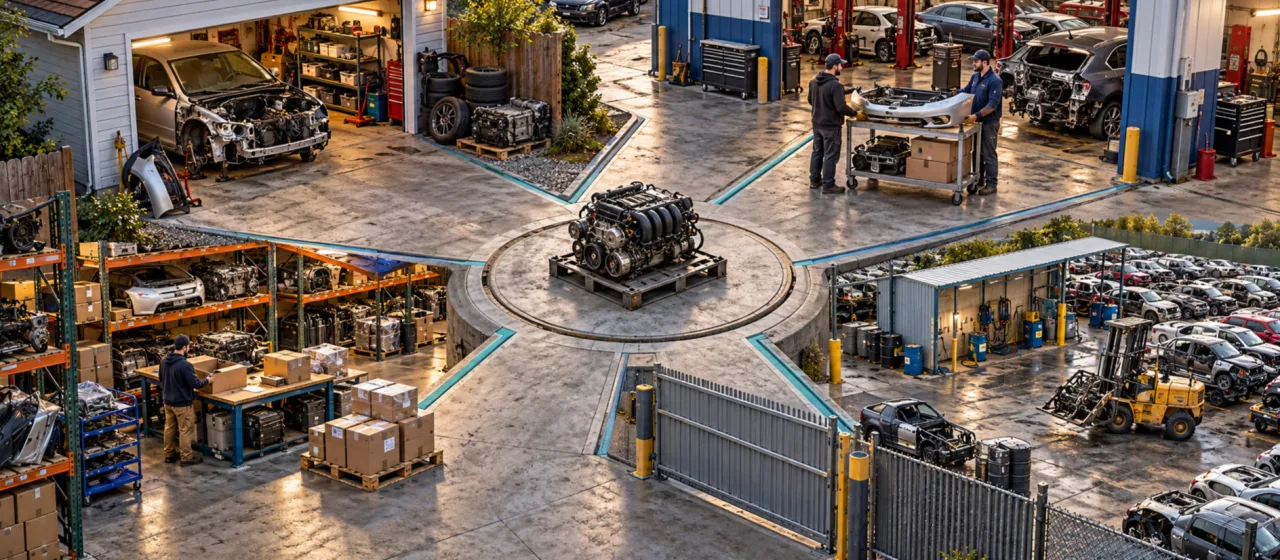
Almost everything that scares people off the used-parts business is about the yard: buying wrecked cars, draining fluids, storing hulks, and carrying the license and environmental load that comes with dismantling. But none of that is required to sell parts. You can sell used auto parts without a yard by selling parts you do not own - and it is one of the lowest-commitment ways in.
It is not a shortcut around responsibility, though. Selling someone else’s property adds contract, ownership, tax, and payout questions that a one-person garage never faces. This guide covers both: the model, and what you would still be on the hook for. For where it fits among the alternatives, see all the ways to make money from used auto parts.
How to sell used auto parts without a yard
The move is simple to state: instead of acquiring and dismantling cars, you connect parts someone else already has with the buyers who want them, and take an agreed share. Two versions of that idea sit behind reParta’s collaborative selling, which is in early access and active development - a feature we are building, not one that is live today.
- A seller-to-seller marketplace. As planned, the feature would help a part’s owner and a selling partner coordinate who catalogs, who lists, who fulfills, and how the agreed revenue split is settled. The final custody, payout, and seller-of-record model has not been decided.
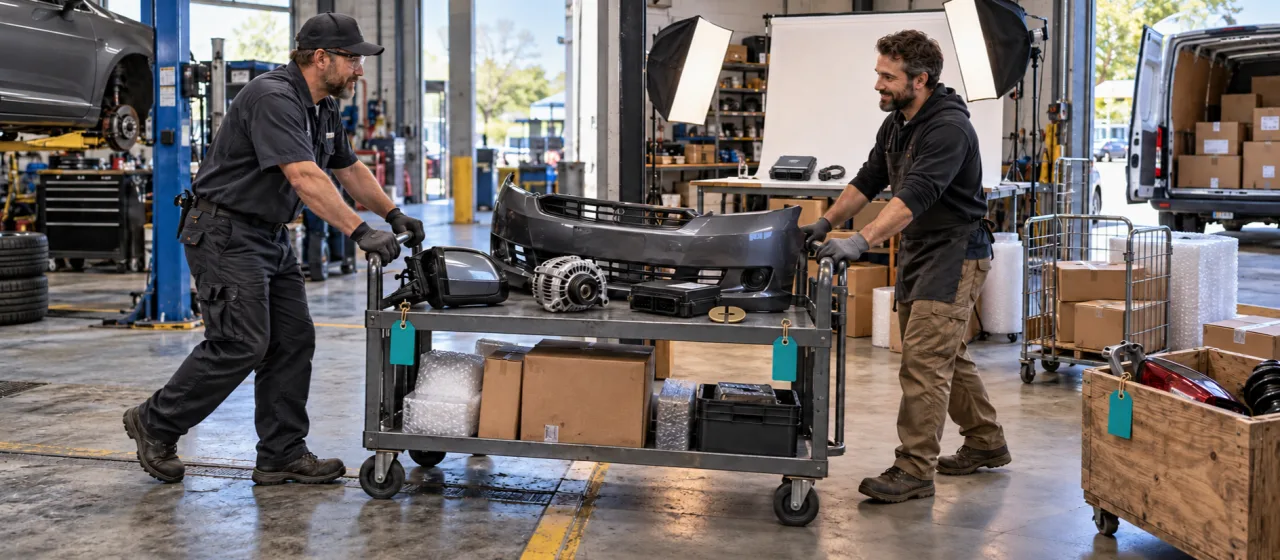
- Consignment with local body shops. Independent collision and repair shops often set aside good parts and surplus that end up scrapped. The consignment model is designed to let you inventory those parts, list them across channels, and share the proceeds with the shop.
Both remove the biggest barriers to entry - buying donors, storing cars, and the license and environmental burden of dismantling - which is why the footprint is so light. What they do not remove is the paperwork of selling on someone else’s behalf, which is the next section.
What you are still responsible for
“Sell parts you do not own” is appealing precisely because it sounds frictionless, but a real arrangement has to answer a list of questions before the first sale. Put them in a written consignment or collaboration agreement:
- who legally owns the part, and who is authorized to put it up for sale;
- who is the seller of record and the merchant of record at checkout;
- who sets the price, takes payment, and issues refunds;
- who handles sales-tax collection and reporting (see below);
- who carries warranty and condition liability, and who eats a chargeback or a shipping loss;
- when ownership passes to the buyer, and who bears the risk of loss before it sells;
- what happens to unsold parts, and who may dispose of them.
On tax specifically: consignment does not switch off sales-tax duties. Depending on the structure and your state, the consignee, the marketplace, the owner, or another party may have collection and reporting obligations, and marketplace-facilitator laws can put collection on the marketplace without erasing the seller’s other registrations and bookkeeping. None of this is legal or tax advice - the point is that a written agreement and a clear checkout flow have to name who is responsible, and you should confirm your situation with a professional.
Only sell parts the owner is allowed to sell
This one matters enough to state plainly, and it belongs in the workflow, not the fine print. A shop should consign only parts it legally owns or is expressly authorized to sell. A part removed during a repair may belong to the customer, the customer’s insurer, or another party depending on the repair authorization, the insurer arrangement, state law, and a total-loss procedure - and a customer can sometimes require the old part back. Customer-owned, insurer-owned, leased, recalled, unsafe, stolen, or otherwise restricted components must stay out of the program.
Any collaborative marketplace also has to keep prohibited parts out from day one: airbags and airbag covers, which eBay banned for all US sellers as of September 24, 2026, used catalytic converters that do not meet the reuse conditions, recalled parts, VIN plates, titles, emissions defeat devices, stolen components, and batteries or other hazardous goods. A part being easy to list is not the same as a part being legal to sell.
Why body-shop consignment is worth watching
A collision shop’s job is fixing cars, not selling parts. The good components they set aside, and the surplus they never use, often go to scrap for pennies. Consignment is designed to turn the parts a shop is allowed to sell into revenue it was leaving on the floor, and a side business for the person who does the selling: as planned, the reseller does the cataloging, photography, listing, and buyer handling, and the shop follows along.
To be clear about status: this is the intended shape of the feature, not a live capability. How splits are set, how payouts are coordinated through a payment provider, and the shop’s view into its parts are still being designed. If it fits how you want to work, the useful step today is to join the collaborative-selling early-access list.
What reParta runs today, and what is coming
It helps to separate the two. Today, reParta is live for cataloging parts with fitment and interchange, pricing against the real used market, listing on your own eBay account through the native API with assisted Facebook Marketplace listing, and tracking orders and profit - across the Garage, Yard, and Yard Pro plans. Collaborative selling - the seller-to-seller marketplace and body-shop consignment described above - is the next thing being built, and it is in early access.
If you want to start selling right now without waiting, you can already list parts you source yourself; selling used car parts on Facebook Marketplace and where to list: Car-Part vs eBay vs Facebook cover the channels, and how to price used auto parts keeps your numbers honest.
Who should sell used auto parts without a yard?
The people who sell used auto parts without a yard tend to be three kinds: someone who wants to test the business before committing capital, a body shop that wants the parts it is allowed to sell to earn instead of scrap, and a seller who is good at listing and buyer service but does not want to run a physical operation. If you would rather buy and part out cars yourself at a small scale, the garage side hustle is the better starting point, and if you are heading for a full operation, the used auto parts business start-up guide is where to go.
Get on the early-access list
You can sell used auto parts without a yard, and collaborative selling is being built to make that a real, organized option - with the ownership, tax, and payout questions handled properly - rather than a series of one-off handshake deals. It is not live yet, and nothing here is a promise of specific mechanics or a launch date; it is the shape of what is coming. Join the collaborative-selling early-access list to be first when it opens and to help shape how it works, and see plans and pricing for what reParta runs today.
Frequently asked questions
Can you sell used auto parts without a yard?
Yes. The barriers people assume are mandatory - buying donor cars, dismantling them, draining fluids, storing junk vehicles, and carrying a dismantler license - only apply if you acquire and take apart whole vehicles. If instead you sell parts you do not own, by partnering with other sellers or with local body shops, you can reach the market without that footprint. It is a low-commitment way into used parts. It does not remove the contract, ownership-verification, sales-tax, returns, and payout responsibilities of selling, though, and it is the model reParta's collaborative selling is being built around, currently in early access.
What is collaborative selling in reParta?
Collaborative selling is a feature reParta is building - it is in early access and active development, not live yet. As planned, it would offer two ways to sell parts you do not own: an internal seller-to-seller marketplace, where a selling partner lists and sells a part and the agreed shares are settled; and consignment with local body shops, where you inventory a shop's surplus parts, list them, and share the proceeds. The mechanics are still being designed. You can join the early-access list to be notified when it opens and to help shape it.
Who is the seller of record and who handles sales tax on consignment?
That depends on how the arrangement and checkout are structured and on your state. Consignment does not automatically remove sales-tax duties: depending on the structure, the person selling the consigned part (the consignee), the marketplace, the owner, or another party may have collection and reporting obligations, and marketplace-facilitator laws may put collection on the marketplace without erasing the seller's other duties. A written agreement should name the seller of record, who sets price, who takes payment, who issues refunds, and who carries warranty and shipping risk. This is general information, not legal or tax advice - confirm with a professional.
Do I need a license to sell parts without a yard?
It depends on your state and on what you actually do; reseller, secondhand-dealer, and consignment rules vary, and selling without a yard does not automatically exempt you. It does avoid the dismantler-license and environmental load that come with buying and taking apart whole vehicles. Confirm the selling-side requirements for your state. This is general information, not legal advice - check with your state motor-vehicle authority, and see the licensing guide for the details.