Selling used car parts on Facebook Marketplace: a dismantler's playbook
Facebook Marketplace reaches a large local buyer base, and a lot of dismantlers under-invest in it next to eBay and the counter. It rewards speed and responsiveness, which is exactly where a busy yard struggles, and it carries local risks eBay does not. Here is the honest playbook: what it is good for, how to list and meet safely, and how to keep it from creating double-sells. If you are still deciding which parts belong where, which part goes on which channel covers that first.
Why Facebook is worth it for a yard
Facebook is strongest as a local channel, and it shines on the parts eBay handles worst:
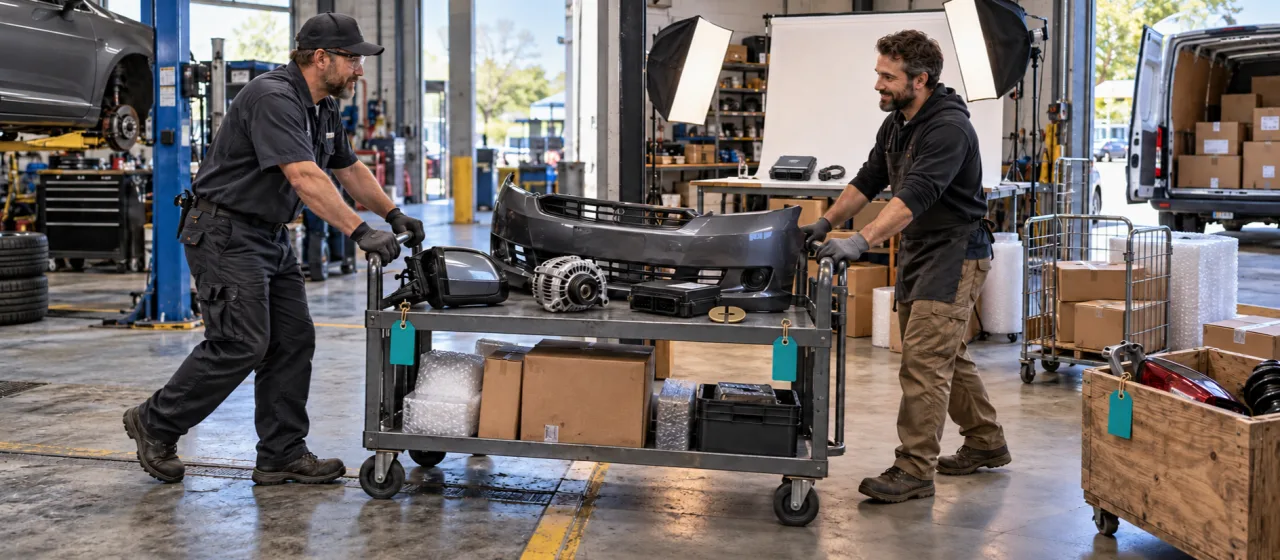
- Heavy and awkward parts. Doors, hoods, glass, seats, bumpers - the things that are painful and expensive to box and freight. Local pickup means no boxing and no shipping damage claims.
- Local buyers who want it today. Someone fixing a car this weekend will drive across town and pay cash rather than wait for shipping.
- Fast messaging. Messenger lets you answer and close while the buyer is still looking.
It is a real revenue channel, but be clear-eyed: it is free to list locally, not free to operate. There is still the labor to photograph and answer, the no-shows, the holding time, and taxes on the income. Treat it as incremental profit with a real cost per sale, not found money.
Before you list: eligibility and prohibited parts
Facebook has commerce policies, and some auto parts are restricted. The clearest case is airbags and other SRS components - regulated, safety-critical, and restricted on many platforms - so confirm a part is eligible before you list it rather than assuming anything off a donor can go up. Check Facebook’s current commerce and prohibited-content rules, and keep your account in good standing so your listings stay visible.
How to list well
A Marketplace listing is won or lost on how findable and trustworthy it looks:
- Lead the title with the vehicle. Year, make, model, then the part - that is what local buyers type.
- Describe the real condition. Note mileage if relevant, any damage, and exactly what is and is not included. Honest wording prevents the disputes that eat your day.
- Carry the fitment. Say which vehicles the part fits, from real interchange, not a guess.
- Set one firm, market-based price. A clear price filters out some of the haggling before it starts.
- Use honest photos of the actual part, from several angles, in decent light.
The deeper craft of a listing that converts is its own topic - how to write an auto part listing goes further.
Safety and payment: the part most guides skip
This is where Facebook differs most from eBay, and where a yard gets burned. Marketplace is not a verified-identity environment - a profile is not proof of who someone is, and ratings do not require a completed purchase - so treat every buyer as unverified and run a process:
- Meet in public. A public, well-lit place or your staffed yard or counter, never a home address. Bring someone.
- Keep it in Messenger. Scammers push you to WhatsApp, SMS, or email to get around Facebook. Stay on the platform.
- Verify the money before the part moves. Confirm cash is real, or that an electronic payment has actually cleared into your account - not a screenshot, the actual balance.
- Know the common scams. Overpayment (“I sent too much, refund the difference”), a link to a fake “confirm your payment” page, gift-card requests, and the verification-code scam (the “code” is an account-takeover step, never read it back). Time pressure is the tell.
- Keep a receipt of each sale for your records.
One more that is easy to forget: local cash sales are still taxable income and may carry sales-tax obligations depending on where you are, so keep records and check with a tax professional or your state’s revenue site.
Speed, lowballs, and no-shows
Facebook rewards fast, complete replies - a quick answer with the price, the fitment, and a pickup window holds a buyer who would otherwise move on. Expect lowballs and no-shows; a clear listing and a firm price filter some out. Reserve a part only on a rule you set (for example, first to confirm a pickup time within the hour), and put no-shows back to available quickly so the part is not sitting dead while it is spoken for.
The double-sell trap
Here is the catch that grows as you add channels. A local Facebook sale can happen fast while the same one-of-a-kind part is still live on eBay, and now two buyers own a part you have only once. Pulling it by hand across channels is slow and error-prone, which is exactly where double-sells happen and what they cost. The reliable answer is to list once from a single record and have the part come off the other channels when it sells - which is a near-real-time sync standard, not an instant guarantee, and the mechanism has its own guide.
How reParta fits
Facebook Marketplace has no public listing API, so nothing can truly automate it - and reParta does not pretend to. Instead, reParta assists Marketplace through its browser extension: guided listing that pulls straight from the same inventory you already manage, plus assisted delist when a part moves. Your eBay channel is different - reParta lists there automatically through eBay’s native API on your own account, and delists near-real-time with retry when a sale is recorded. That split is the point: reParta keeps one source of truth for availability, so a part is described the same way everywhere and priced from your real numbers, and when it sells on any channel reParta works to pull it from the others near-real-time, with retry and reconciliation - a measured reduction in double-sells, not a magic “instant everywhere” promise. Its fitment comes from reParta’s own built-in OEM cross-reference and part-level data, with the U.S. vehicle-configuration data used to identify the donor rather than to guess a fit, so what you post is grounded, not a hunch that turns into a return. It is one connected auto parts inventory management software that scales from a solo garage to a multi-location yard, on Garage, Yard, and Yard Pro.
Facebook’s local reach is worth having. The only things standing between you and it are a safe process and the manual overhead - both solvable. Start a free 14-day trial - no card required - or see plans and pricing.
Frequently asked questions
Is it free to sell auto parts on Facebook Marketplace?
Free to list locally, not free to operate. Local pickup listings paid in person have no selling fee, but shipped orders sold through Facebook checkout carry a selling fee, and either way you still pay in staff time to photograph, list, and answer messages, plus no-shows, holding time, and taxes on the income. Treat it as a low-fee local channel, not free money.
Is Facebook Marketplace safe for selling car parts?
It can be, with a process. Meet buyers in a public, well-lit place or at your staffed yard rather than a home address, keep the conversation inside Messenger, and confirm payment has actually landed in your account before the part changes hands - a screenshot is not proof. Watch for the common scams: overpayment, requests to click an off-platform confirmation link, gift-card payment, and the fake verification-code scam. Treat every buyer as unverified, because a Facebook profile is not confirmed identity.
Do Facebook Marketplace ratings mean a buyer actually bought from me?
No. Facebook does not verify that a reviewer completed a purchase, and buyers can leave a rating after only messaging you. Ratings and a filled-out profile add some accountability, but they are not proof of a real transaction, so do not lower your guard because a buyer looks established.
How do I avoid double-selling a part I list on both Facebook and eBay?
Local Facebook sales happen fast, often while the same one-of-a-kind part is still live on eBay, so the reliable fix is to list once from a single inventory record and remove the part from the other channels when it sells. Delisting is automatic on eBay through its API and assisted on Facebook through a browser extension, since Facebook has no public listing API, so the honest goal is near-real-time removal that measurably cuts double-sells, not an instant guarantee.
What should I not sell on Facebook Marketplace?
Check Facebook's commerce and prohibited-content policies before you list, especially for safety-sensitive parts. Airbags and other SRS components are the clearest example - they are regulated, safety-critical, and restricted on many platforms - so confirm eligibility rather than assuming any part off a donor can be listed.