Free Shipping vs Calculated Shipping
Shipping is where profit leaks without anyone noticing. Not in one dramatic loss, but a dollar here and two dollars there, on every order, until your margin is half what you thought. Most of it comes down to two mistakes: paying for the wrong service, and pricing shipping the wrong way. This is the companion to how to ship auto parts without losing money - that guide covers packing, freight, and hazmat; this one is about the economics: where the money goes, free shipping vs calculated shipping, and how to stop the leak.
Rule zero: never pay retail
Buying a label at the post office counter is the most expensive way to ship, full stop. Platform and commercial labels - eBay Labels, or any shipping platform with negotiated rates - run 10 to 30 percent cheaper than the counter for the exact same service, automatically. If you are printing labels through anything other than a commercial-rate source, you are handing away 10 to 30 percent of your shipping budget for nothing. Fix that first, before anything else on this page.
Match the shipping method to the package
There is no single cheapest carrier. There is only the cheapest carrier for a specific box. Here is the map - and see the packing side of this in the companion guide.
- Small and light, under a pound. USPS Ground Advantage is the cheapest standard option. A few-ounce package runs about $5.50 to $6.40 on commercial rates, and even a 15.9 oz package tops out around $8.40 to the far zones.
- Small but dense and heavy. This is the one sellers miss. Priority Mail Cubic prices by the box’s size, not its weight, so a small heavy item - a dense metal part - ships far cheaper than its weight would suggest. If you ship small and heavy, Cubic is often your biggest single saving.
- Compact and heavy. USPS Flat Rate boxes ignore both weight and zone. If it fits and it is heavy, they usually win - and they win biggest when you ship from a far corner of the map where every zone is high.
- Heavier packages. As weight climbs, USPS loses to UPS Ground Saver and FedEx Ground. Price it both ways - do not default out of habit.
- Very specific flat, low-value items. eBay Standard Envelope is dirt cheap, under a couple of dollars with tracking, but it is only for eight categories (trading cards, coins and currency, stamps, postcards, greeting cards, patches, stickers, and seeds) and only for items under $20. It is a niche tool, not a general small-item solution, and auto parts do not qualify.
- Books and media only. Media Mail is the cheapest thing going, from around $4.63, but strictly for books, media, and educational material - and eBay does audit it.
Dimensional weight, and the 2026 change that made it worse
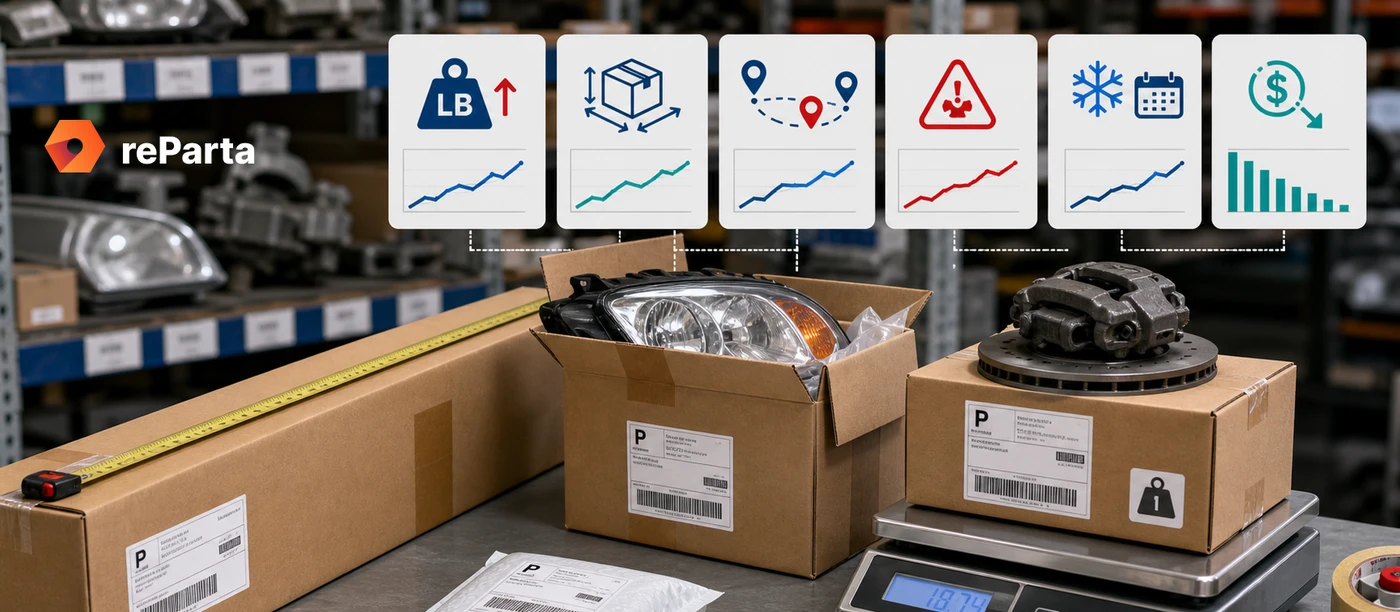
Carriers bill on size as well as weight. Once a box passes about one cubic foot, dimensional weight kicks in and a light bulky item gets charged like a heavy one. This got more expensive in 2026: as of July 12, USPS changed its dimensional divisor from 166 to 139 and started rounding fractional inches up, which raises the billed weight on oversized light boxes by roughly 19 percent - and brings USPS in line with the 139 divisor UPS and FedEx already use.
Translation: right-size your boxes. An item rattling around in a box two sizes too big is now costing you real money on every zone.
Free shipping vs calculated shipping: the actual math
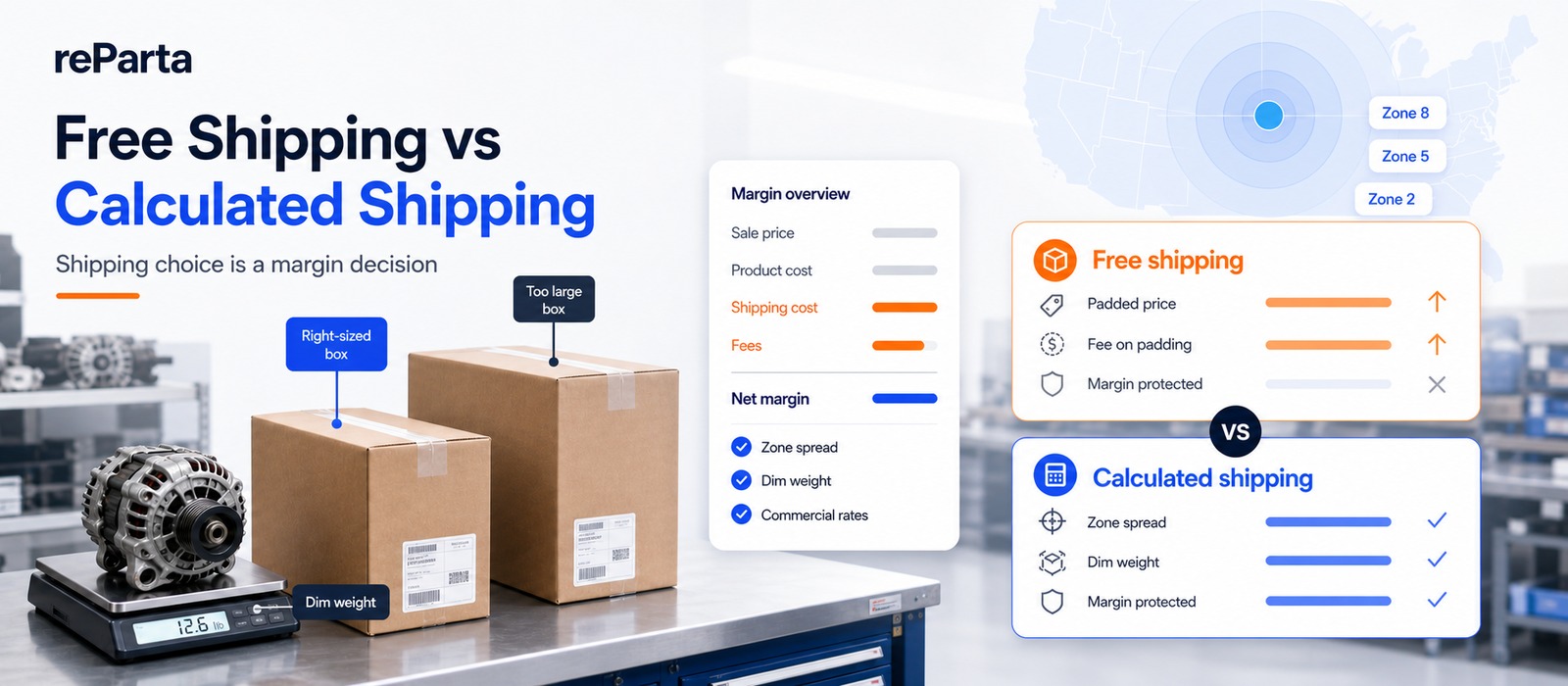
This is the decision that quietly costs the most, and most sellers make it on vibes. Getting free shipping vs calculated shipping right is really a margin decision, not a preference.
Free shipping is not free - it is baked into your price. Buyers respond to it emotionally: a lot of them filter for it, and a lot more fear getting hit with a surprise shipping charge at checkout, so “free” genuinely converts. That part is real.
But here is the hidden cost nobody mentions. To offer free shipping safely, you pad your price to cover the worst-case far zone. eBay then charges its final value fee - around 13.6 percent - on that padding, on every single order, including all the local ones where you never needed it. On a 5 lb item, that is roughly $1.29 per sale in fees on money you added purely as insurance. Sell a hundred of them and you have paid about $129 in fees for zone coverage you actually used on maybe a third of the orders. (For the full breakdown of that 13.6 percent, see how to sell auto parts on eBay profitably.)
So use this test. Take your shipping-cost spread between your nearest and farthest zone, and divide it by your sale price.
- Under 10 percent: offer free shipping. The padding is small and the conversion lift is worth it.
- Over 20 percent: do not. Use calculated shipping so the far-zone buyer pays their own freight instead of you eating it or over-padding everyone.
- In between: it comes down to whether your margin can absorb a bad week of distant orders.
Flat rate - a fixed shipping charge you set to your true average cost - is the middle path: you are not eating the far zones, and not padding the fee base as hard as full free shipping.
Combined shipping: the one that grows the order
If you sell multiples, combined shipping is close to free money. Charge shipping on the first item and ship additional items free, or at a small add-on. Combined-shipping listings tend to convert better, because a buyer who knows a second item will not double their shipping is far more likely to add it. It is the cleanest way to keep the free-shipping appeal while protecting your margin on single orders.
Insurance and the claim math
USPS Ground Advantage already includes up to $100 of coverage. So insurance is only a real decision above that number. On a genuinely valuable part, the premium is small next to the loss - buy it. Below $100 you are already covered, so do not pay twice. And remember: insurance only pays on real carrier loss or damage, not on buyer-caused problems, so it is not a substitute for good packing or for cutting wrong-fitment returns before they happen.
Where the money actually leaks
Add it all up and the quiet losses are almost always one of these:
- Buying labels at retail instead of commercial rates.
- Eating the far-zone difference because calculated shipping was set up wrong or left off.
- Paying for a bigger or pricier service when a cheaper one fit - missing Cubic on dense items, or flat rate on compact heavy ones.
- Dimensional-weight surprises from oversized boxes, now worse in 2026.
- Padding free-shipping prices and paying eBay’s fee on the padding, order after order.
Shipping is part of your real margin, not overhead
Shipping is not overhead you note at the end. It is a cost that comes off the top of every single sale, and if you do not know it precisely, you do not actually know what any item makes you. The sellers who stay profitable price and source with the true, landed shipping cost already in the number, and they get the free shipping vs calculated shipping call right on every listing rather than guessing.
That is part of what reParta does. Per-donor P&L tracks what each part nets after real shipping, and pre-bid ROI factors shipping in before you ever buy the lot - so you are pricing and sourcing on your actual take-home, not a guess. You cannot cut every shipping dollar, but you can stop being surprised by them.
See how reParta tracks true per-part profit or factor real shipping before you buy.
Quick reference
- Never buy labels at retail. Commercial rates are 10 to 30 percent cheaper for the same service.
- Small and light: Ground Advantage. Small and dense: Priority Cubic. Compact and heavy: USPS Flat Rate.
- Heavier: price USPS against UPS Ground Saver and FedEx Ground.
- eBay Standard Envelope is cheap but only for eight specific categories under $20 - not parts.
- Right-size your boxes. Dimensional weight got more expensive on July 12, 2026 (divisor 166 to 139, round up).
- Free vs calculated: divide zone spread by sale price. Under 10 percent free, over 20 percent calculated.
- Free-shipping padding gets hit by eBay’s ~13.6 percent fee on every order, including local ones.
- Combined shipping (first item paid, extras free) grows order size and converts better.
- Ground Advantage includes $100 insurance. Only pay for more above that.
Frequently asked questions
What is the cheapest way to ship auto parts?
There is no single cheapest carrier - only the cheapest one for a specific box. Small and light parts (under a pound) go cheapest on USPS Ground Advantage. Small but dense and heavy parts are usually cheapest on USPS Priority Mail Cubic, which prices by box size, not weight. Compact and heavy parts win on USPS Flat Rate boxes. As weight climbs, price USPS against UPS Ground Saver and FedEx Ground. The one universal rule: never buy labels at retail - commercial rates are 10 to 30 percent cheaper for the same service.
Should I offer free shipping or calculated shipping on eBay?
Use a simple test: take the shipping-cost spread between your nearest and farthest zone and divide it by your sale price. Under 10 percent, offer free shipping - the padding is small and the conversion lift is worth it. Over 20 percent, use calculated shipping so the far-zone buyer pays their own freight instead of you eating it or over-padding everyone. In between, your margin decides. Free shipping converts better, but only offer it when the zone spread is small enough that the padding does not quietly cost you.
Does free shipping actually make you more money on eBay?
Sometimes - it depends on the zone spread. Free shipping genuinely converts better because buyers filter for it and fear surprise checkout charges. But to offer it safely you pad your price to cover the worst-case far zone, and eBay charges its final value fee (about 13.6 percent) on that padding on every order, including the local ones that never needed it. On a 5 lb item that is roughly $1.29 per sale in fees on money you added purely as insurance. Free shipping pays off on low-variance items and hurts on heavy, wide-zone-spread ones.
How did the 2026 USPS dimensional-weight change affect shipping costs?
On July 12, 2026, USPS changed its dimensional-weight divisor from 166 to 139 and began rounding fractional inches up to the next whole inch. For packages larger than one cubic foot, that raises the billable weight by roughly 19 percent. The practical effect: oversized, lightweight boxes now cost noticeably more. Right-size your boxes - an item rattling around in a box two sizes too big is costing you real money on every zone.
What is USPS Priority Mail Cubic and when should I use it?
Priority Mail Cubic prices a package by its outer box size, not its weight, so a small but dense item - a heavy metal part - ships far cheaper than its weight would otherwise suggest. If you ship small and heavy, Cubic is often your single biggest saving. It is the option sellers most often miss because instinct says a heavy part must cost more to ship.
Is USPS Ground Advantage insured?
Yes. USPS Ground Advantage includes up to $100 of insurance in the label price automatically, for both outbound and return shipments. So insurance is only a real decision above $100 - on a genuinely valuable part, buy the extra coverage; below $100 you are already covered, so do not pay twice. Note that insurance only pays on real carrier loss or damage, not on buyer-caused problems, so it is not a substitute for good packing.
Is eBay Standard Envelope good for shipping small auto parts?
No. eBay Standard Envelope is very cheap - under a couple of dollars with tracking - but it is limited to eight specific categories (trading cards, coins and currency, stamps, postcards, greeting cards, patches, stickers, and seeds) and only for items under $20. Auto parts do not qualify. It is a niche tool, not a general small-item solution.