How much can you make parting out a Toyota Camry 2011-2017?
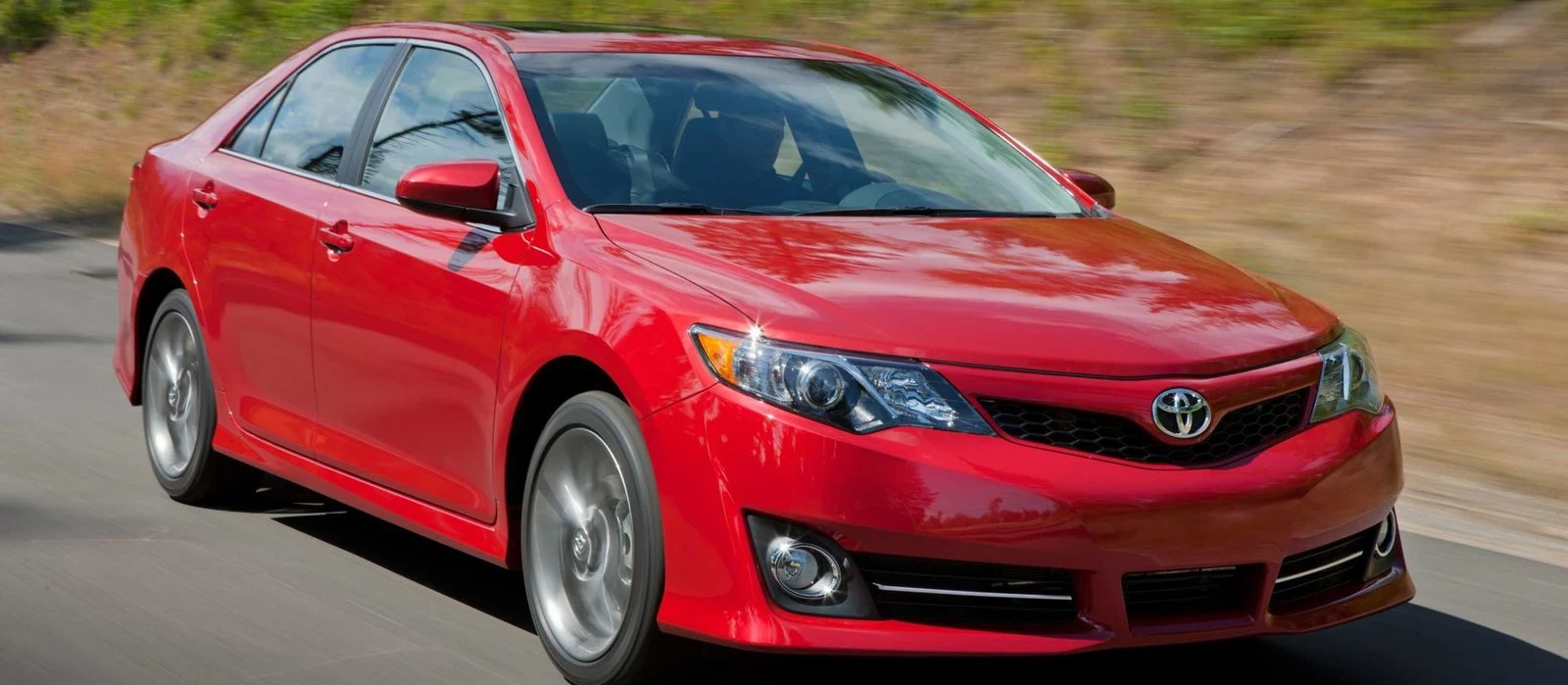
Parting out a Toyota Camry (2011-2017) is a modest-dollar job with two things going for it: the drivetrain is the money, and that drivetrain fits half of Toyota’s lineup. An XV50 Camry takes home roughly $3,900 in the parts worth pulling, after marketplace fees, before your own labor and freight - a smaller number than you might expect, because the Camry is one of the most common cars on the road, so its body panels trade soft. But the engine and transmission are dependable money, and they sell into a much bigger pool than a Camry-only part, because the same mechanical hardware fits other Toyotas. This is the XV50 Camry (2011-2017), the generation before the 2018 redesign, so on a 2017 donor confirm which one you have before you price anything. This is the full Toyota Camry part-out value breakdown: what each major part sells for, why the mechanical parts reach further, and how to get the exact figure before you buy.
Parting out a Toyota Camry 2011-2017: the top parts
A few majors carry most of the part-out value. These are real used-market prices for the XV50 Camry, ranked by take-home - your own labor, packing, and freight come off on top:
At a glance: estimated parts take-home $3,900+ · top part engine at $1,599 · 15+ parts priced · prices updated Aug 2026 · years 2011 - 2017 · XV50 generation · body sedan, Hybrid available. The “$3,900+” is the take-home across every part worth pulling, not just the five above - the top 5 are shown here, and 10 more sit behind them.
What each part is worth when parting out a Toyota Camry
The table is the summary. The money is in reading it correctly, part by part.
Engine - the reliable headline. The engine keeps about $1,387 on a deep 191-listing market at high confidence, with a used-market range of roughly $1,100 to $2,195. It is the steadiest big-ticket figure on the car - and, as below, one that sells into more than just Camrys. Expect the real sale to land under the ask once selling fees and freight come off, and remember the engine is the heaviest thing you will ship.
Transmission - the strong second. The transmission keeps about $976 on 190 listings at high confidence. Match it to the exact engine - the four-cylinder, V6 and Hybrid do not share the same unit - before you quote one.
Front door and hood - soft, because the Camry is everywhere. Here is why the total is modest: the body panels trade soft. The front door keeps about $365 and the hood about $238, both at low confidence with wide ranges (the door runs $199 to $842), because the Camry is so common that used panels are a glut and condition decides everything. They vary by trim and grade, so confirm the exact panel and photograph honestly before you quote.
Steering rack - deep market, small money. The steering rack keeps about $136 on a very deep 198-listing market at high confidence. It is a dependable, liquid number, but a small one - it only pays pulled in volume or bundled.
The Camry’s edge: its mechanical parts fit other Toyotas
This is the reason to part a Camry even at modest per-part numbers: reach. The 2011 - 2017 Camry shares its mechanical hardware with a family of Toyotas - the 2011 - 2017 RAV4, Sienna, Highlander and Avalon all take many of the same parts: the engine, radiator, A/C compressor, starter and related drivetrain hardware. That means those parts sell into a far bigger buyer pool than a Camry-only part, so they move faster and hold their price better. Body panels, lighting and interior are Camry-specific, so they do not cross. Always confirm the exact part number before you list one across models - shared “on the mechanical side” is not the same as universal fitment.
The Hybrid adds parts a gas Camry doesn’t have
A Camry Hybrid donor is worth a second look, because it carries high-value parts a gas car does not. The hybrid battery pack keeps about $928 - but read it carefully: it varies enormously, from about $65 to $1,700, entirely on the health of the pack, so it rates low confidence and you should test it before you promise anything. The hybrid converter/inverter keeps about $208 on a firm market. Both exist only on the Hybrid, so confirm the drivetrain off the VIN first. Handle the high-voltage battery safely - it is not a part to pull without the right training and gear.
Three engines - price the right one
The XV50 ran three powertrains: a 2.5L I4 (most cars), a 2.5L Hybrid, and a 3.5L V6 in the top trims. Engine-specific parts do not interchange across them, so confirm which one the donor has off the VIN before pricing a long block, an engine computer, or the drivetrain. The four-cylinder is the common, liquid market; the V6 and Hybrid are rarer.
Trims change which parts a car has - and what they sell for
Five trims ran - L, LE, SE, XLE and XSE - and trim decides the hardware: lighting, wheels, seats, audio and the body-panel finish all differ, which is part of why the door and hood ranges are so wide. Read the trim off the VIN before you price the trim-specific parts, so you quote the part the donor actually has.
The full picture: 15+ parts, not 5
The five above are the headline, but they are not the whole car. 15 or more parts are worth pulling on a 2011 - 2017 Camry - the top 5, plus the radiator, A/C compressor, alternator and starter (all shared with other Toyotas), the tail lights and headlights, wheels, seats, mirrors, and the Hybrid-only parts on a Hybrid donor. The Camry is one of the best-selling cars in America, so the donor pool is deep and buyers are always searching - the common parts move if you list them well.
Only the top 5 are shown publicly. The full ranked list - all 15+ parts with live prices, plus side-by-side vehicle comparison - is inside reParta. Start a free trial to see the rest of the parts and price your exact VIN.
The small parts only pay in volume
The alternator, the starter, and the A/C compressor are all deep, steady markets - and on the Camry they have the bonus of fitting other Toyotas, so they move faster than most. But at low dollars each they still only pay if you pull and list them in volume. On a vehicle this ubiquitous the upside is that buyers are always searching; the downside is that everyone else has them too, so price to the market. This is where a small operation quietly loses hours - the parts feel like money on the shelf, but they only pay if your listing and fulfillment are fast enough to move them at scale.
Get the exact number for your VIN before you buy
Everything above is the generation average. The Camry in front of you is a specific engine, trim, and condition, with specific damage - so the real part-out value is specific too, and on this one it hinges on the engine, whether it is a Hybrid, and the condition of the panels. That is what Pre-bid ROI gives you: paste the VIN and your max bid, edit the projected parts list to match what is intact on the lot, and it returns resale revenue from real used-market prices, minus marketplace fees, transport, and your bid - the net profit, a days-to-sell read per part, and a risk score. It works the same for Copart, IAA, and private buys, and it does not scrape the auction - you enter the price. Decoding the Camry is free: start with the free VIN decoder, then run the full profit number in reParta.
Parting out a different car?
The Camry is one of many. See the part-out value for other cars - ranked parts and real prices for the most profitable vehicles to part out, or go straight to the full 2011 - 2017 Toyota Camry part-out value - so you know the number before you bid on any lot.
Comparing donors? Run the part-out math on other midsize sedans - the Honda Accord, the Nissan Altima, and the Hyundai Sonata.
Know your profit before you buy - try reParta free
reParta is the pre-bid, list-everywhere, know-your-profit operating system for used-auto-parts sellers. See all 15+ Camry parts with live prices, compare vehicles side by side, and price your exact VIN before you bid - so you buy on a number, not a hunch.
Start your 14-day free trial - no card required
Takeaways
- A 2011 - 2017 Toyota Camry takes home roughly $3,900 in the parts worth pulling, after marketplace fees - a modest number, because the car is so common that body panels trade soft; the money is the engine ($1,387) and transmission ($976).
- The Camry’s edge is reach: its mechanical parts (engine, radiator, A/C compressor, starter, drivetrain) also fit the 2011 - 2017 RAV4, Sienna, Highlander and Avalon, so they sell into a much bigger pool - confirm the part number before listing across models.
- A Hybrid donor adds a battery pack (
$928, but $65 to $1,700 on health) and inverter ($208) a gas car does not have; three engines ran (2.5L I4, 2.5L Hybrid, 3.5L V6), so confirm which off the VIN. - Only the top 5 parts are public; the full 15+ list and your exact VIN are in reParta - start free or see the full Camry part-out value.
Frequently asked questions
How much can you make parting out a Toyota Camry 2011-2017?
The parts worth pulling off a 2011 - 2017 Toyota Camry take home roughly $3,900 combined, after marketplace fees, before your own labor and freight. The engine leads at about $1,387 take-home, the transmission is second at about $976, and 10 more parts sit behind the top five. A Hybrid donor adds a battery pack and inverter on top.
What is the most valuable part on a 2011-2017 Camry?
The engine, at about $1,599 market and roughly $1,387 take-home, on a deep 191-listing market at high confidence. The transmission is second at about $976. Both are the dependable numbers on the car; the body panels trade softer because the Camry is so common.
Do 2011-2017 Camry parts fit other Toyotas?
The mechanical parts do. The 2011 - 2017 RAV4, Sienna, Highlander and Avalon share strongly on the mechanical side - engine, radiator, A/C compressor, starter and related drivetrain hardware - so those parts sell into a much bigger pool. Body panels, lighting and interior are Camry-specific. Always confirm the exact part number before listing one across models.
Is the Camry Hybrid worth more to part out?
It can be, because it carries parts a gas car does not. The hybrid battery pack keeps about $928 (though it varies widely, from about $65 to $1,700 depending on health), and the hybrid converter/inverter about $208. Both exist only on the Hybrid, so confirm the drivetrain off the VIN and test the battery before pricing it.
How many parts are worth pulling from a Camry, and where do I see them all?
15 or more parts are worth pulling on a 2011 - 2017 Camry. The top 5 are the engine, transmission, front door, hood and steering rack; the rest, plus the Hybrid-only parts and live prices, are inside reParta. Start a free trial to see the full ranked list and price your exact VIN.