How much can you make parting out a Ford Explorer 2011-2019?
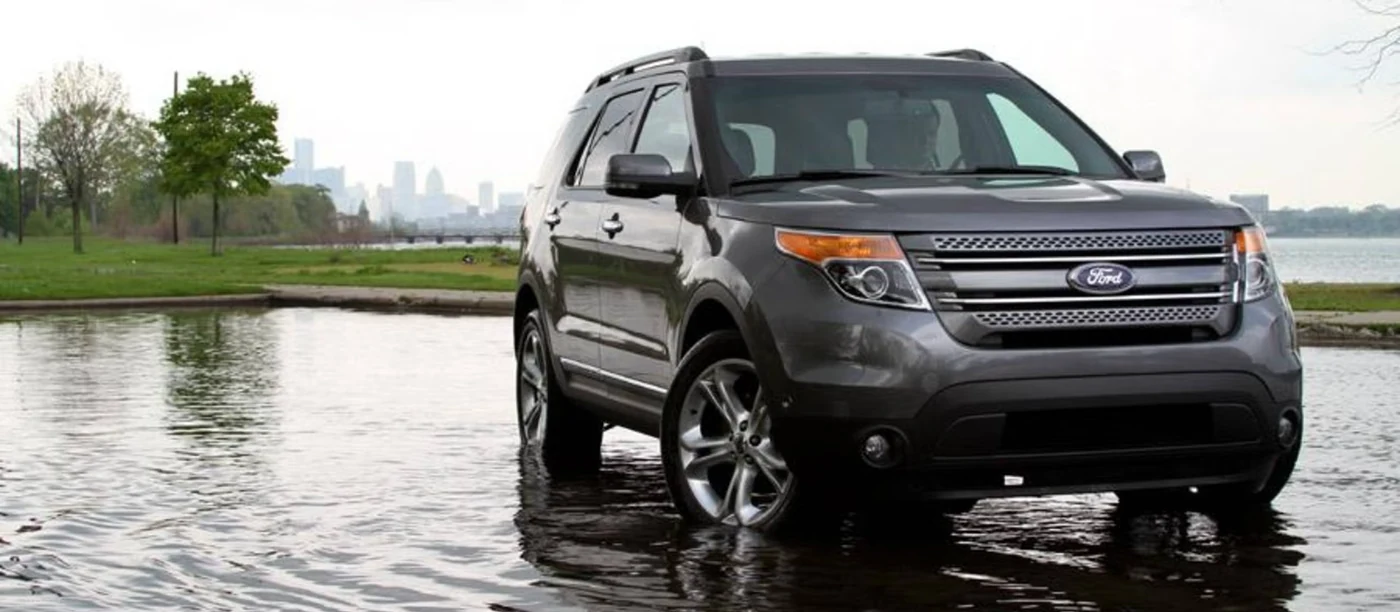
Parting out a Ford Explorer (2011-2019) is one of the steadier part-out plays on the market: a clean fifth-generation SUV takes home roughly $5,859 in the parts worth pulling, after marketplace fees, before your own labor and freight. This is the fifth-generation U502 Explorer (2011-2019), not the 2020-up rear-drive redesign, so the parts do not interchange with the newer car. But “an Explorer” is not one number - the real figure depends on the engine, whether the car is AWD, and the trim. This is the full Ford Explorer part-out value breakdown: what each major part sells for, why the engine leads, how the four engines and AWD move the numbers, and how to get the exact figure before you buy.
Parting out a Ford Explorer 2011-2019: the top parts
A few majors carry most of the part-out value. These are real used-market prices for the fifth-generation Explorer, ranked by overall part-out value - your own labor, packing, and freight come off on top:
At a glance: estimated parts take-home $5,859+ · top part engine at $1,723 · 18+ parts priced · prices updated Aug 2026 · years 2011 - 2019 · fifth generation · body SUV, AWD available. The “$5,859+” is the take-home across every part worth pulling, not just the five above - the top 5 are shown here, and 13 more sit behind them.
What each part is worth when parting out a Ford Explorer
The table is the summary. The money is in reading it correctly, part by part.
Engine - the deal on the car. It lists around $1,723 and takes home about $1,494 after the marketplace fee - by a wide margin the most valuable part here, on a deep 197-listing sample. The range ($1,197 to $2,740) tracks the lineup: a base 3.5L V6 and a twin-turbo 3.5L EcoBoost (the Sport) are both “Explorer engines,” and they are not the same money. Decode the VIN and confirm the exact engine before you quote it - on this Explorer the engine is where the deal is won or lost.
Transmission - the firm second. The transmission takes home about $551 on a deep 197-listing sample, a steady high-confidence number. It is a distant second to the engine, but it is one of the most reliable figures on the car, because the sample is large and the six-speed automatic is common to most of the range. If the drivetrain is intact, the engine and transmission together are the backbone of the donor.
Turbocharger, hood, and transfer case - the mid-tier. After the drivetrain the value clusters. On an EcoBoost car the turbocharger keeps about $337 on 184 listings - real money, but only on the turbo engines, so confirm the car has one. The hood keeps about $479 on 106 listings, steady because front-end hits are common on a high-volume SUV. And because most Explorers are AWD, the transfer case is a genuine top-five part at about $391 on 140 listings - a part a front-wheel-drive donor would not have.
The full picture: 18+ parts, not 5
The five above are the headline, but they are not the whole car. 18-plus parts are worth pulling on a 2011 - 2019 Explorer - the top 5 by overall value, plus 13 more that fill in the margin: headlights and tail lights, the infotainment and cluster, wheels, seats, mirrors, bumpers, modules, and the small mechanical parts. On a three-row SUV this common - it was also the Police Interceptor Utility, so the roads are full of them - the long tail is deep, because there are so many donors and so many buyers for the common parts.
Only the top 5 are shown publicly. The full ranked list - all 18+ parts with live prices, plus side-by-side vehicle comparison - is inside reParta. Start a free trial to see the other 13 parts and price your exact VIN.
Four engines - identify it before you quote
The Explorer ran four engines over this generation: the 3.5L Ti-VCT V6 (the base), the single-turbo 2.0L EcoBoost I4 and 2.3L EcoBoost I4, and the twin-turbo 3.5L EcoBoost V6 (the Sport). The gap between them shows up in the price range ($1,197 to $2,740), and the twin-turbo 3.5L is the top of it. Sell the wrong engine and you buy a return; miss it on a bid and you misjudge the whole donor. Decode the VIN first, every time - and remember that only the EcoBoost cars carry the turbocharger.
AWD and trim change what the donor has - and what it sells for
Most Explorers of this generation are all-wheel drive, which is why the transfer case is a top-five part rather than an afterthought - a front-wheel-drive donor does not have it. Trim matters too: this generation ran Base, XLT, Limited, Sport, and Platinum, and they are not the same donor. A Platinum or Sport carries premium lighting, larger wheels, upgraded interior, and (on the Sport) the twin-turbo drivetrain; a base or XLT does not. Read the drivetrain and trim off the VIN before you price the trim-specific parts, because a base headlight and a Platinum headlight are different money.
The small parts only pay in volume
The alternator, starter, and A/C compressor all list under about $135 apiece. They are worth pulling only if you move them in volume - one or two at a time, the labor to pull, test, photograph, and ship eats the margin. On a vehicle this common the upside is that buyers are always searching, so the small parts move fast if you list them well; the downside is that everyone else has them too, so price to the market. This is where a small operation quietly loses hours: the parts feel like money on the shelf, but they only pay if your listing and fulfillment are fast enough to move them at scale.
Get the exact number for your VIN before you buy
Everything above is the generation average. The car in front of you is a specific engine, drivetrain, and trim, with specific damage - so the real part-out value is specific too. That is what Pre-bid ROI gives you: paste the VIN and your max bid, edit the projected parts list to match what is intact on the lot, and it returns resale revenue from real used-market prices, minus marketplace fees, transport, and your bid - the net profit, a days-to-sell read per part, and a risk score. It works the same for Copart, IAA, and private buys, and it does not scrape the auction - you enter the price. Decoding the car is free: start with the free VIN decoder, then run the full profit number in reParta.
Parting out a different car?
The Explorer is one of many. See the part-out value for other cars - ranked parts and real prices for the most profitable vehicles to part out, or go straight to the full 2011 - 2019 Ford Explorer part-out value - so you know the number before you bid on any lot.
Comparing donors? Run the part-out math on other three-row SUVs - the Toyota Highlander, the Honda Pilot, and the Jeep Grand Cherokee.
Know your profit before you buy - try reParta free
reParta is the pre-bid, list-everywhere, know-your-profit operating system for used-auto-parts sellers. See all 18+ Explorer parts with live prices, compare vehicles side by side, and price your exact VIN before you bid - so you buy on a number, not a hunch.
Start your 14-day free trial - no card required
Takeaways
- A 2011 - 2019 Ford Explorer takes home roughly $5,859 in the parts worth pulling, after marketplace fees - and the engine is most of it.
- The engine keeps about $1,494 and swings from $1,197 to $2,740 depending on whether it is a base V6 or the twin-turbo 3.5L EcoBoost; the transmission is a firm second at about $551.
- Four engines run in this generation, most Explorers are AWD (so the transfer case is a top-five part), and only EcoBoost cars carry the turbocharger - verify engine, drivetrain, and trim before pricing.
- Only the top 5 parts are public; the full 18+ list and your exact VIN are in reParta - start free or see the full Explorer part-out value.
Frequently asked questions
How much can you make parting out a Ford Explorer 2011-2019?
The parts worth pulling off a 2011 - 2019 Ford Explorer take home roughly $5,859 combined, after marketplace fees, before your own labor and freight. The engine carries most of it, and the transmission and the AWD driveline fill in the rest. The exact figure depends on the engine, whether it is AWD, and the trim, so price it per VIN.
What is the most valuable part on a 2011 - 2019 Explorer?
The engine, by a wide margin - about $1,723 market, roughly $1,494 take-home across 197 listings. The transmission is a distant second at about $551. On this Explorer the engine is where the money is, and a twin-turbo 3.5L EcoBoost (the Sport) is worth far more than the base V6.
Which Ford Explorer engine is worth the most?
This Explorer ran four engines - a 3.5L Ti-VCT V6, a 2.0L EcoBoost I4, a 2.3L EcoBoost I4, and a twin-turbo 3.5L EcoBoost V6 (the Sport). The engine price ranges from $1,197 to $2,740 depending on which, and the twin-turbo 3.5L is the top of that range. Decode the VIN and confirm the exact engine before you quote it.
Is an AWD or EcoBoost Explorer worth more to part out?
Both add value. Most Explorers are AWD, so the transfer case is a real top-five part (about $391 take-home), and the EcoBoost engines add a turbocharger worth about $337. Confirm the drivetrain and engine off the VIN before you price those parts, because a base front-wheel-drive V6 does not carry them.
How many parts are worth pulling from an Explorer, and where do I see them all?
18-plus parts are worth pulling on a 2011 - 2019 Ford Explorer. The top 5 by overall value are the engine, transmission, turbocharger, hood, and transfer case; the other 13, plus live prices and side-by-side vehicle comparison, are inside reParta - start a free trial to see the full ranked list and price your exact VIN.